Understanding a flat cortisol rhythm
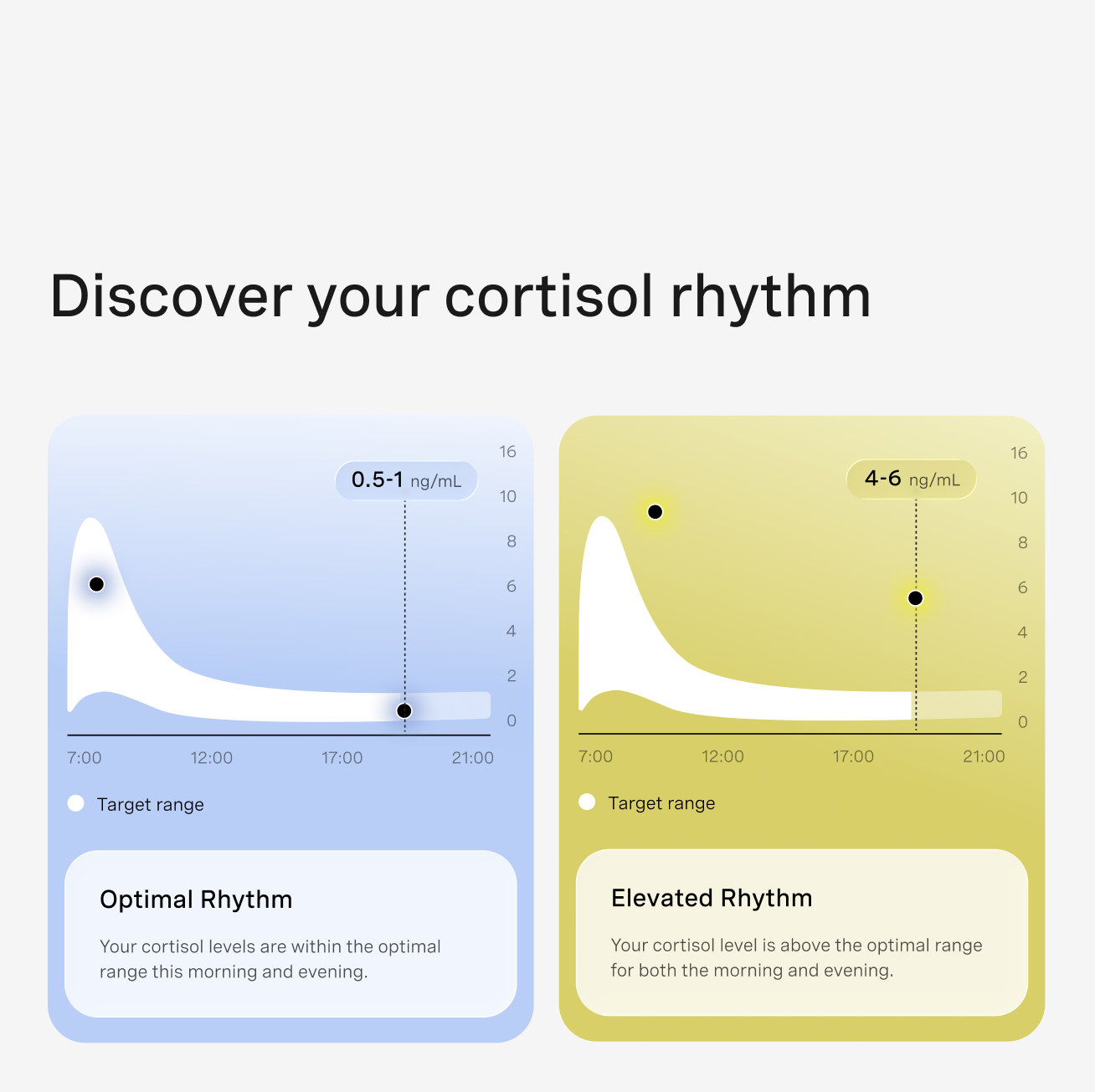
Your body runs on a daily cortisol rhythm: levels naturally rise to a peak in the morning and taper down through the day to reach their lowest point at night. This pattern—your diurnal rhythm—is closely tied to your energy, your focus, and how you respond to stress.
When that rhythm loses its shape and flattens out, it can leave you feeling "off" in ways that are hard to pin down. Here's what a flat rhythm actually is, what the research says is behind it, and what you can do next.
What an optimal rhythm looks like
A healthy cortisol rhythm has three features:
- A morning rise. Cortisol climbs sharply after you wake, usually peaking about 30 to 45 minutes later. This surge is called the cortisol awakening response (CAR).
- A steady decline. From that morning peak, cortisol tapers down gradually across the day.
- An evening low. Levels reach their lowest point around bedtime, helping set the stage for sleep.
The gap between your high morning level and your low evening level is what gives the rhythm its slope.
What is a flat rhythm?
A flat rhythm is one that's lost its signature slope. Instead of a clear morning peak and an evening drop, the difference between your morning and evening levels shrinks. In practice, a flatter rhythm can show up as a muted morning rise, an evening level that stays higher than it should, or both.
It's worth saying that "flat" is a matter of degree, not an on/off switch. A rhythm can be slightly blunted or quite flat, which is exactly why seeing your actual pattern matters more than guessing at it.
What a flat rhythm can feel like:
Everyone's different, but a flatter rhythm is often described as:
- Waking up tired, even after a full night's sleep
- Reaching for caffeine just to get going
- Feeling drained long before bedtime
- A general sense of running on empty
The fatigue connection isn't just anecdotal: large studies have repeatedly associated flatter daily cortisol rhythms with persistent fatigue, and more broadly, with poorer health outcomes across a wide range of measures.
What can flatten your rhythm?
A rhythm rarely flattens overnight. It tends to build over weeks or months from everyday factors. The research points to a few in particular:
- Prolonged stress. This is the most consistently studied factor associated with a flatter daily rhythm. There's an important nuance here: short bursts of stress often raise your morning cortisol—that's your body gearing up to demand. It's when stress runs long enough to tip into exhaustion that the morning response tends to get blunted.
- Ongoing sleep loss. Poor or broken sleep has been linked to a flatter cortisol rhythm the following day.
- Disrupted schedules. Irregular or shifting routines, like shift work, frequent time-zone changes, inconsistent bed and wake times, can throw off the timing your rhythm depends on.
- Under-recovery. Consistently pushing hard, in training or at work, without enough recovery is associated with a blunted morning response and a flatter rhythm overall.
Some medical conditions and mood-related states are also associated with altered cortisol rhythms, but those relationships can run in both directions. If you have concerns, reach out to a trusted healthcare provider.
What you can do next
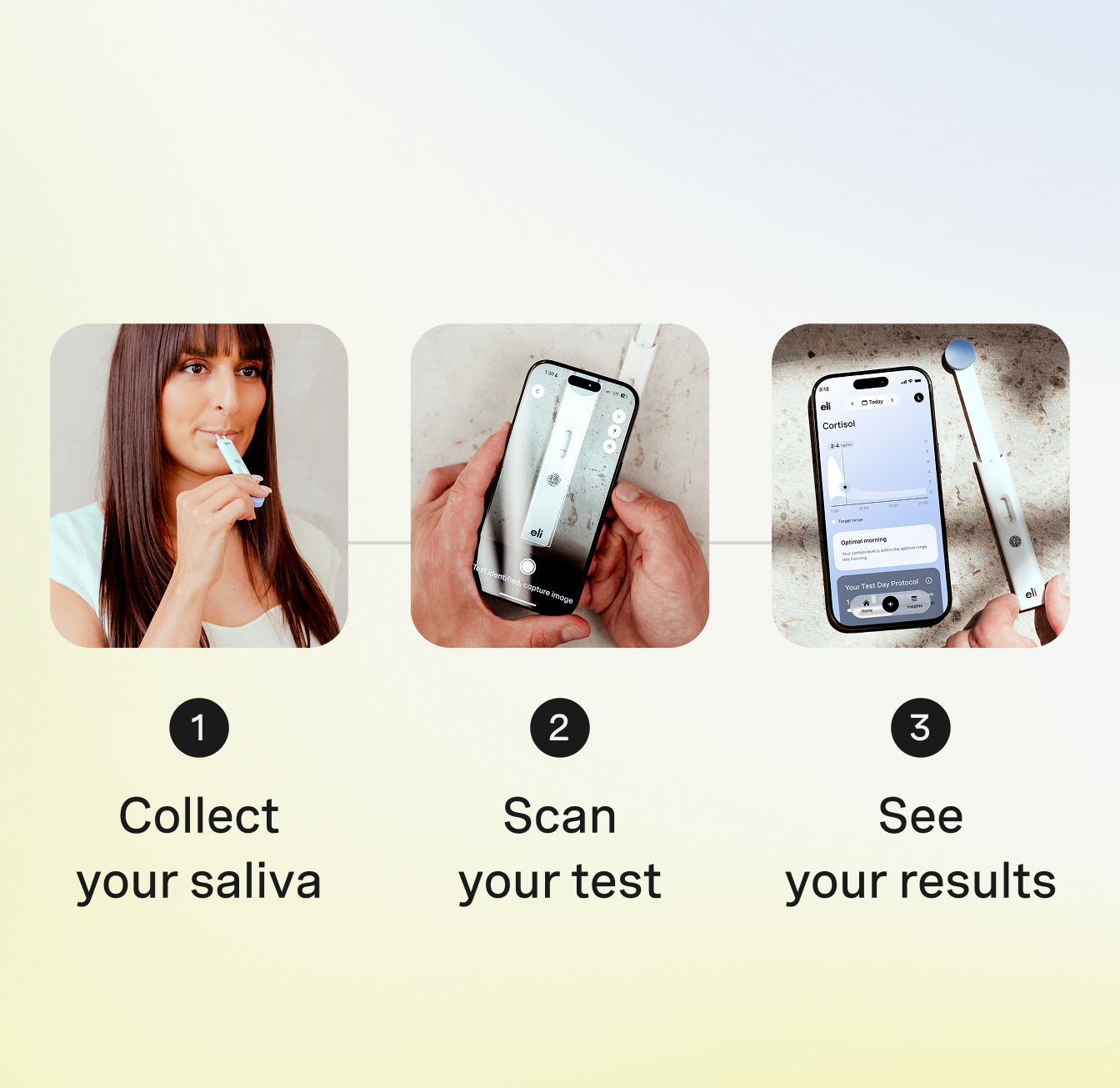
Start by seeing your pattern. A single reading can't tell you much on its own, since cortisol naturally varies from day to day. Testing consistently across morning and evening shows you the shape of your rhythm, rather than a one-off snapshot.
In the Eli app, your readings are plotted against a healthy target range, so you can see whether your rhythm is following the typical curve or flattening out.
Support a healthier rhythm. A handful of habits are commonly recommended for a healthy diurnal rhythm. None is a guaranteed fix, but all are low-risk and well-aligned with how the rhythm works:
- Anchor your mornings. Bright light soon after waking and some gentle movement early in the day are classic circadian cues.
- Protect your evening wind-down. A consistent bedtime, dimmer light in the hours before bed, and less screen time can help your system settle.
- Manage your stress load. Regular recovery, rest days, and boundaries around work all take pressure off a system that's been running hot.
- Keep your sleep schedule consistent. Going to bed and waking around the same time supports the timing your rhythm relies on.
The goal isn't to force a peak. Instead, it's to give your rhythm the conditions it needs, then use your own data to see what's actually shifting over time.
When to talk to a doctor
Changes take time, and it's normal for shifts to show up gradually. But if your rhythm stays flat despite consistent changes for 5-6 weeks, or if you're dealing with persistent exhaustion that's affecting your daily life, it's worth talking to a healthcare provider. Your cortisol pattern is one useful signal, and a clinician can help place it in the context of your full health picture.
Bottom Line: A flat rhythm is your body's way of saying: "I've been running on empty for too long." The good news? With consistent effort, most flat rhythms can be improved.