Understanding your diurnal rhythm
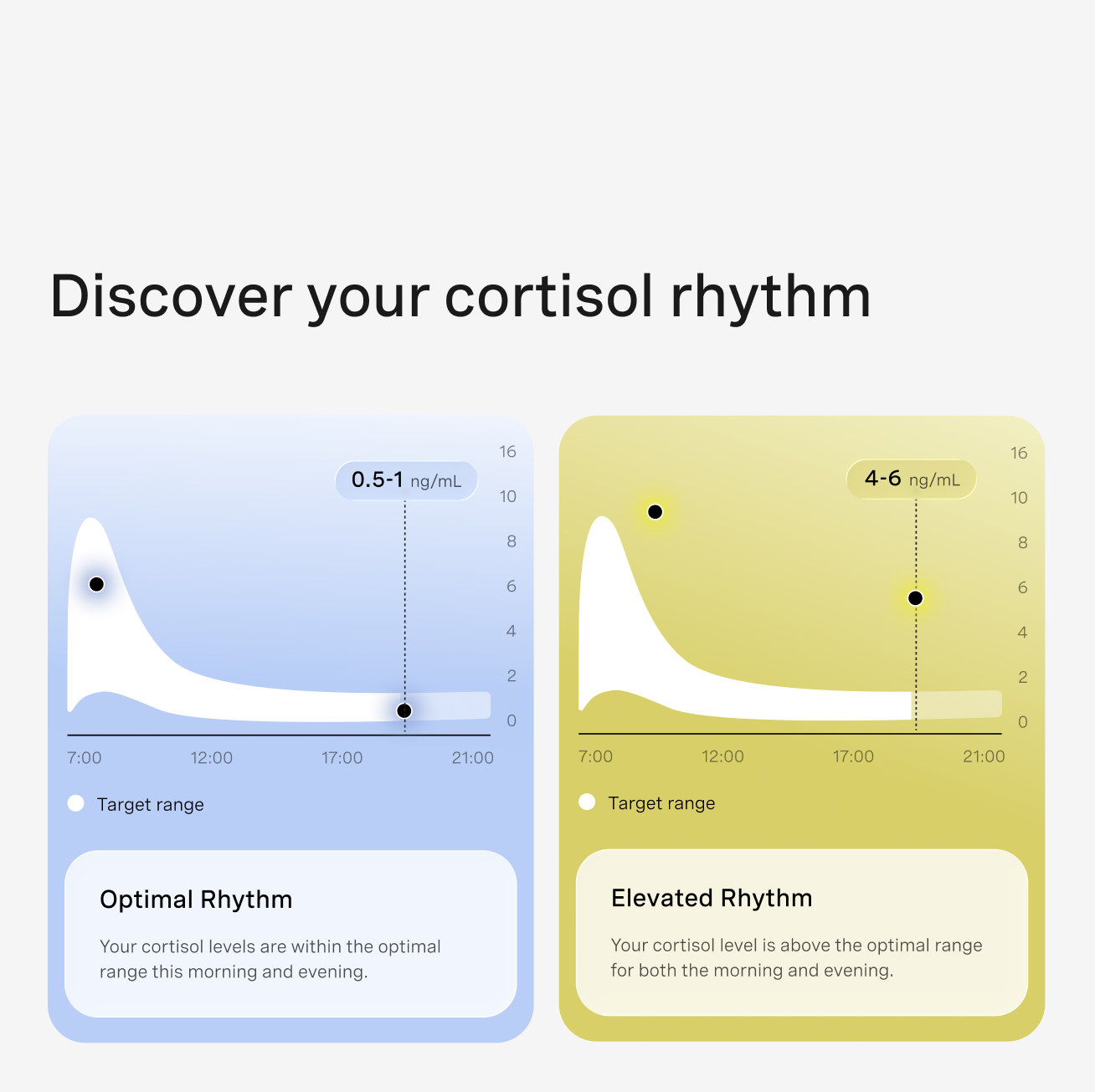
Your body runs on a cortisol rhythm that naturally peaks in the morning and drops through the day. This pattern, called your diurnal rhythm, drives your energy, focus, and stress response.
A healthy rhythm shows:
-
Morning spike: Sharp rise within 60 minutes of waking (your Cortisol Awakening Response)
-
Steady decline: Gradual drop through the day
-
Evening low: Lowest point by bedtime (the precursor to falling asleep)
What is an elevated rhythm?
When your rhythm is elevated, the natural decline that should happen stalls. Cortisol peaks too high, falls more slowly than it should, or stays elevated into the evening when your body is supposed to start winding down. The result is a system running at a level it wasn't designed to sustain.
Signs of chronically elevated cortisol:
-
Feeling wired and anxious most of the day, even when nothing's "wrong"
-
Difficulty relaxing, even during downtime
-
Racing thoughts that carry into the evening
-
Trouble falling asleep despite feeling tired
-
Irritability or mood swings through the day
Why does an elevated rhythm happen?
The shift from regulated to elevated rarely announces itself. It tends to build gradually through everyday factors, the kind that seem manageable on their own but add up faster than most people realize.
Common contributors include:
-
Chronic stress: Keeps cortisol output high across the day, gradually flattening the normal AM-to-PM slope.
-
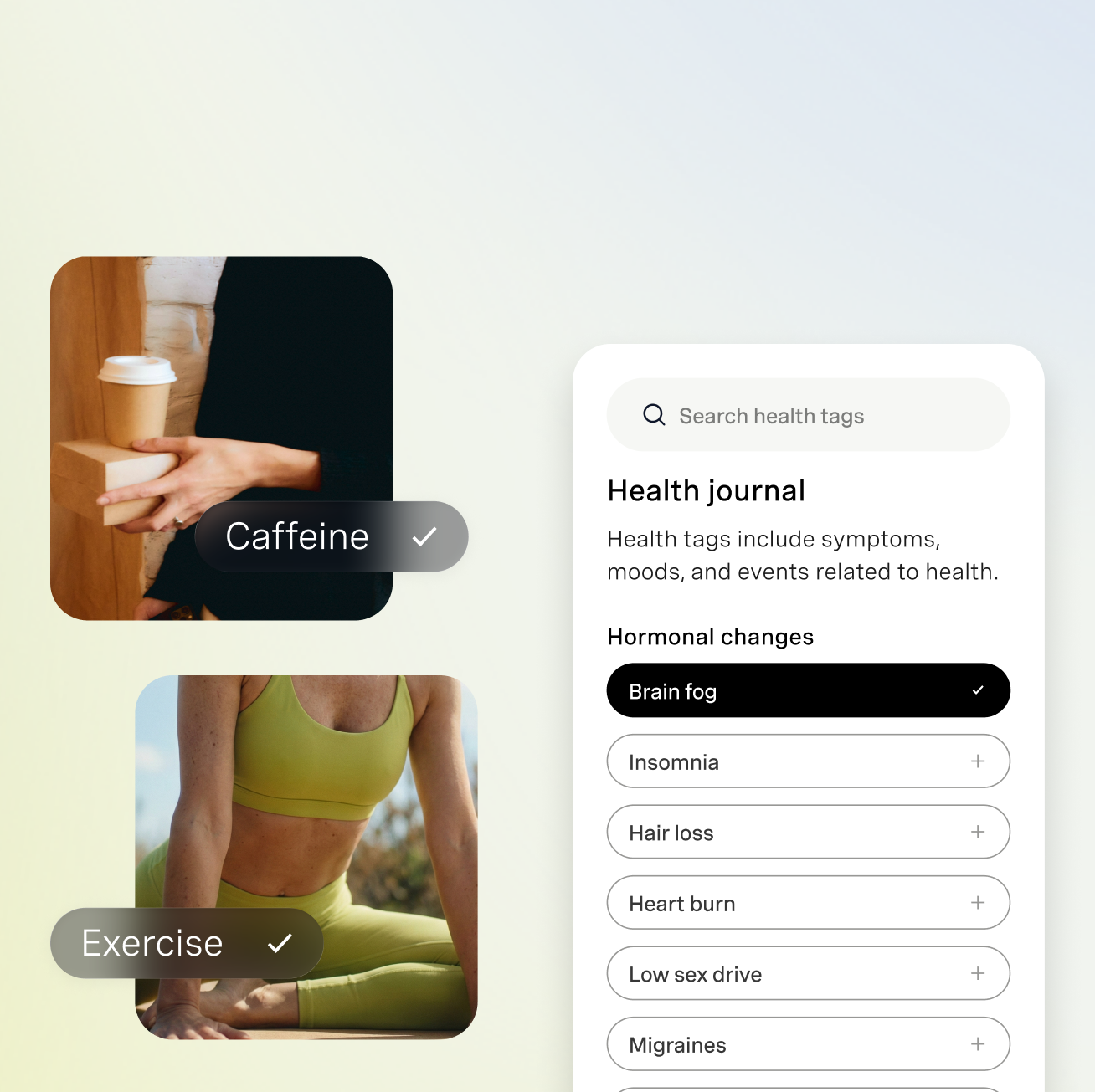
High training load: Intense or late-in-the-day exercise without adequate recovery can keep cortisol elevated into the evening.
-
Excess caffeine: Amplifies the morning spike and delays the afternoon decline that should follow it.
-
Poor sleep: Disrupted sleep and elevated cortisol feed each other, each one making the other harder to fix.
In some cases, persistently elevated cortisol may point to an underlying medical cause, including conditions affecting the adrenal or pituitary glands, or certain medications. If your rhythm stays elevated for 4-6 despite lifestyle changes, consult a physician or practitioner.
What worsens an elevated rhythm?
-
No recovery time: Back-to-back obligations without real rest keep the stress response activated.
-
High-stimulation evenings: News, work emails, and social media sustain cortisol when it should be falling.
-
Late caffeine: Afternoon coffee delays the decline your rhythm depends on.
-
Overtraining: Exercise without adequate recovery raises baseline cortisol over time.
What to do next
1. Track your pattern in the app
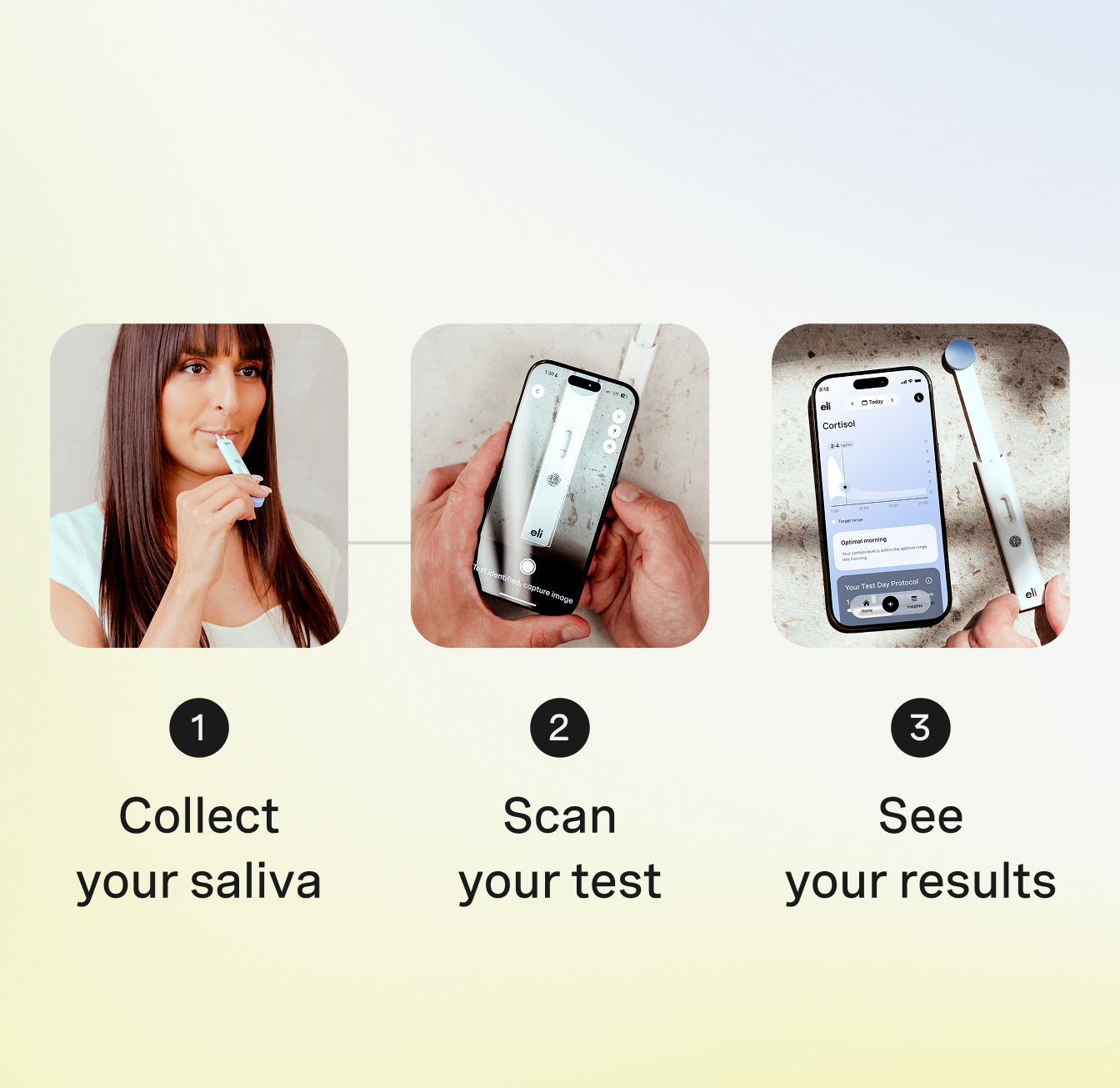
Test morning (we recommend within 30 minutes of waking for consistency), afternoon, and evening for 3-5 days to confirm consistently high levels. The Eli app shows whether your elevation is persistent or situational—that distinction matters for what comes next.
2. Adjust factors within your control
-
Stress management: Incorporate intentional recovery into your day like breathwork, walks, boundaries around work and screens.
-
Caffeine timing: Try cutting off caffeine after noon for 2-4 weeks and retest.
-
Exercise load: Temporarily reduce intensity and and prioritize lower-cortisol movement like walking, yoga, or pilates.
-
Sleep consistency: Maintain the same bedtime and wake time, and protect your sleep environment.
3. Consult a doctor
If your rhythm stays persistently elevated despite trying various lifestyle changes, bring your pattern to a physician.
Elevated cortisol across the day can indicate Cushing's syndrome or other serious medical conditions that require prompt evaluation and treatment.
Bottom Line: An elevated rhythm isn't just a stress problem—it's a signal that your cortisol pattern has shifted out of its natural range. The good news: rhythms are responsive. Small, consistent changes to how you structure your day can start to bring the slope back.