You're doing everything right with your GLP-1 medication—taking it consistently, following the guidance, watching what you eat. But the scale isn't moving the way you expected. Before you blame the medication or question your willpower, there might be a hidden factor at play:
Your cortisol patterns.
Cortisol, often called the "stress hormone," does far more than just respond to stress. It regulates your metabolism, blood sugar, appetite, and even how your body responds to weight loss medications like GLP-1s. When your cortisol rhythm—also known as your diurnal curve—is disrupted, it can work directly against your medication, no matter how perfectly you follow your protocol.
The good news? You can measure these patterns at home and start making targeted changes that help your medication work with your body, not against it.
Key Takeaways
- Your cortisol should follow a natural daily rhythm—high in the morning, low in the evening. When this pattern is disrupted, it can interfere with GLP-1 effectiveness.
- Five specific cortisol patterns can sabotage weight loss results: flat curves, elevated evening levels, blunted morning response, chronically high levels, and unpredictable chaos (a curve that's all over the place.)
- Testing your cortisol at strategic times reveals which pattern you have and guides targeted interventions.
- When cortisol patterns normalize, GLP-1 medications can work more effectively—improving appetite control, energy, and consistent results.
Understanding the Cortisol-GLP-1 Connection
GLP-1 medications work by mimicking a natural hormone that regulates appetite, slows digestion, and improves insulin sensitivity. They're powerful tools for weight management and metabolic health. But they don't work in isolation—they work within your broader hormonal ecosystem.
Cortisol plays a central role in that ecosystem. It influences blood sugar regulation, insulin sensitivity, fat storage patterns, and appetite signals.12,17 When cortisol patterns are disrupted, they can create metabolic conditions that directly oppose what your GLP-1 medication is trying to accomplish.
Think of it this way: your GLP-1 is saying "we have enough energy stored, you don't need to eat." But if your cortisol is chronically elevated, it's saying "we're under threat, hold onto every calorie." These opposing signals create metabolic confusion—and unpredictable results.
Let's look at five specific cortisol patterns that might be interfering with your GLP-1 results.
Pattern 1: The Flat Curve—Your Results Plateaued
What's happening
Your cortisol should follow a clear daily rhythm—think of a mountain shape with a peak in the morning and a gradual decline to low levels by evening.2,7 Research shows that in healthy individuals, cortisol levels typically drop 70-80% from morning to evening.2 When you test your levels throughout the day and see similar numbers from morning to night, that's a flat curve. Your body is maintaining a constant state of mild alertness (as if it's under ongoing threat.)
How it affects your GLP-1
This creates a fundamental conflict. Your medication signals that you have adequate energy stores and don't need to eat. Meanwhile, your flat cortisol curve signals ongoing stress, triggering your body to hold onto fat reserves "just in case." Your metabolism never fully switches into fat-burning mode because these opposing signals keep it in a holding pattern.
A comprehensive meta-analysis of 80 studies involving over 36,000 participants found that flatter diurnal cortisol slopes are significantly associated with worse health outcomes, including metabolic dysfunction and obesity.2 Research specifically demonstrates that flattened cortisol rhythms precede and contribute to dysregulations in metabolism, energy, and appetite.2
The result? Initial weight loss that eventually plateaus, even though nothing about your medication or habits has changed.
What tracking shows you
Test your cortisol in the morning (right after waking up) and evening (starting at 5pm—around 9pm) on the same day. You should see a significant drop—your evening level should be roughly 20-30% of your morning level.2 If both numbers are similar, you've identified a flat curve.
Retest weekly as you work on establishing better sleep-wake consistency, stress management, and daily rhythm. Watch for your evening number to gradually come down. When your curve develops proper rhythm, your metabolism can work with your GLP-1 instead of against it.
Pattern 2: Elevated Evening Cortisol—The Sleep Saboteur
What's happening
In a healthy pattern, cortisol drops 70-80% from morning to evening.2 If yours doesn't—if it remains elevated at bedtime—you're kept in an active, alert state when your body should be transitioning to repair mode. Research shows that elevated evening cortisol is particularly disruptive to metabolic health and significantly predicts increased cardiovascular mortality and stroke risk.4
How it affects your GLP-1
High evening cortisol creates a cascade of metabolic problems:
Studies demonstrate that sleep deprivation increases circulating levels of cortisol, particularly elevated evening cortisol, which is accompanied by metabolic impairments.13 This elevation in evening cortisol raises blood glucose and reduces insulin sensitivity—working directly against what your GLP-1 medication is designed to do.13,18
Research confirms that higher presleep cortisol predicts shorter total sleep time, lower sleep efficiency, and longer sleep onset latency—while shorter sleep duration and quality is also associated with a flatter diurnal cortisol slope the next day.9 This creates a bidirectional relationship: disrupted cortisol prevents good sleep, and poor sleep further disrupts cortisol patterns.
You might notice you fall asleep easily but wake frequently, or that you sleep through the night but wake up feeling groggy. Either way, your metabolism isn't getting the reset it needs.
What tracking shows you
Test at 9-10pm. If your cortisol is still elevated—closer to 50-60% of your morning level rather than 20-30%—you've identified a key problem.2 Try implementing an evening wind-down routine for a week, then test again to see if that number drops.
Lower evening cortisol means better overnight metabolism, better sleep quality, and better GLP-1 results. It's one of the most impactful patterns to address.
Pattern 3: Blunted Morning Response—Still Exhausted Despite Rest
What's happening
Within 30-45 minutes of waking, your cortisol should surge 50-75% above your waking level.22,27 This cortisol awakening response (CAR) is what gives you energy to start your day and activates your metabolism. When this surge is blunted or absent—common after chronic stress or burnout—your metabolism starts the day at reduced capacity.22,24
How it affects your GLP-1
That morning cortisol surge does more than just wake you up. Research indicates that the CAR provides an energy-mobilizing function, with evidence showing positive associations with higher arousal levels and reduced fatigue.27 The CAR mobilizes glucose for energy needs, augments cardiovascular function, engages the motor system, and initiates cognitive processes that allow us to be alert and ready for action.24
A blunted CAR is associated with metabolic dysfunction, including Type 2 diabetes, insulin resistance, and obesity.22,23 When this morning activation is absent, your metabolic engine runs at ~70% capacity from the start.
Your GLP-1 is reducing calorie intake, but if your metabolism isn't running at full capacity to burn what's there, you end up in a sluggish state. You feel tired despite adequate sleep, struggle to be active, and may compensate by being more sedentary throughout the day.
What tracking shows you
Test when you first wake up, ideally before getting out of bed, and then again 30 minutes later. You should see a 50-75% increase.22,27 If you don't—if your curve stays flat or even drops—you've found why you're exhausted despite getting eight hours of sleep.
Track weekly as you work on rebuilding this morning activation through bright light exposure, morning movement, protein at breakfast, and consistent wake times. Watch your morning surge gradually return, and notice how your energy and metabolism improve alongside it.
Pattern 4: Chronically High Cortisol—The Hidden Tax on Your Results
What's happening
When your cortisol is consistently in the upper range or above normal throughout the entire day—morning, midday, and evening—you're dealing with chronic activation of your stress response system. While GLP-1 is working to improve insulin sensitivity and glucose control, chronically high cortisol is doing the exact opposite.17,20
How it affects your GLP-1
This pattern fights your medication in multiple ways:
Blood sugar and insulin: Cortisol promotes gluconeogenesis (glucose production), inhibits glucose uptake in muscle and fat tissue, and causes insulin resistance.17,19 Research demonstrates that elevated morning cortisol is correlated with greater insulin resistance and higher odds of prevalent diabetes.20
Appetite and cravings: Chronic stress and elevated cortisol increase the hunger hormone ghrelin and reduce the satiety hormone leptin.42,51 Studies show that elevated cortisol levels boost appetite and trigger cravings, particularly for high-calorie, sugary, and fatty foods.42,43,44
Metabolism: Cortisol slows metabolic rate and breaks down muscle tissue for energy, reducing your overall calorie-burning capacity.43,50
Fat distribution: Persistently high cortisol preferentially promotes visceral adipose tissue (belly fat) accumulation through upregulation of enzymes responsible for fat cell creation.45,47,48 This visceral fat is metabolically active and associated with increased risk of cardiovascular disease, Type 2 diabetes, and metabolic syndrome.43,48
You might think of this as paying a "hidden tax" on your medication. You're investing in treatment, but chronic stress is taking a cut of every benefit.
What tracking shows you
Test multiple times per day for 2-3 days: morning (8am), midday (1pm), and evening (9pm). If all three time points are consistently elevated, you have objective evidence that stress is running around the clock—this isn't just "feeling stressed," it's measurably high cortisol.
Take this data to your healthcare provider. It changes the conversation from subjective ("I feel stressed") to objective ("my cortisol is measurably high throughout the day"). Test monthly to track whether interventions—such as stress management techniques, schedule changes, or medical treatments—are actually working.
Pattern 5: Chaotic Patterns—Unpredictable Results
What's happening
Your cortisol pattern has no consistency. Monday it looks normal. Wednesday it's elevated all day. Friday it's flat. This isn't natural variation—healthy people maintain relatively consistent cortisol patterns day to day.11 This kind of chaos indicates your stress response system is dysregulated.
How it affects your GLP-1
This creates unpredictable medication response:
Research identifies distinct cortisol profile patterns, and findings suggest that specific combinations of cortisol parameters—such as flat slope, high total exposure, and dysregulated awakening response—predict worse health outcomes over time.11 When cortisol patterns are chaotic, it becomes impossible to determine if treatment resistance is due to medication dosing, adherence issues, or hormonal interference.
On days when cortisol is normal, your GLP-1 works beautifully—no appetite, good energy, weight drops. On days when cortisol spikes unexpectedly, you're suddenly ravenous, exhausted, and nothing seems to work.
You might find yourself questioning everything—is the medication working? Am I doing something wrong? Why do I feel so different day-to-day? The answer often lies in these chaotic cortisol patterns.
What tracking shows you
Test on a "good day" when you feel on track, and again on a "bad day" when everything feels harder—same times of day both days. Compare the patterns. If they're wildly different, you've captured the chaos on paper.
This data is valuable to show your healthcare provider or therapist. Test 2-3 times weekly as you work on building more routine and predictability in your schedule. When your cortisol patterns start looking similar day to day, your medication response will stabilize, too.
The Complex Relationship Between GLP-1 and Cortisol
It's important to note that the relationship between GLP-1 medications and cortisol is complex and still being studied. While GLP-1 medications don't directly lower cortisol levels,38 animal studies suggest GLP-1 receptors exist in brain regions involved in stress response.32,35 Some research shows that acute administration of GLP-1 can activate the stress response system,34,40 though human studies using therapeutic doses over several weeks have not found sustained activation of the stress axis.34
What we do know is that weight loss achieved through any method—including GLP-1 medications—may indirectly influence cortisol metabolism by reducing visceral fat, which itself drives cortisol production.33 Addressing cortisol dysregulation creates the optimal metabolic environment for your GLP-1 medication to work as designed.
Track Your Cortisol Patterns with Hormometer™
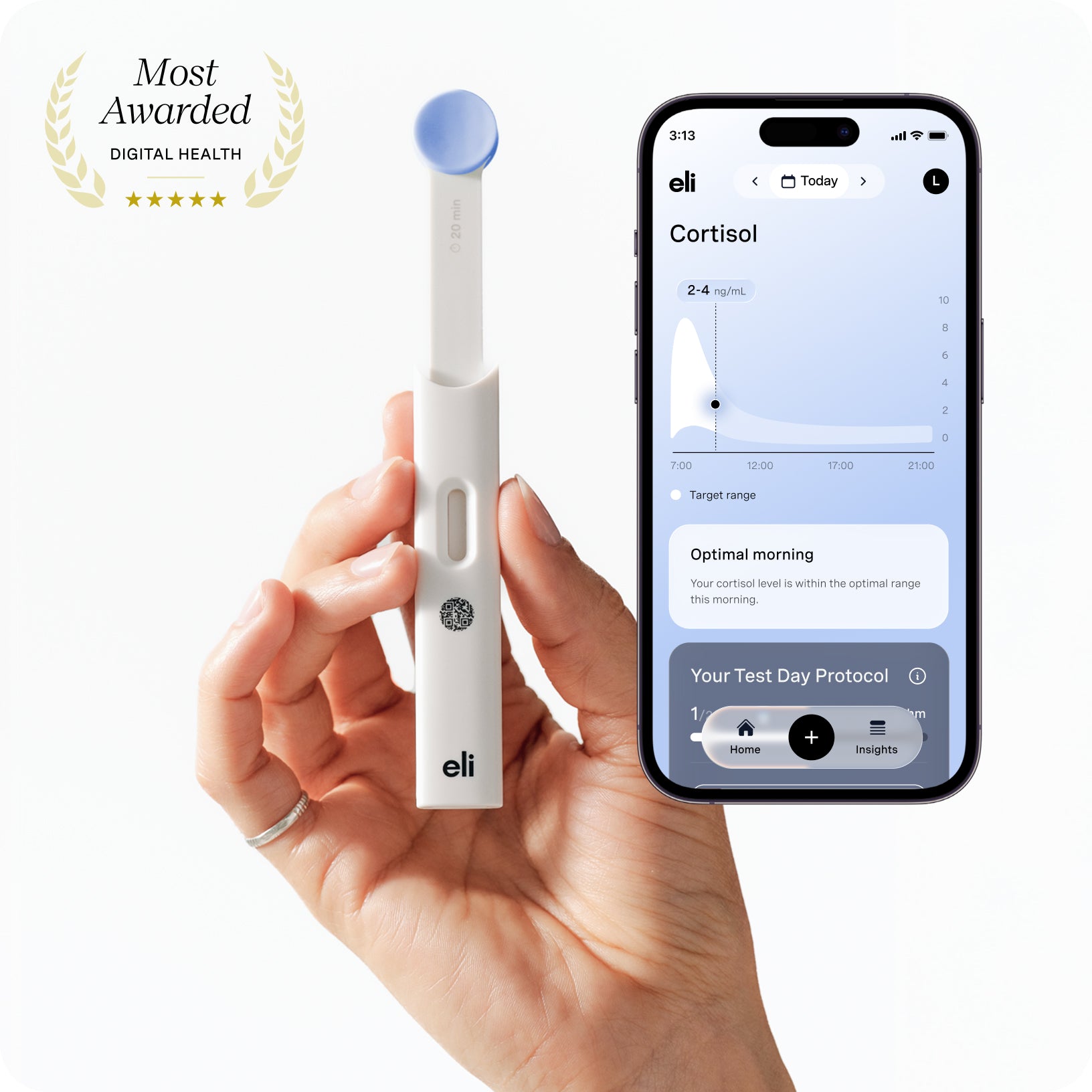
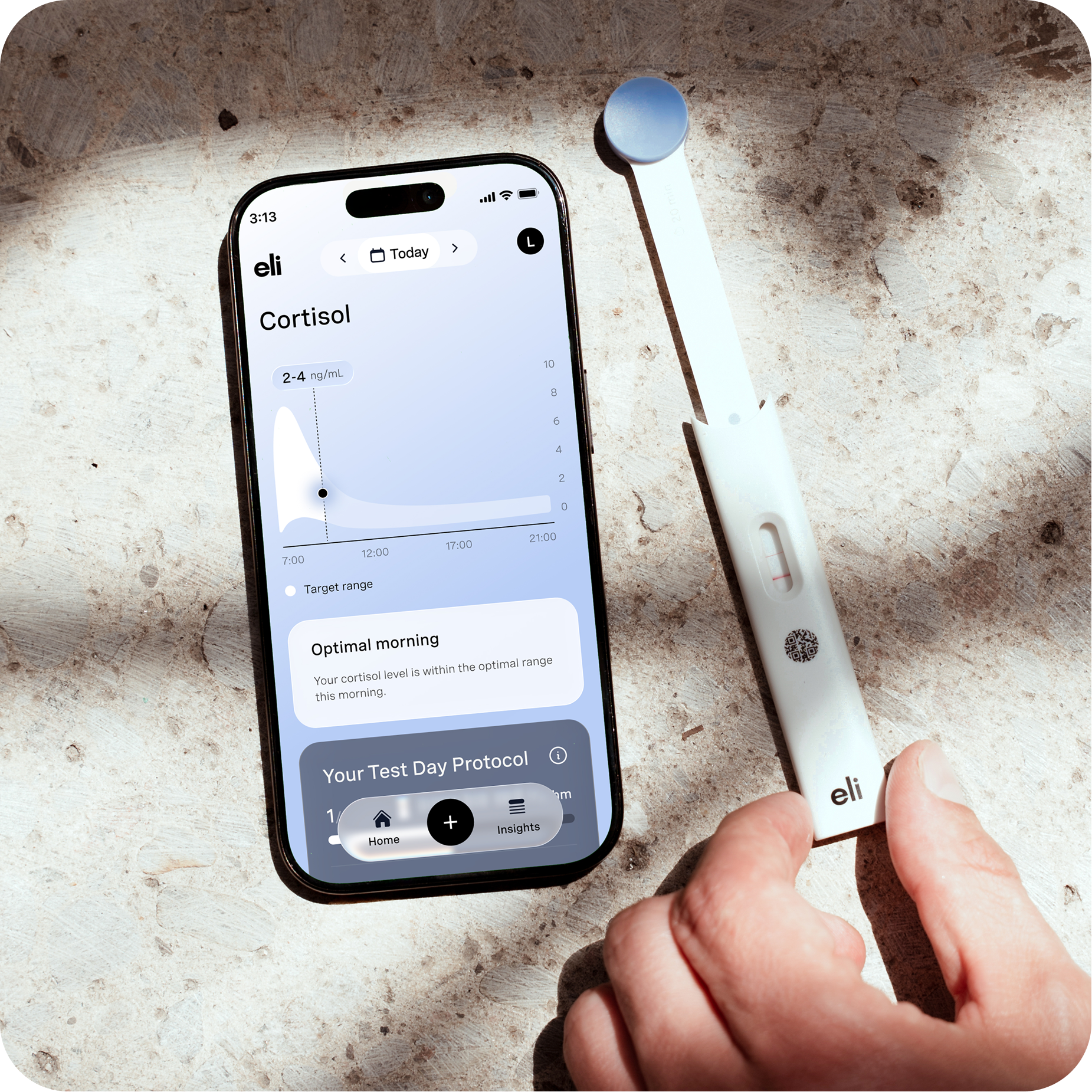
Understanding these patterns is one thing—but identifying them in your own data is transformative. Hormometer™ lets you track your cortisol levels at home, at the times that matter most for understanding your unique pattern.
With Hormometer™, you can:
- Get a clear picture of your baseline cortisol rhythm and identify which pattern you're dealing with.
- Test strategically—morning, evening, or throughout the day—to capture the specific data you need.
- Track changes over time as you implement interventions, showing you what's actually working.
- Share objective data with your healthcare provider to guide treatment decisions.
When you know your cortisol pattern, you can work with it instead of against it. And when your cortisol rhythm normalizes, your GLP-1 medication can work the way it's designed to.
Practical Steps to Support Better Cortisol Patterns
Once you've identified which pattern you're dealing with, you can take targeted action:
For flat curves:
- Establish consistent wake and sleep times to rebuild circadian rhythm7,9
- Get bright light exposure within an hour of waking24
- Create clear boundaries between work and rest time
For elevated evening cortisol:
- Implement a wind-down routine 1-2 hours before bed
- Dim lights and reduce screen time in the evening18
- Consider magnesium or other calming support (discuss with your doctor)
For blunted morning response:
- Get morning sunlight within 30 minutes of waking24
- Eat protein at breakfast to support cortisol rhythm
- Add gentle morning movement to activate your system27
For chronically high cortisol:
- Work with a healthcare provider to address underlying stressors
- Consider stress management techniques like meditation or therapy44
- Evaluate your schedule for opportunities to reduce chronic demands
For chaotic patterns:
- Focus on building routine and predictability11
- Track potential triggers alongside your cortisol tests
- Work with a healthcare provider or therapist to address dysregulation
Remember, these patterns developed over time and will take time to normalize. But with consistent attention and tracking, you can rebuild healthier cortisol rhythms that support your metabolism instead of sabotaging it.
Conclusion
Your GLP-1 medication is a powerful tool, but it works best when your broader hormonal environment supports it. Cortisol patterns have a profound impact on metabolism, insulin sensitivity, appetite, and weight loss—which means they have a profound impact on how well your medication works.
The patterns we've explored aren't character flaws or failures of willpower. They're measurable physiological patterns that you can identify, track, and address. When you bring your cortisol into a healthier rhythm, you're not just reducing stress—you're creating the metabolic conditions where your GLP-1 can work the way it's designed to.
Start by testing your cortisol at strategic times to identify which pattern you're dealing with. Then use that data to guide targeted changes. And remember: you don't have to figure this out alone. Share your cortisol data with your healthcare provider to have more informed conversations about optimizing your treatment.
Your medication is working hard for you. Make sure your cortisol is working with it, not against it.
Disclaimer
This test is a wellness device. It is not intended to diagnose, treat, cure, prevent, or manage any disease or medical condition, including metabolic disorders, diabetes, obesity, adrenal disorders such as Addison's disease or Cushing's syndrome, or hormonal imbalances. The information about cortisol patterns and GLP-1 medications is for lifestyle and wellness insights only and should not replace professional medical advice. Always consult a licensed healthcare provider before starting, stopping, or modifying any medications, including GLP-1 receptor agonists. Do not make changes to your prescribed treatment plan without medical supervision. Home cortisol testing provides wellness data but is not a substitute for clinical diagnosis or medical evaluation.
References
2 Adam EK, Quinn ME, Tavernier R, et al. Diurnal cortisol slopes and mental and physical health outcomes: a systematic review and meta-analysis. Psychoneuroendocrinology. 2017;83:25-41. https://pmc.ncbi.nlm.nih.gov/articles/PMC5568897/
3 Evidence for disruption of diurnal salivary cortisol rhythm in childhood obesity: relationships with anthropometry, puberty and physical activity. BMC Pediatrics. 2020. https://link.springer.com/article/10.1186/s12887-020-02274-8
4 What Do Cortisol Curves Tell Us About Health? The Institute for Functional Medicine. https://www.ifm.org/articles/cortisol-curves-tell-us-health
7 Elder GJ, Wetherell MA, Barclay NL, Ellis JG. The cortisol awakening response - applications and implications for sleep medicine. Sleep Med Rev. 2014;18(3):215-24. https://pmc.ncbi.nlm.nih.gov/articles/PMC8813037/
9 Yap Y, Slavish DC, Taylor DJ, Bei B, Wiley JF. Bi-directional relations between stress and self-reported and actigraphy-assessed sleep: a daily intensive longitudinal study. Sleep. 2024;47(9):zsae151. https://academic.oup.com/sleep/article/47/9/zsae151/7706142
11 Siegel SD, Brumage MR, Dolan SL, et al. Identifying diurnal cortisol profiles among young adults: Physiological signatures of mental health trajectories. Psychoneuroendocrinology. 2021;128:105217. https://www.sciencedirect.com/science/article/abs/pii/S0306453021000780
12 The Effects of Cortisol on Blood Sugar and Insulin Resistance. Veri. https://www.veri.co/learn/cortisol-insulin-resistance
13 Sharma S, Kavuru M. Sleep and metabolism: an overview. Int J Endocrinol. 2010;2010:270832. https://pmc.ncbi.nlm.nih.gov/articles/PMC3767932/
17 Sun S, Li Y, Jiao M, et al. Relationship between cortisol and diabetic microvascular complications: a retrospective study. Eur J Med Res. 2023;28:374. https://link.springer.com/article/10.1186/s13098-024-01515-5
18 Sleep & Glucose: How Blood Sugar Can Affect Rest. Sleep Foundation. 2025. https://www.sleepfoundation.org/physical-health/sleep-and-blood-glucose-levels
19 The Cortisol & Insulin Connection (& How To Manage Stress). Rupa Health. 2025. https://www.rupahealth.com/post/the-cortisol-insulin-connection-how-to-manage-stress
20 Joseph JJ, Echouffo-Tcheugui JB, Kalyani RR, et al. The association of morning serum cortisol with glucose metabolism and diabetes: The Jackson Heart Study. Psychoneuroendocrinology. 2017;88:118-126. https://pmc.ncbi.nlm.nih.gov/articles/PMC6450778/
22 The Cortisol Awakening Response Test. DiagnosTechs, Inc. 2024. https://www.diagnostechs.com/2024/08/02/the-cortisol-awakening-response-test/
23 Bruehl H, Rueger M, Dziobek I, et al. A blunted cortisol awakening response and hippocampal atrophy in type 2 diabetes mellitus. Psychoneuroendocrinology. 2009;34(6):815-21. https://pmc.ncbi.nlm.nih.gov/articles/PMC2774914/
24 Anxiety, Depression, and the Cortisol Awakening Response. ZRT Laboratory. https://www.zrtlab.com/blog/archive/anxiety-depression-cortisol-awakening/
27 Hoyt LT, Craske MG, Mineka S, Adam EK. Cortisol awakening response: Regulation and functional significance. Endocr Rev. 2025;46(1):43-85. https://academic.oup.com/edrv/article/46/1/43/7739741
32 Ghosal S, Myers B, Herman JP. Role of central glucagon-like peptide-1 in stress regulation. Physiol Behav. 2013;122:201-207. https://pmc.ncbi.nlm.nih.gov/articles/PMC3778098/
33 Cortisol, Stress, and GLP1 Medications: What Patients Should Know. Blossom Family Medicine. 2025. https://www.blossomfamilymed.com/blog/glp1-cortisol
34 Winzeler B, da Conceição I, Refardt J, et al. Effects of glucagon-like peptide-1 receptor agonists on hypothalamic-pituitary-adrenal axis in healthy volunteers. J Clin Endocrinol Metab. 2019;104(1):202-208. https://academic.oup.com/jcem/article/104/1/202/5107757
35 Holt MK, Trapp S. The physiological role of the brain GLP-1 system in stress. Cogent Biol. 2016;2(1):1229086. https://www.tandfonline.com/doi/full/10.1080/23312025.2016.1229086
38 Does GLP-1 Help Cortisol Levels? Evidence and Clinical Insights. Fella Health. 2025. https://www.fellahealth.com/guide/does-glp-1-help-cortisol-levels
40 GLP-1 agonists enhance stress-induced corticosterone release. Endocrine Abstracts. 2012;29:P705. https://www.endocrine-abstracts.org/ea/0029/ea0029p705
42 Mason AE, Lustig RH, Brown RR, et al. Stress, cortisol, and other appetite-related hormones: Prospective prediction of 6-month changes in food cravings and weight. Obesity. 2016;24(3):713-720. https://pmc.ncbi.nlm.nih.gov/articles/PMC5373497/
43 Cortisol belly: How stress can impact your weight (and what you can do about it). BSW Health. https://www.bswhealth.com/blog/cortisol-belly-how-stress-can-impact-your-weight-and-what-you-can-do-about-it
44 Cortisol Belly (Stress Belly): 7 Tips to Help Reduce the Fat. CareCredit. https://www.carecredit.com/well-u/health-wellness/how-to-reduce-cortisol-belly/
45 Cortisol and Your Waistline: The Unseen Battle. Torrance Memorial. https://www.torrancememorial.org/healthy-living/blog/cortisol-and-your-waistline-the-unseen-battle/
47 Cortisol belly: How stress causes visceral fat and what helps. Tonum. 2025. https://tonum.com/blogs/useful-knowledge/what-is-cortisol-belly-proven-compassionate-ways-to-beat-stress-belly
48 Understanding cortisol's role in weight gain. Nuvance Health. https://www.nuvancehealth.org/health-tips-and-news/cortisol-and-weight-gain
50 Cortisol Belly: What It Is, Causes, and Symptoms. Mia Aesthetics. 2024. https://miaaesthetics.com/conditions/cortisol-belly/
51 Stress Belly: The Cortisol-Weight Gain Link Nobody Talks About. Advanced Women's Health Clinics. 2025. https://www.advancedwomenshealth.ca/blog/stress-belly-the-cortisol-weight-gain-link-nobody-talks-about