You've probably noticed you feel more alert at certain times of day, and that you tend to drag or feel tired at others. These patterns aren't random—they're driven by an internal timing system that regulates everything from hormone levels to body temperature: your circadian rhythm.
At the heart of this system is cortisol, often called your "master stress hormone." In reality, cortisol is one of your body's primary timekeeping signals, rising and falling in a predictable daily rhythm. When this rhythm runs smoothly, you feel energized during the day and sleep well at night. When it's disrupted—by shift work, travel, or chronic stress—the consequences ripple through your entire physiology.
Takeaways
-
Your body runs on a 24-hour internal clock that coordinates hormones, metabolism, sleep, and immune function.
-
Cortisol isn't just a stress hormone—it's also a key daily timing signal for your body.
-
Disruptions like shift work, jet lag, and chronic stress have measurable effects on your cortisol rhythm.
-
A healthy cortisol curve has a clear shape—when it varies, you can recognize it and act upon it.
-
Small, consistent habits around light, food, movement, and sleep can meaningfully restore your rhythm.
What Are Circadian Clocks?
Every cell in your body keeps time. This internal timekeeping system is called your circadian rhythm—from the Latin circa (about) and dies (day). The conductor of this biological orchestra sits in a tiny region of your brain called the suprachiasmatic nucleus (SCN), which acts as your body's master clock. It synchronizes all other cellular clocks throughout your tissues.1,2
The SCN adjusts to the outside world through environmental cues, primarily light. When morning sunlight hits specialized cells in your retina, signals travel directly to the SCN—essentially saying, it's daytime, let's get active. This process, called entrainment, keeps your internal rhythms aligned with the 24-hour day-night cycle.3
How Cortisol Follows Your Clock
Cortisol follows a robust daily rhythm in healthy individuals:4,5
-
Morning surge: Cortisol peaks within 30–60 minutes after waking (the Cortisol Awakening Response, or CAR), jumpstarting alertness and mobilizing energy for the day.
-
Afternoon decline: Levels gradually taper as your body shifts toward recovery mode.
-
Nighttime nadir: Cortisol reaches its lowest point during deep sleep, allowing immune activation and essential repairs.
Cortisol doesn't work alone—your circadian system also coordinates melatonin (which rises as cortisol falls), growth hormone (which surges during deep sleep), and insulin sensitivity (which is highest in the morning). This timing ensures competing processes don't interfere with each other.6
When Rhythms Go Wrong
Modern life frequently pushes our internal clocks out of sync—a state called circadian misalignment. A few common examples include:
Shift work, which forces you to stay awake when your biology signals sleep. The result: a blunted morning cortisol response, elevated nighttime cortisol, and a flattened diurnal slope. Even after a week of night shifts, many workers' cortisol patterns remain only partially adjusted.7 Chronic shift work is associated with increased rates of metabolic syndrome, cardiovascular disease, and mood disorders.8
Chronic stress, which overrides the circadian system's coordination. While acute stress causes cortisol spikes that resolve quickly, prolonged stress flattens the normal cortisol slope, elevates evening levels, and increases overall 24-hour cortisol exposure—impairing sleep, metabolism, and immune function.9
Jet lag, which creates a biological tug-of-war. Your SCN still runs on home time while your environment has shifted. Cortisol can take roughly one day per time zone crossed to fully adjust, leaving you alert at midnight and exhausted at noon.10
Reading Your Cortisol Rhythm
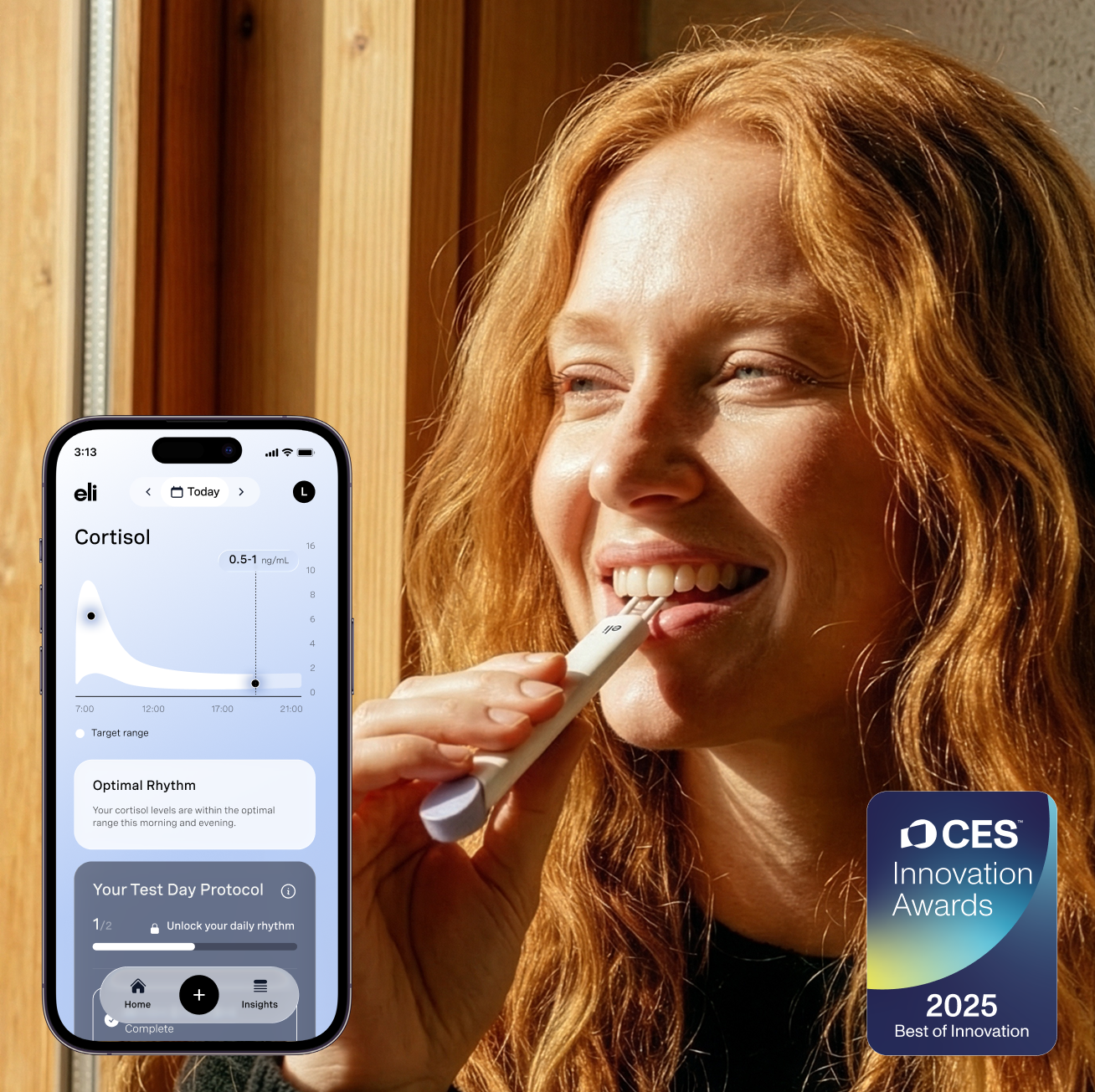
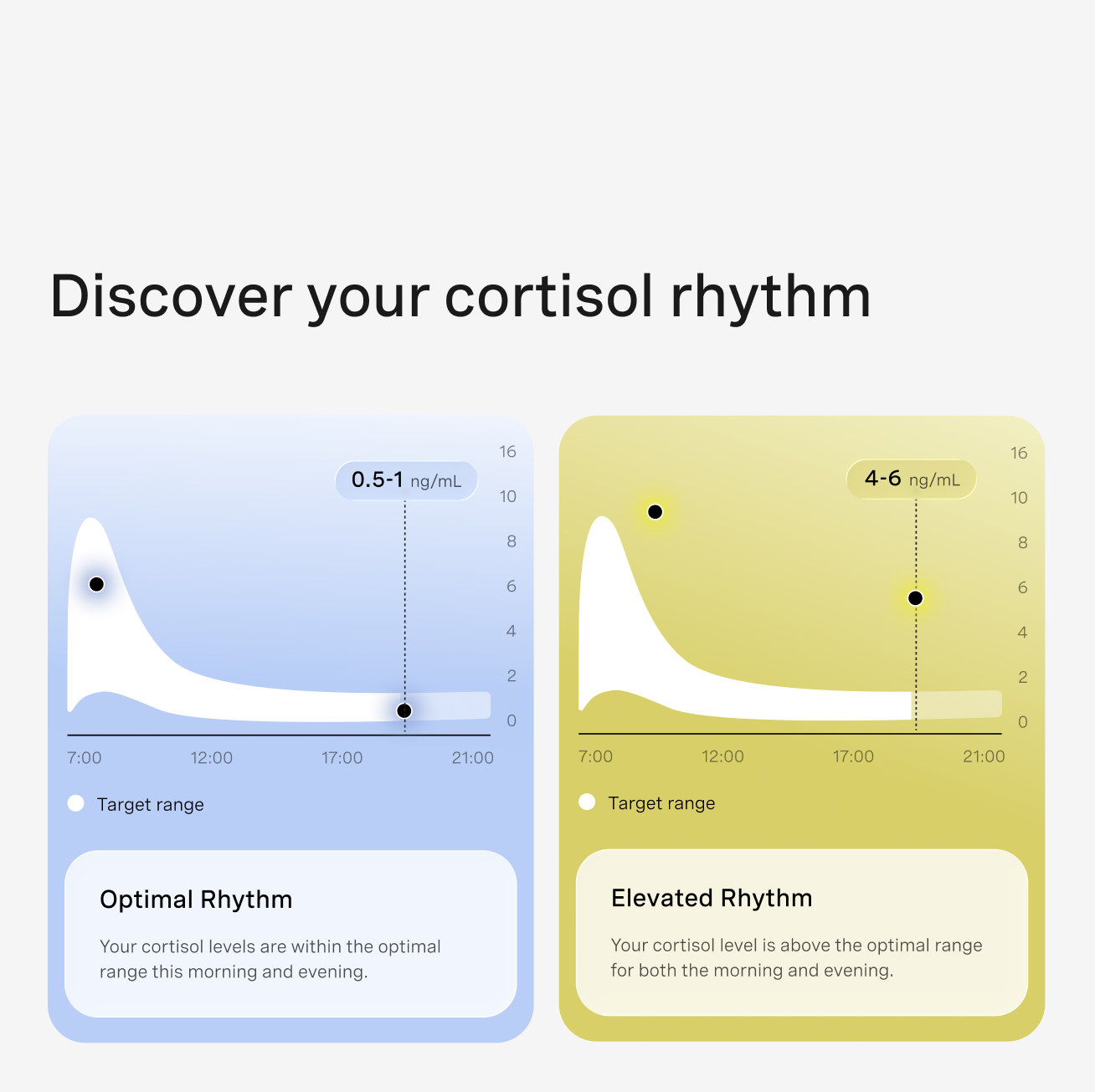
A healthy cortisol curve has a few key features: a sharp morning peak (rising ~50–75% above waking levels), a steady decline throughout the day, and evening values roughly 70–80% lower than morning levels.
Disrupted rhythms show recognizable patterns:11
-
Flattened curve: Morning and evening levels converge, linked to chronic stress and increased disease risk.
-
Blunted awakening response: A weak CAR suggests burnout or HPA dysfunction.
-
Elevated nighttime cortisol: Interferes with sleep and creates a cycle of further disruption.
-
Phase-shifted pattern: Peaks and troughs at unusual times, common after travel or shift work.
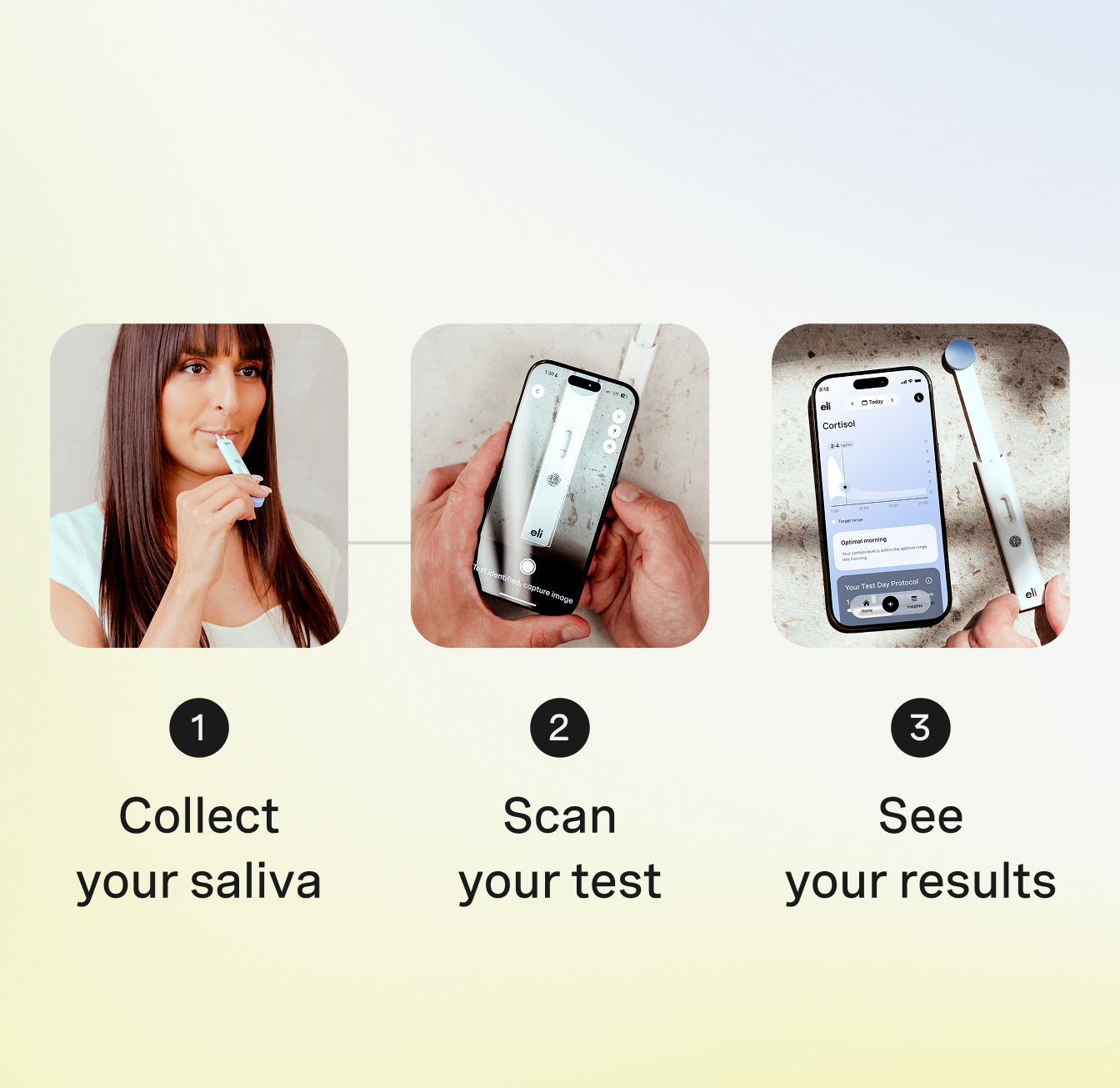
A single cortisol measurement tells you very little—the same value can be perfectly normal at 8am but concerning at 10pm. Tracking multiple time points throughout the day (upon waking, mid-morning, afternoon, and evening) lets you calculate your diurnal curve, measure your cortisol awakening response, and compare your pattern across days.
Tips to Support Circadian Alignment
Light is your most powerful tool. Get 15–30 minutes of natural light within an hour of waking. In the evening, dim your lights and reduce screen exposure 2–3 hours before bed—blue light from screens delays melatonin and keeps cortisol elevated.
Meal timing matters. Front-load calories earlier in the day when cortisol and insulin sensitivity are highest. Avoid eating within two or three hours of bedtime, which forces digestion during biological night.
Movement reinforces time-of-day cues. Morning or midday exercise supports a healthy cortisol peak and improves the diurnal slope. Vigorous activity within three hours of bedtime can delay cortisol decline and disrupt sleep onset.
Sleep consistency is foundational. Going to bed and waking at the same time every day—yes, even weekends—strengthens circadian entrainment and allows the HPA axis to properly reset overnight.
Stress management protects your rhythm. Daily relaxation practices like meditation or deep breathing have been shown to reduce evening cortisol by 10–15%. Clear boundaries between work and personal time prevent the chronic HPA activation that disrupts cortisol rhythms.
Bringing It All Together
Your circadian rhythm coordinates physiology with the environment, and cortisol is both an output of this system and a measurable indicator of its health. When your rhythm is aligned, you experience natural morning wakefulness, sustained daytime energy, and restful sleep. When misalignment occurs, the consequences show up across multiple systems.
Measuring your cortisol pattern transforms "random" fatigue or sleep problems into objective data—making the invisible visible, and giving you something concrete to act on.
1 Hastings, M. H., Maywood, E. S., & Brancaccio, M. (2018). Generation of circadian rhythms in the suprachiasmatic nucleus. Nature Reviews Neuroscience, 19, 453–469. https://doi.org/10.1038/s41583-018-0026-z
2 Tsuno, Y., & Mieda, M. (2024). Circadian rhythm mechanism in the suprachiasmatic nucleus and its relation to the olfactory system. Frontiers in Neural Circuits, 18, 1385908. https://doi.org/10.3389/fncir.2024.1385908
3 Gillette, M. U., & Sejnowski, T. J. (2005). Biological clocks coordinately keep life on time. Science, 309(5738), 1196–1198. https://doi.org/10.1126/science.1111420
4 Bowles, N. P., et al. (2022). The circadian system modulates the cortisol awakening response in humans. Frontiers in Neuroscience, 16, 995452. https://doi.org/10.3389/fnins.2022.995452
5 Chellappa, S. L., & Aeschbach, D. (2022). Sleep and circadian regulation of cortisol: A short review. Clinical and Translational Neuroscience, 6(1), 1–9.
6 Mavroudis, P. D., Corbett, S. A., Calvano, S. E., & Androulakis, I. P. (2022). Circadian rhythms and the HPA axis: A systems view. Wiley Interdisciplinary Reviews: Mechanisms of Disease, 14(1), e1518. https://doi.org/10.1002/wsbm.1518
7: Koshy, A., Cuesta, M., Boudreau, P., Cermakian, N., & Boivin, D. B. (2019). Disruption to the internal circadian clock during shift work: A field study. Sleep, 42(4), zsz020. https://doi.org/10.1093/sleep/zsz020
8 Vetter, C., et al. (2018). Night shift work, genetic risk, and type 2 diabetes in the UK Biobank. Diabetes Care, 41(4), 762–769. https://doi.org/10.2337/dc17-1933
9 McEwen, B. S. (2019). What is the confusion with cortisol? Chronic Stress, 3, 2470547019833647. https://doi.org/10.1177/2470547019833647
10 Reilly, T., & Edwards, B. (2007). Altered sleep-wake cycles and physical performance in athletes. Physiology & Behavior, 90(2–3), 274–284. https://doi.org/10.1016/j.physbeh.2006.09.017
11 Adam, E. K., et al. (2017). Diurnal cortisol slopes and mental and physical health outcomes: A systematic review and meta-analysis. Psychoneuroendocrinology, 83, 25–41. https://doi.org/10.1016/j.psyneuen.2017.05.018