Cortisol has a reputation problem. Most people think of it as the "stress hormone," something to lower, manage, or eliminate. But that framing misses the point entirely.
Cortisol is your body's first responder. When something demands your attention, a looming deadline, a difficult conversation, an early alarm, it mobilizes energy, sharpens focus, and prepares you to meet the moment. The problem isn't cortisol. The problem is what happens when the demand never stops, and the response never switches off.
Here's how it actually works, and how to recognize when a healthy stress response has crossed into something worth paying attention to.
What's actually happening in your body when you feel stressed
When your brain perceives a stressor, whether it's a physical threat or a full inbox, it triggers a chain reaction involving three key players: the hypothalamus, the pituitary gland, and the adrenal glands. This system is known as the HPA axis.¹
The hypothalamus sends a chemical signal to the pituitary, which in turn signals the adrenal glands (small glands sitting on top of your kidneys) to release cortisol into the bloodstream. Within minutes, cortisol is at work: raising blood glucose for fast energy, dialing down non-essential functions like digestion and immune activity, and keeping you alert and focused.¹
This is stress working exactly as it should. It's fast, targeted, and temporary.
Once the stressor passes, cortisol levels are supposed to return to baseline. The HPA axis has its own built-in feedback mechanism: rising cortisol signals the hypothalamus and pituitary to ease off, completing the loop.¹
In a healthy stress response, this whole cycle resolves within hours.
Acute stress vs. chronic stress: the key distinction
Not all stress is the same. The distinction that matters most for your cortisol rhythm is how long the demand lasts.
When stress is short-lived, cortisol does its job
A presentation you're nervous about. A hard workout. An unexpected problem you need to solve. These are acute stressors, real and time-limited demands that your body's stress response is built to handle.
In healthy adults, cortisol rises in response to the demand, peaks, and then declines once the situation has resolved.² If the cortisol awakening response (the natural morning surge that primes your body for the day) is functioning well, it also plays a role in preparing your system to handle these daily challenges.²
After acute stress, the HPA axis returns to its normal rhythm. Energy is restored, digestion resumes, immune function comes back online. Recovery happens.
When stress doesn't switch off, the rhythm pays the price
Chronic stress is different in kind, not just degree. It's not a single demanding situation. It's a sustained state of activation that doesn't give the HPA axis time to complete its feedback loop.¹
The sources vary: unrelenting work pressure, disrupted sleep, financial strain, relationship difficulty, or the background hum of ongoing uncertainty. What they share is persistence. The stressor doesn't resolve, so the cortisol response doesn't fully wind down.
Over time, this sustained activation begins to reshape the cortisol rhythm itself.³ The feedback mechanism that normally turns the stress response off becomes less efficient. What started as a healthy short-term reaction gradually becomes a baseline state.
How chronic stress disrupts your cortisol rhythm
The effects of chronic stress on cortisol don't always show up as a single dramatic spike. More often, they show up as a change in pattern. The shape of the daily rhythm shifts in ways that affect how you feel across the entire day.³
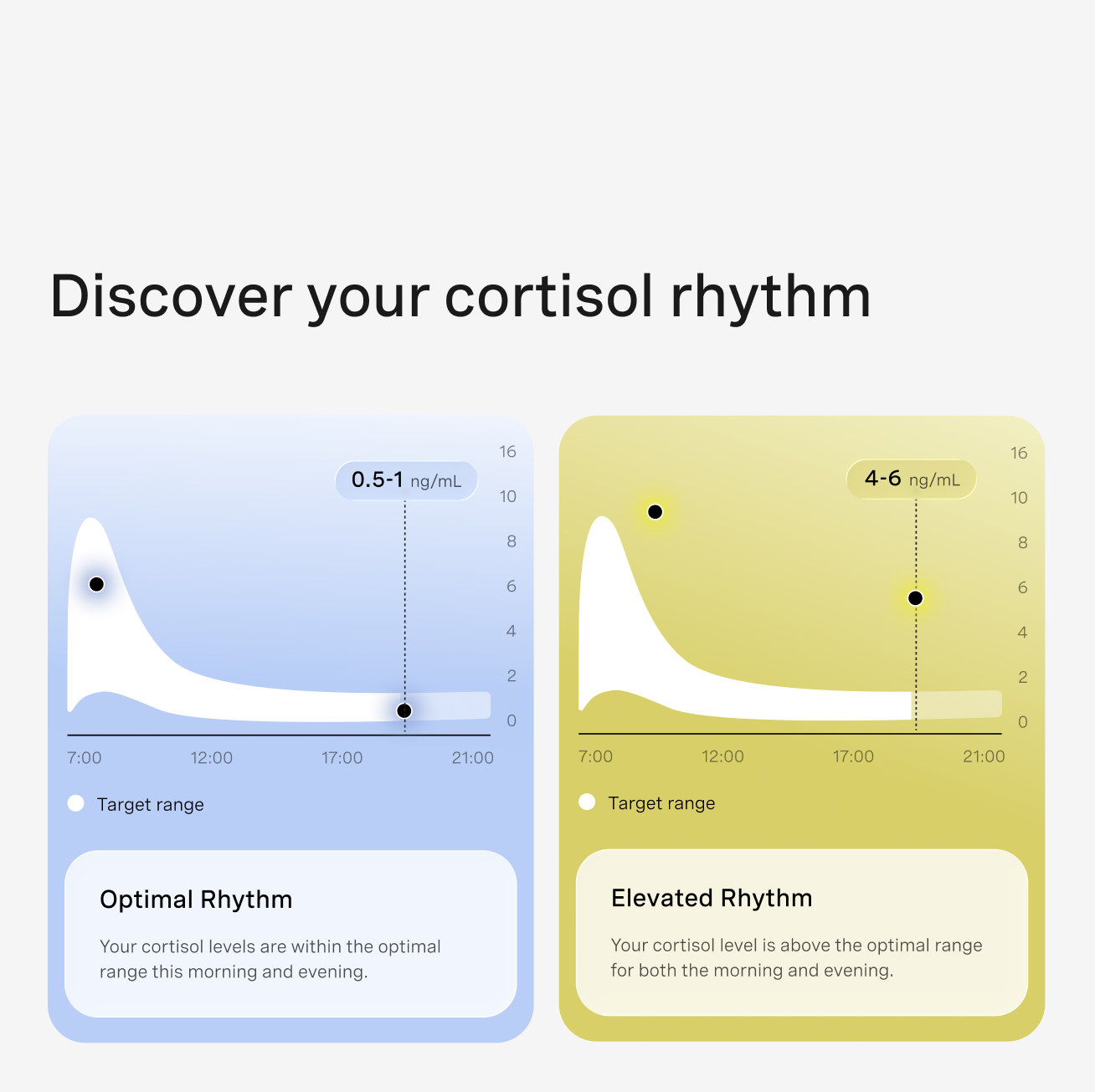
Common changes include cortisol that remains elevated in the evening when it should be tapering toward its low point, a blunted cortisol awakening response in the morning that leaves you starting the day without the energy surge you need, and a flatter overall curve that lacks the natural rise and fall that supports steady energy, mood, and focus.
These rhythm disruptions create a cascade of downstream effects: sleep becomes harder to come by (elevated evening cortisol competes with the hormones that signal wind-down), energy feels less reliable, mood regulation requires more effort, and recovery from both mental and physical demands takes longer.⁴
Importantly, the relationship runs in both directions. Chronic stress disrupts the cortisol rhythm, but a disrupted cortisol rhythm also makes it harder to manage stress, a cycle that can persist long after the original stressor has passed.¹
The part that's hard to self-assess
One of the most common assumptions about stress is that you can feel whether your cortisol is running high or low. In practice, this is only partly true.
Symptoms like fatigue, mood shifts, and disrupted sleep are real signals worth paying attention to. But two people experiencing similar levels of perceived stress can have very different cortisol patterns. Individual differences in HPA axis reactivity, sleep quality, physical activity, and other lifestyle factors all shape how the body actually responds.³ Salivary cortisol measures reflect these individual differences in ways that self-report alone cannot capture.⁴
This matters because the strategies that help someone with chronically elevated cortisol are different from those that help someone whose cortisol pattern has become depleted. Acting on symptoms alone, without knowing which direction the pattern has shifted, means guessing. Sometimes the guess is right. Often it isn't.
If you want to understand how your body is actually responding to the stress in your life, not just how it feels but what your rhythm is doing, measuring it is the most direct route.
Tracking your cortisol rhythm during stressful periods
The most useful information about your cortisol rhythm comes from testing at multiple points across the day: morning (to see the awakening response), afternoon (to track the midday decline), and evening (to check whether levels are dropping the way they should).
That kind of pattern data tells you things that symptoms can't: whether your morning peak is present and strong, whether your curve is declining normally or staying flat, and whether your evening cortisol has wound down enough to support restorative sleep.
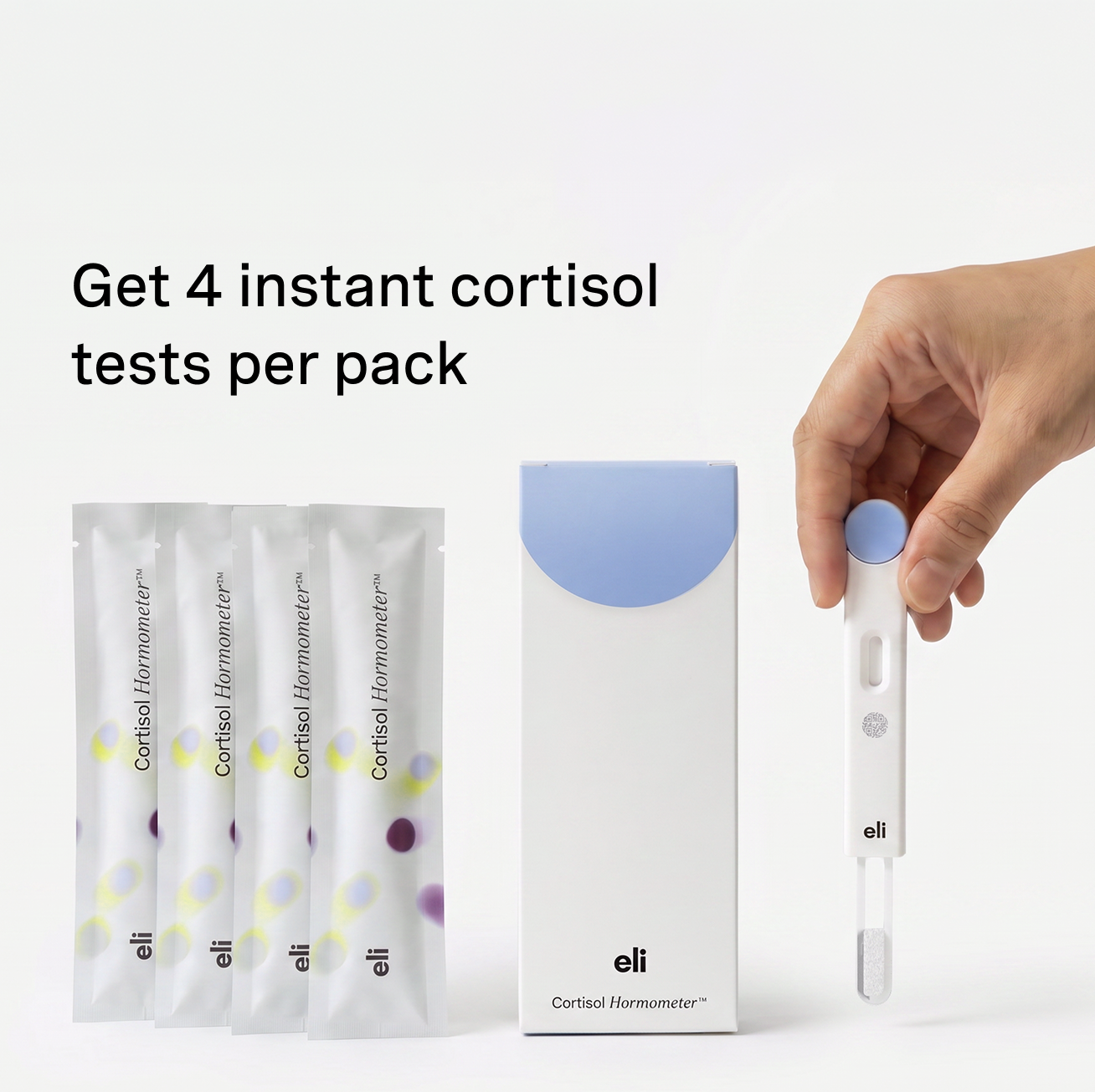
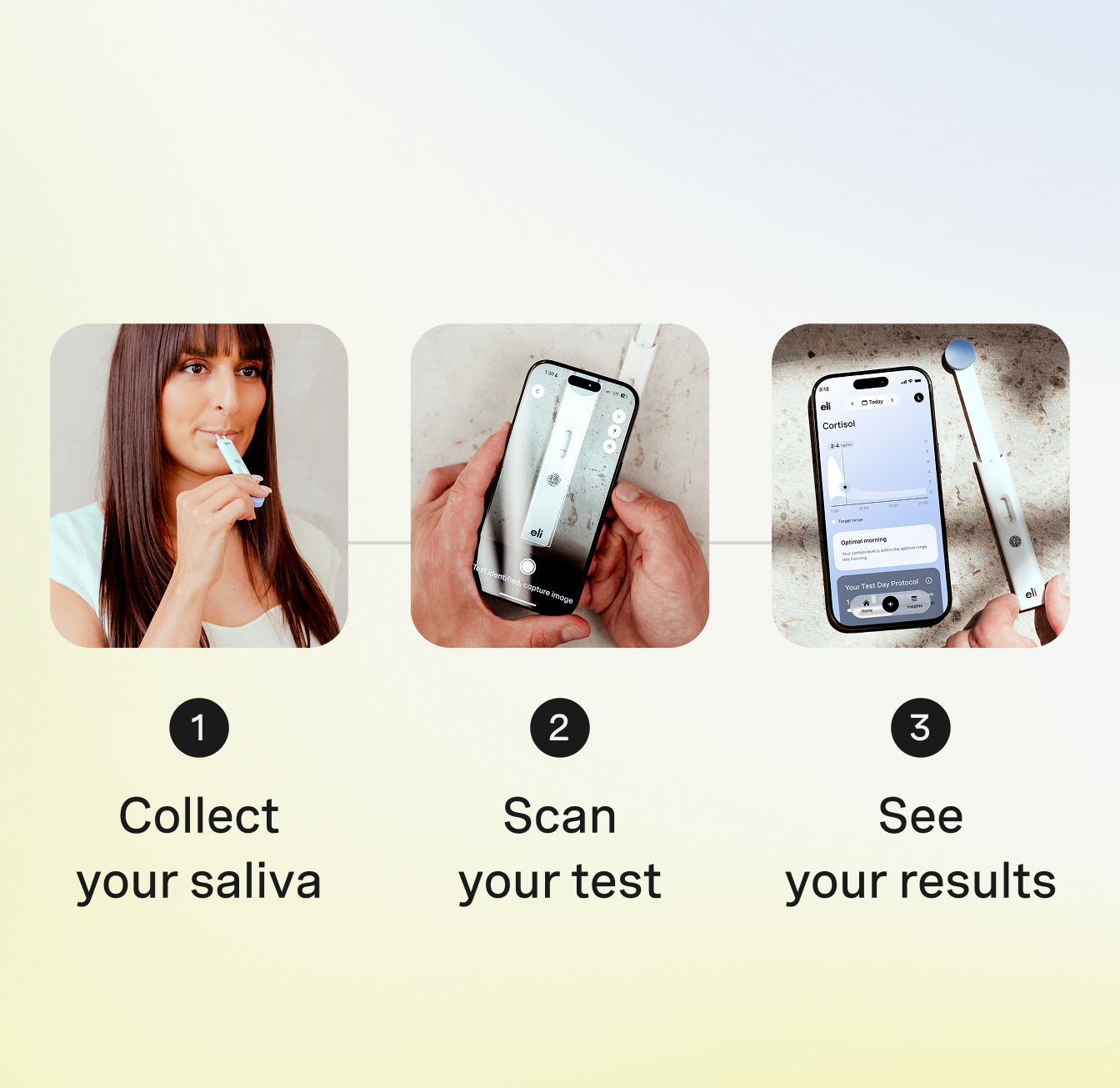
The Hormometer® delivers salivary cortisol results in 20 minutes via the Eli app. No lab, no mail-in. Test at the moments that matter and start building a picture of your actual rhythm, not an estimate of it.
The Hormometer® is a general wellness device. It is not a medical device and is not intended to diagnose, treat, or monitor any health condition.
→ Signs your cortisol may be out of balance
→ Saliva vs. blood cortisol tests: which one is right for you?
Frequently asked questions
Why does stress cause cortisol to rise? When the brain perceives a stressor, it activates the HPA axis: a signaling chain involving the hypothalamus, pituitary gland, and adrenal glands. The adrenal glands respond by releasing cortisol, which rapidly mobilizes energy, heightens alertness, and prepares the body to meet the demand.¹ In healthy adults, this response is designed to be short-term: once the stressor passes, cortisol levels return to baseline as the HPA axis completes its feedback loop.
What is the difference between acute and chronic stress on cortisol? Acute stress triggers a cortisol response that rises, peaks, and then resolves. The HPA axis returns to its normal rhythm within hours.² Chronic stress, by contrast, keeps the HPA axis in a sustained state of activation that prevents full recovery. Over time, this reshapes the daily cortisol pattern: the feedback mechanism becomes less efficient, the rhythm flattens or shifts, and the downstream effects on sleep, energy, and mood become harder to ignore.³
Can you have high stress but normal cortisol levels? Yes. Perceived stress and cortisol patterns don't always move in lockstep. Individual differences in HPA axis reactivity mean that two people with similar stress loads can have meaningfully different cortisol rhythms.⁴ Some people also show a blunted cortisol response to chronic stress rather than an elevated one, a pattern associated with prolonged exposure rather than acute reactivity. This is one of the reasons that measuring cortisol directly, rather than inferring it from symptoms, provides a more complete picture.
This article is for informational and educational purposes only. It is not intended as medical advice and does not constitute a diagnosis, treatment recommendation, or substitute for consultation with a qualified healthcare provider. If you have concerns about your cortisol levels or hormonal health, consult your doctor.
References
-
Knezevic, E., Nenic, K., Milanovic, V., & Knezevic, N. N. (2023). The Role of Cortisol in Chronic Stress, Neurodegenerative Diseases, and Psychological Disorders. Cells, 12(23). https://doi.org/10.3390/cells12232726
-
Nicolson, N. A., Peters, M. L., & In den Bosch-Meevissen, Y. M. C. (2020). Imagining a positive future reduces cortisol response to awakening and reactivity to acute stress. Psychoneuroendocrinology, 116, 104677. https://doi.org/10.1016/j.psyneuen.2020.104677
-
Wiley, J. W., Higgins, G. A., & Athey, B. D. (2016). Stress and glucocorticoid receptor transcriptional programming in time and space: Implications for the brain-gut axis. Neurogastroenterology and Motility, 28(1), 12–25. https://doi.org/10.1111/nmo.12706
-
Hellhammer, D. H., Wüst, S., & Kudielka, B. M. (2009). Salivary cortisol as a biomarker in stress research. Psychoneuroendocrinology, 34(2), 163–171. https://doi.org/10.1016/j.psyneuen.2008.10.026
-
McEwen, B. S. (2006). Sleep deprivation as a neurobiologic and physiologic stressor: Allostasis and allostatic load. Metabolism, 55(10 Suppl 2), S20–S23. https://doi.org/10.1016/j.metabol.2006.07.008