
Does sauna lower your cortisol?
Sometimes—but what you're seeing is usually cortisol returning to baseline.
The more important question is whether your cortisol actually needs lowering.
To know where to begin, start by measuring it.
As seen in


Sauna’s impact on cortisol.
Heat is a stressor: one session typically raises cortisol for 20-40 minutes before it comes back down. That's a temporary spike and return—it doesn’t mean your cortisol rhythm has shifted.
Regular sauna sessions can make those spikes smaller as your body reacts less to the same heat. That's a real change in how you respond to a stressor, but it isn't the same as a lower cortisol baseline.
Five things worth knowing before trying to lower your cortisol.
Most cortisol advice online skips straight to the fix.
Start here instead.
01
You can’t “feel” your exact cortisol levels.

Feeling exhausted at 3pm or wired at 11pm? These are signals worth taking seriously, but they don’t confirm if your cortisol is high or low. No single sensation points to a specific cortisol value. To find your patterns, you need to test and log how your results line up with how you feel.
02
Your cortisol should be high in the morning.
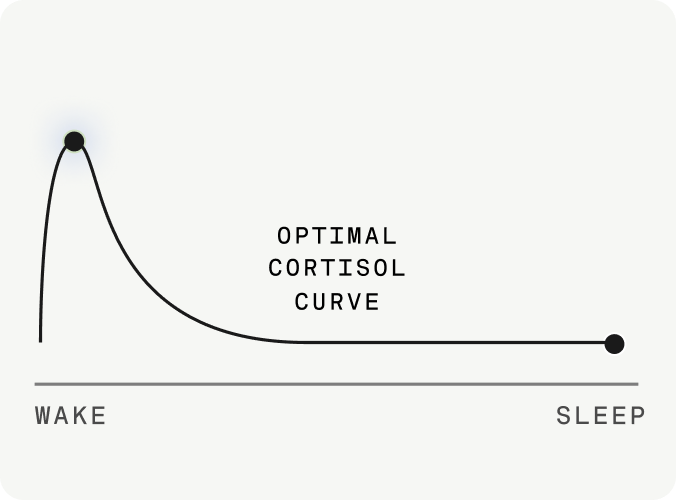
High cortisol isn’t always bad. In fact, within 30-45 minutes of waking, your cortisol should rise sharply. This is your cortisol awakening response (CAR.)
That rise has a purpose: it helps you get out of bed feeling energized. Without it, you start the day tired and flat.
03
Cortisol readings need context.
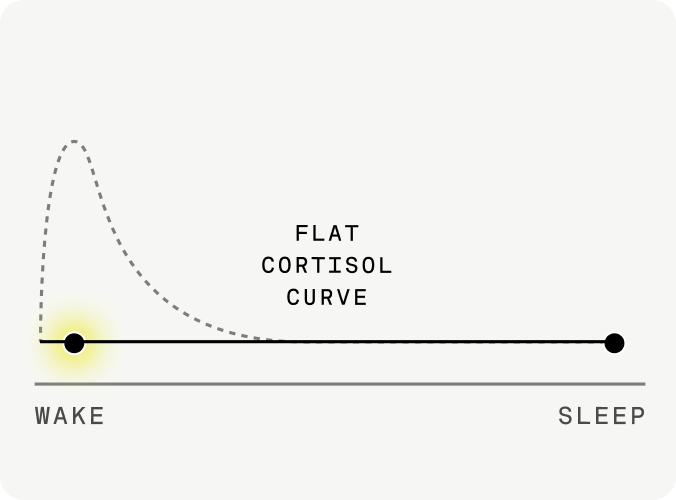
A value that’s normal at 7 a.m. can be out of range at 10 p.m. One number alone doesn't tell you much—your readings need timestamps to be properly interpreted.
04
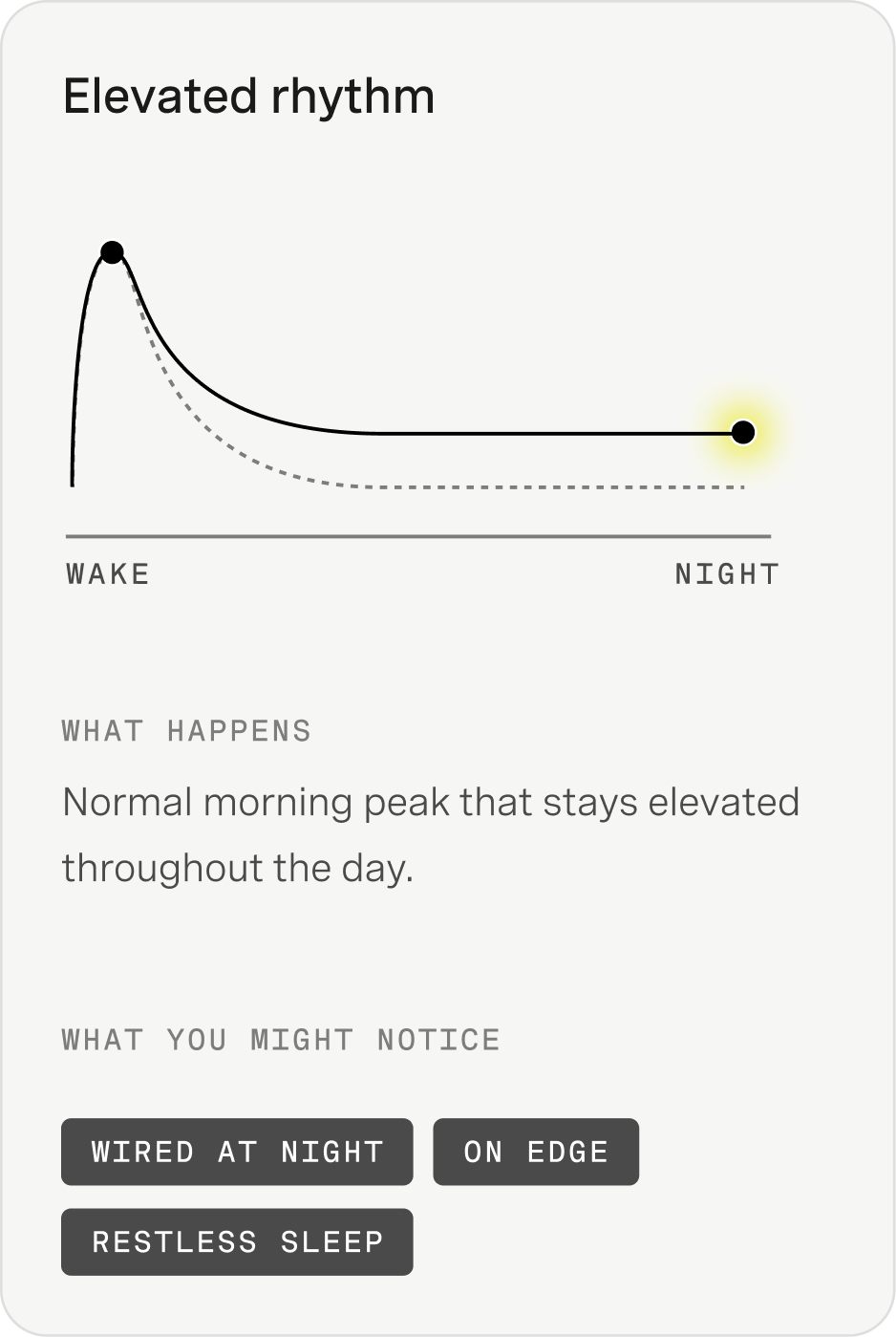
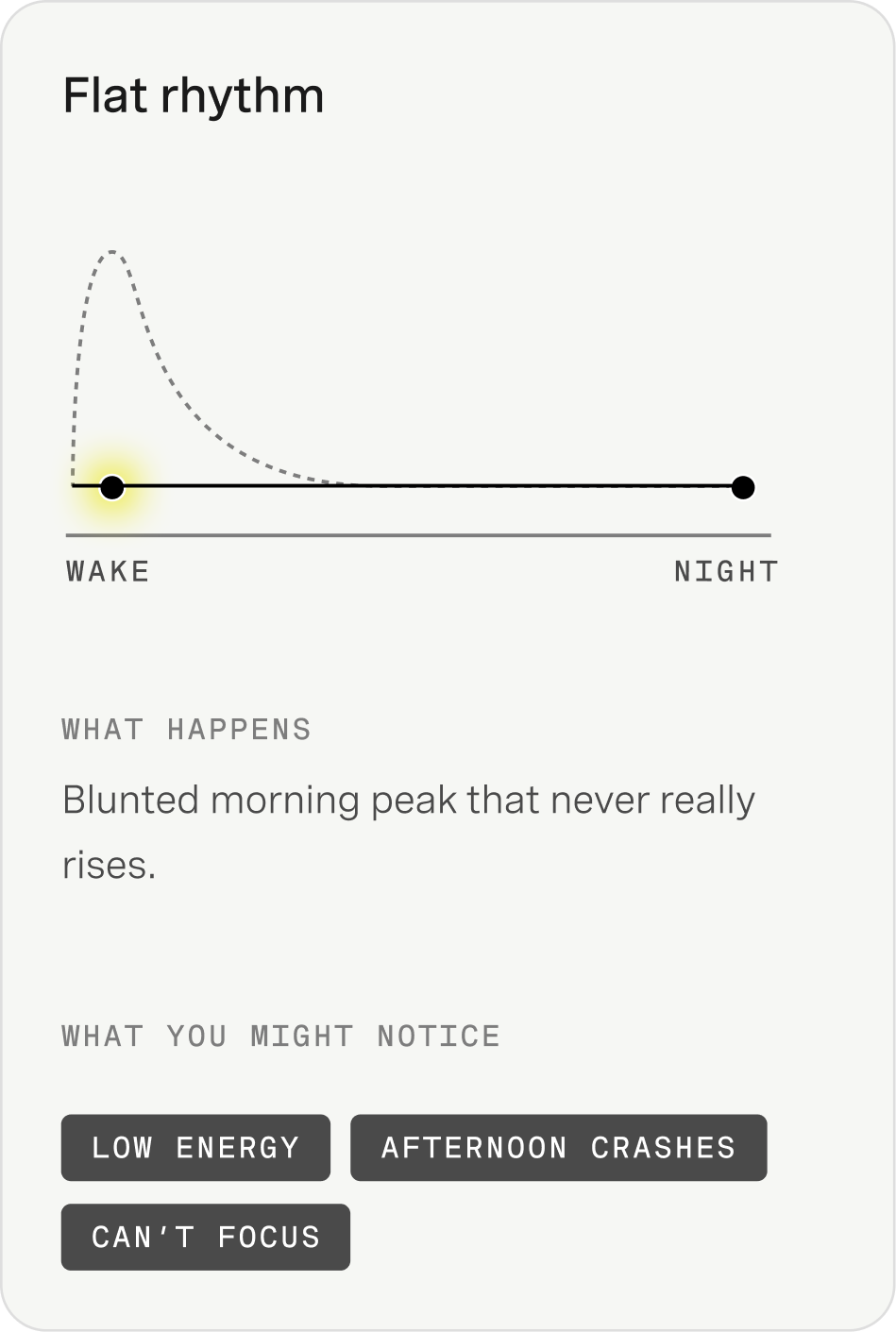
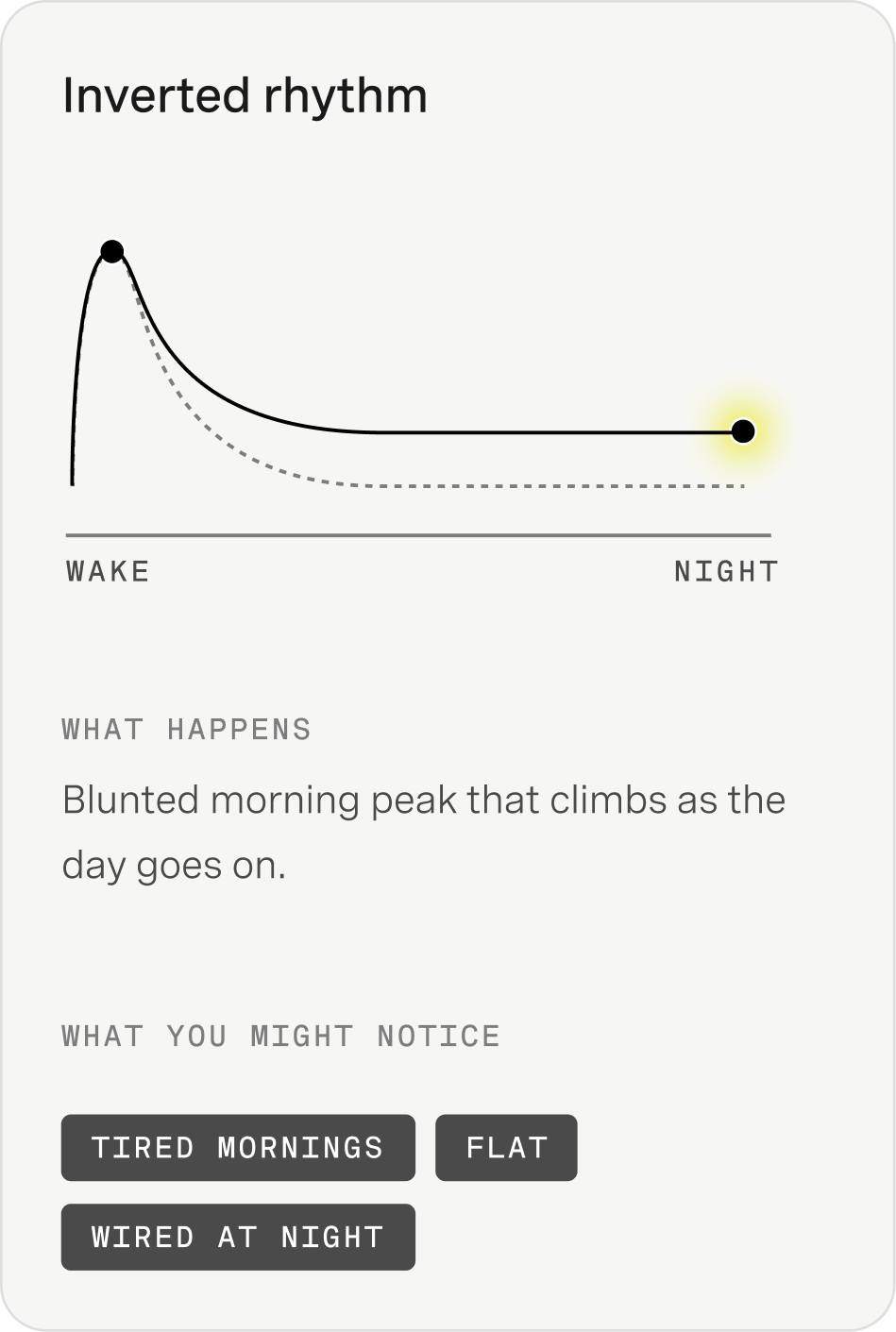
The shape of your rhythm is linked to how you feel.
What matters is the relationship between your morning and evening readings: the ratio between cortisol's daily high and low, how steeply it falls across the day, and how strongly it rises after you wake up.
05
Test first, then decide if sauna supports your goals.
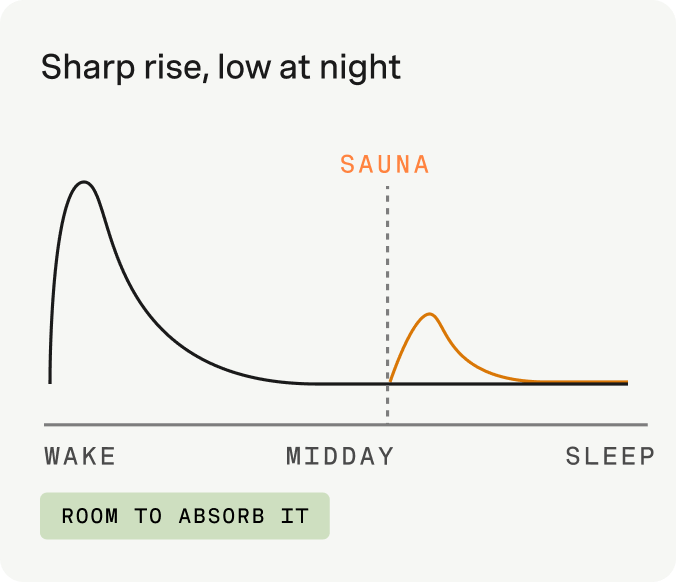
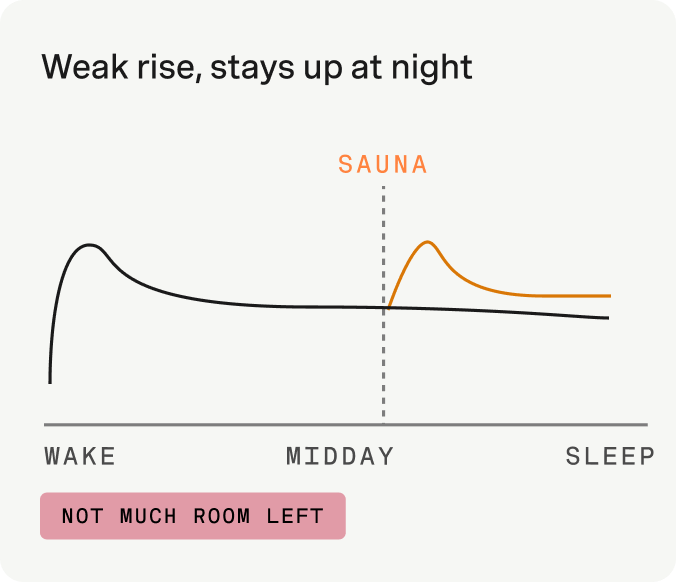
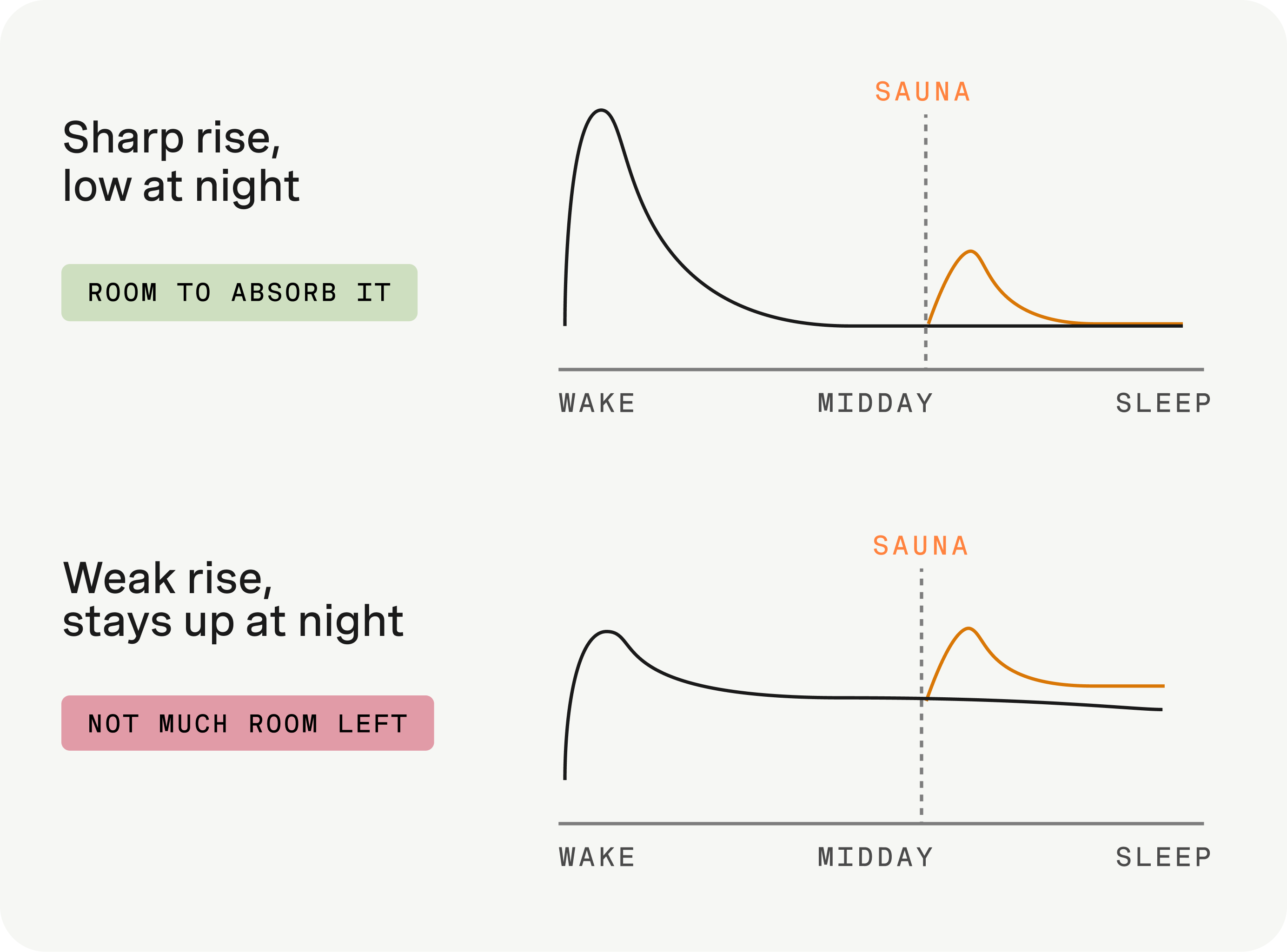
Sauna temporarily raises cortisol—your body's adaptation to that spike is the point. For someone whose rhythm is already in range, that can be useful. For someone with a flat rhythm, adding another stressor may not make sense.
Test first and find out what shape your rhythm is in. Once you know, you can decide how often sauna belongs in your routine.
Without a baseline, you're trying to track changes in your stress response with nothing to compare them against.
FIND YOUR BASELINE
8 tests • $22.37 per test
Turn guessing into actionable data.
Testing once gives you a snapshot.
Testing regularly shows how your baseline changes over time.

Build your baseline.
Establish what normal looks like for you.
- Test 1: within an hour of waking
- Test 2: between 5-11 p.m.
Repeat for several days.
Try one change.
Add one intervention (a sauna session) and see how your cortisol responds.
- Test 1: within an hour of waking
- Test 2: right before the session
- Test 3: 30-60 min. after the session
- Test 4: between 5-11pm.
Log what you felt and how your rhythm shifted.
Identify adaptations.
Repeat Phase 2 a few weeks later and compare your results.
- Is the post-session rise smaller?
- Is your evening reading lower?
- Is your daily rhythm steeper?
Spreading your tests across a few weeks is what separates real changes in your rhythm from off days.
Find out what your cortisol is really doing.
1 month
8 tests • $17.32 per test
Enough to map your baseline rhythm and test one change
Free shipping on your first order
Choose this if you're new to tracking your cortisol.
3 months
24 tests • $11.61 per test — 49% less
3x the data, at the lowest per-test price
Free onboarding call with an Eli team member to read your first rhythm.
Free shipping every 6 months
Choose this if you're ready to track your cortisol regularly.
We stand behind every test.

Test replacement guarantee. If your test doesn't produce a readable result, we'll replace it.
Pause, adjust, or cancel at anytime. Complete control of your plan.
The Eli difference.
Dr. Fady Hannah-Shmouni, MD, DABIM, AHSCP, FRCPC
Eli Health Medical Director: leader in endocrinology and longevity medicine for 15 years.
Internal Medicine, Endocrinology & Genetics · Longevity Docs member
Skip the wait: results in minutes.
step 01
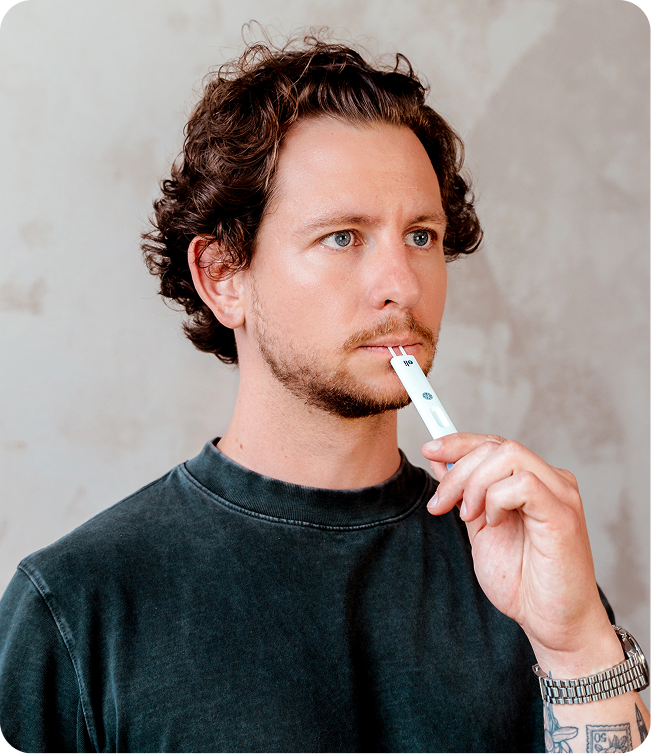
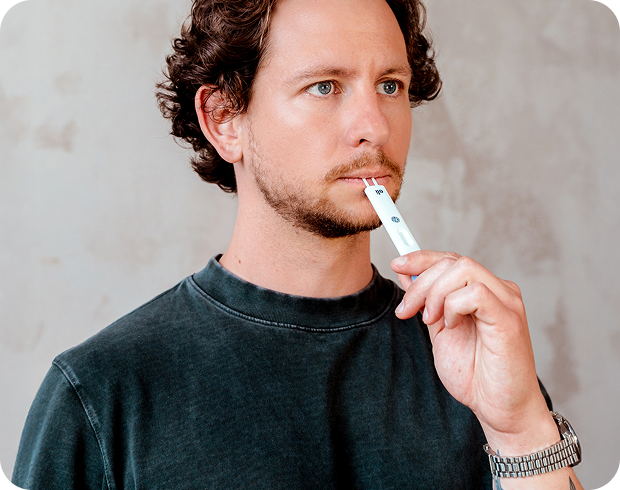
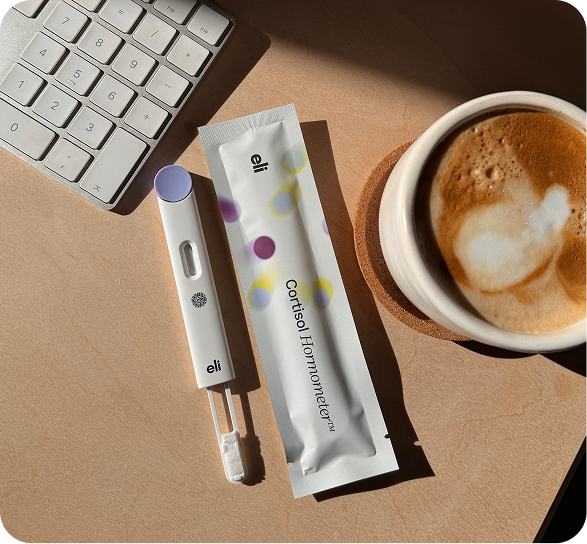
Collect your saliva.
Saliva contains dozens of unbound hormones including cortisol.
step 02
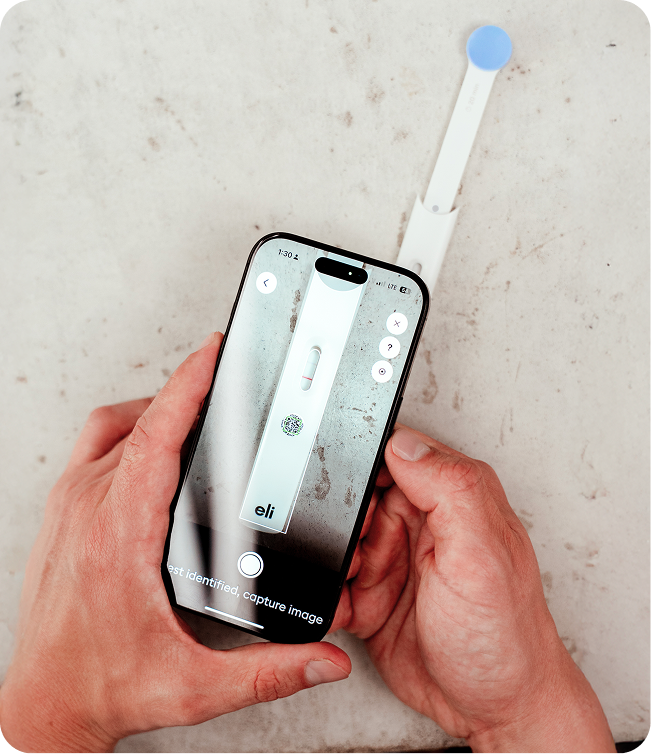
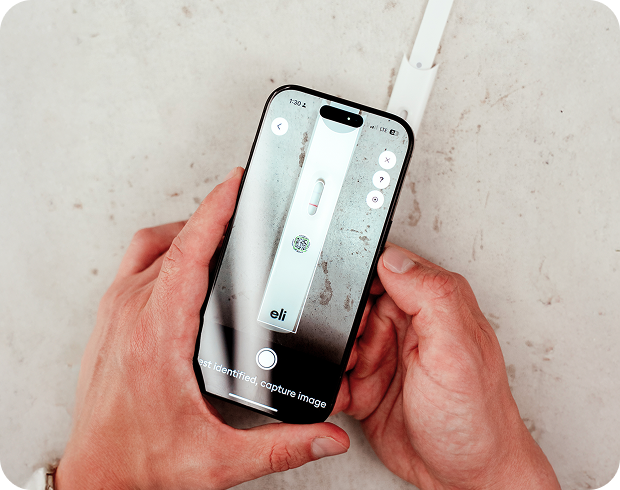
Scan in your test.
The Eli app uses AI computer vision to analyze your test.
step 03
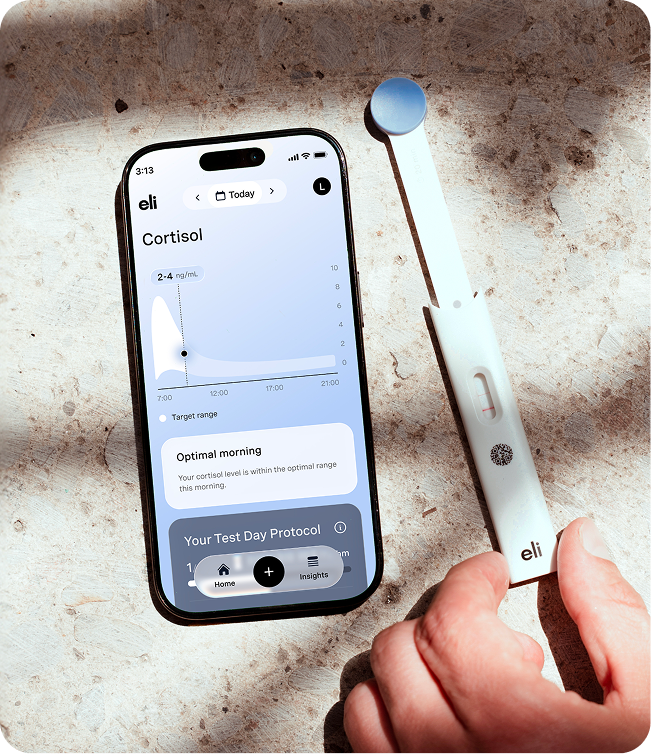
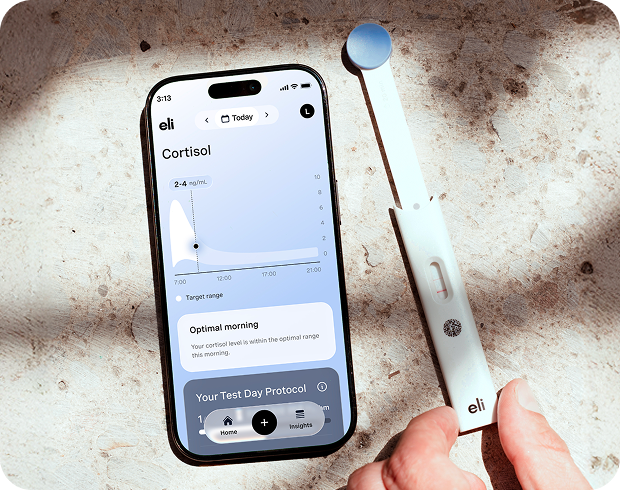
Visualize your data.
See what moves your cortisol rhythm and get personalized tips on how to improve it.
Proudly built in North America.
10,000+
Hormone-curious users tracking their cortisol with Eli.
250,000+
Tests manufactured in-house in North America.








How Eli helps users navigate their health.
Meaghan Praznik
Ironman competitor
“Easy to use tests and I exported the data and shared with my doctor as part of my health care plan.”
Lee L.
Verified customer
“Thanks to Eli, I gained a better understanding of my cortisol and what may be contributing to spikes. The valuable insights helped me have a more informed conversation with my doctor. Having access to this information has given me greater confidence in managing my health.”
Gabriella
Verified customer
The most awarded cortisol test.

CES 2025
Best of innovation

Fast Company
Best Health + Wellness Design 2025

Canyon Ranch
Wellness Gold List 2026
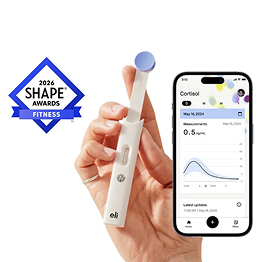
Shape
Best Cortisol Testing App

HLTH 2025
Best of innovation

Wareable 2025
Wearable Digital Health

Digital Health 2025
Digital Health Awards
4.7

Customer reviews reflect individual experiences with wellness tracking. The Hormometer™ is not intended to diagnose, treat, or screen for any medical condition.