Cortisol is one of the most studied hormones in the human body—and one of the most misunderstood. If you've started looking into how to test your cortisol levels, you've probably noticed that there are several options: a blood test ordered by a doctor, a 24-hour urine collection, a mail-in saliva kit, or an instant at-home saliva device like the Hormometer®. They all measure cortisol, but they don't all measure the same thing—and those differences matter more than most people realize.
This article explains how each method works, what each one is designed to tell you, and how to decide which type of testing fits your goals.
Why the testing method matters
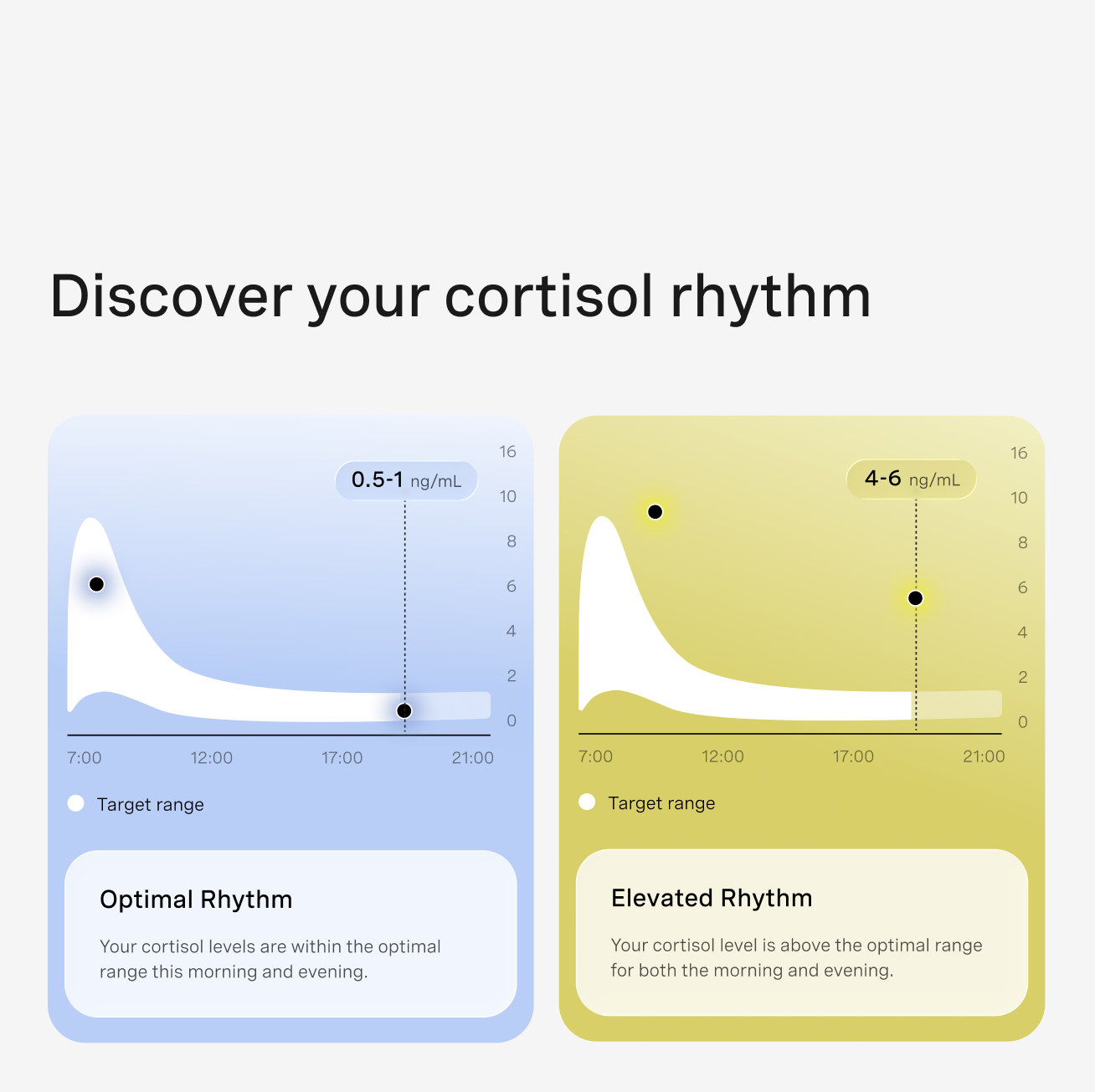
In healthy adults, cortisol typically follows a consistent daily rhythm—rising in the first 30 to 45 minutes after waking, peaking in the early morning, then gradually declining through the afternoon and evening. This pattern, known as the diurnal cortisol curve, reflects how the body regulates the stress response across the day (Pruessner et al., 1997).
A single measurement—taken once, at one point in time—captures a snapshot of that curve. Depending on when the sample is taken and what question you are trying to answer, that snapshot can be exactly what you need, or only part of the picture. This is why when and how cortisol is measured changes what the test can tell you.
There is also a fundamental biological difference between the methods. Blood tests often measure total cortisol—both the cortisol that is bound to proteins in the bloodstream and the fraction that is free. Saliva tests measure free cortisol: the biologically active portion that is not protein-bound and is therefore available to act on the body's cells and tissues.
Multiple decades of research have established that free cortisol in saliva closely reflects the physiologically active fraction in blood. Foundational work by Kirschbaum and Hellhammer (1994) validated the salivary method, and subsequent reviews—including Hellhammer et al. (2009) and Kudielka & Wüst (2010)—have confirmed salivary cortisol as a well-validated marker for assessing the body's stress response in healthy populations.
How blood cortisol testing works
When a healthcare provider orders a cortisol blood test, a blood draw is performed—typically in the morning, when cortisol is naturally at its highest. The sample is sent to a certified clinical laboratory, where the total cortisol concentration in the serum is measured against established reference ranges.
Blood cortisol testing is the gold standard in clinical medicine for evaluating cortisol-related hormonal conditions. It provides a precise, standardized measurement of total cortisol that physicians use to screen for conditions such as adrenal insufficiency, which is associated with low cortisol. These reference ranges have been validated over decades of clinical use and are recognized across medical institutions worldwide (Aardal & Holm, 1995).
Blood testing is most commonly performed in a clinical setting, but mail-in fingerprick blood collection kits are also available through certain services, allowing users to collect a small blood sample at home and mail it to a laboratory for analysis. Whether drawn in a clinic or collected at home, the sample is processed in the same way—measured against the same standardized reference ranges.
Because blood testing relies on controlled protocols and established reference ranges, it gives physicians a reliable, reproducible value to work with when assessing a patient's hormonal health. For this purpose, it is the established standard of care.
How saliva cortisol testing works
Salivary cortisol testing is not a new technology. It has been used in psychoneuroendocrinology research for decades, with foundational studies published in the early 1990s establishing that free cortisol in saliva correlates reliably with the physiologically active fraction in blood (Kirschbaum & Hellhammer, 1994; Hellhammer et al., 2009). In clinical medicine, salivary cortisol also has an established diagnostic role: late-night salivary cortisol is one of three recognized first-line screening tests for Cushing's syndrome, alongside the 1mg overnight dexamethasone suppression test and 24-hour urinary free cortisol measurement. Morning blood cortisol, by contrast, has more limited clinical applications, primarily in ruling out adrenal insufficiency. These clinical protocols are performed in controlled environments under medical supervision, using validated laboratory methods and established reference thresholds. Consumer wellness devices like the Hormometer® operate in an entirely different context: they are designed to support everyday cortisol awareness and general wellness habits, and are not intended to screen for, diagnose, or monitor any medical condition.
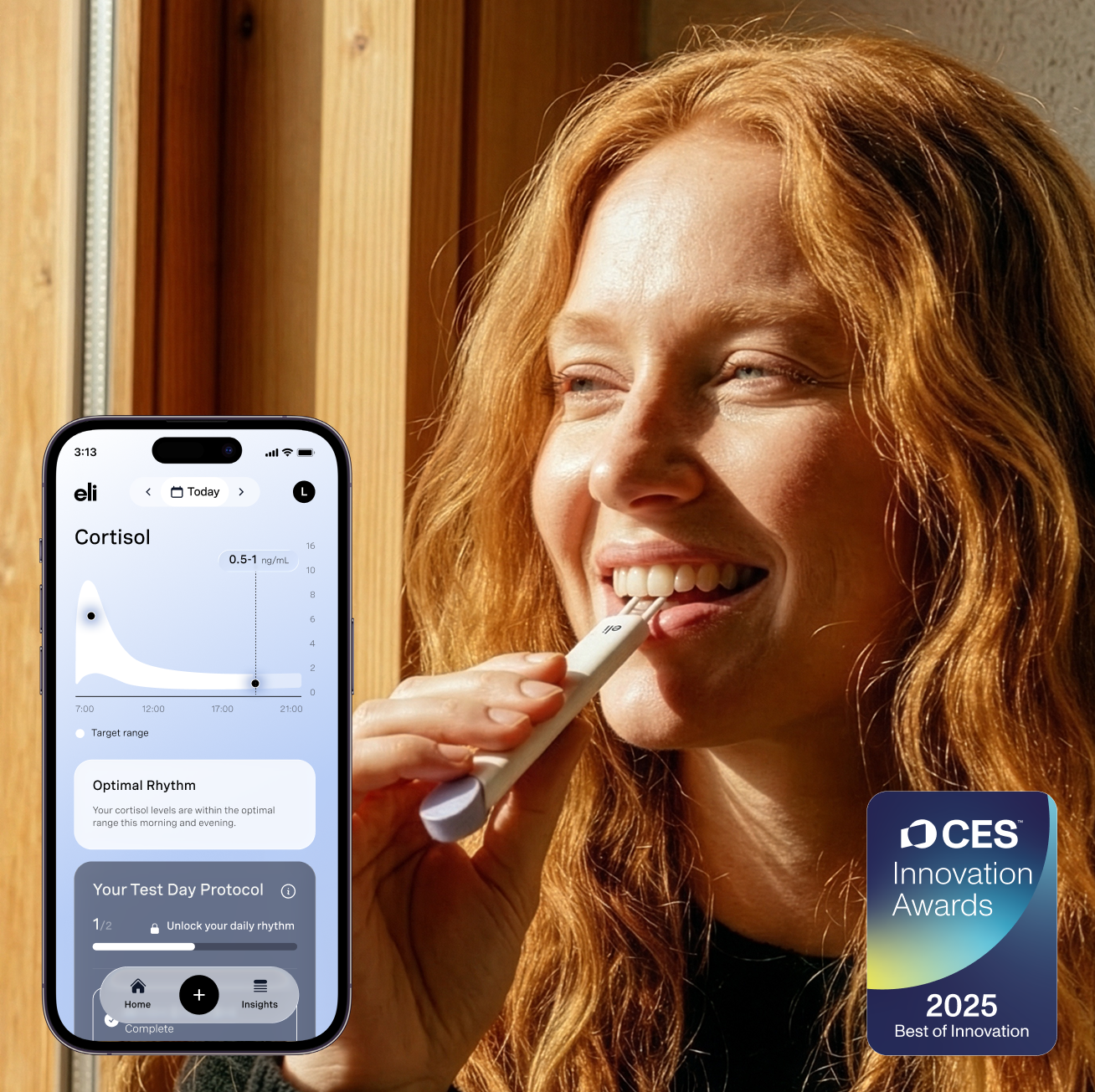
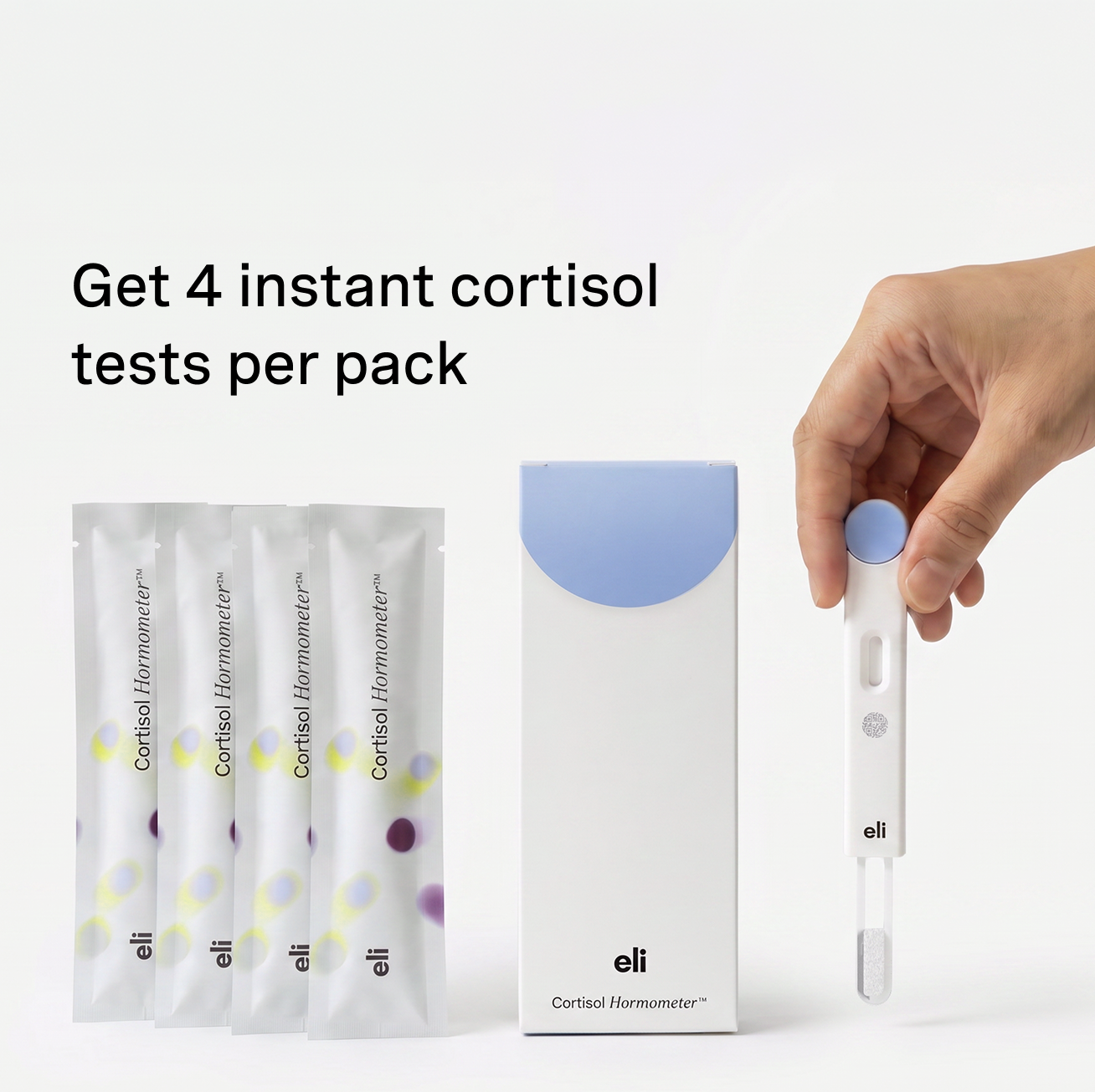
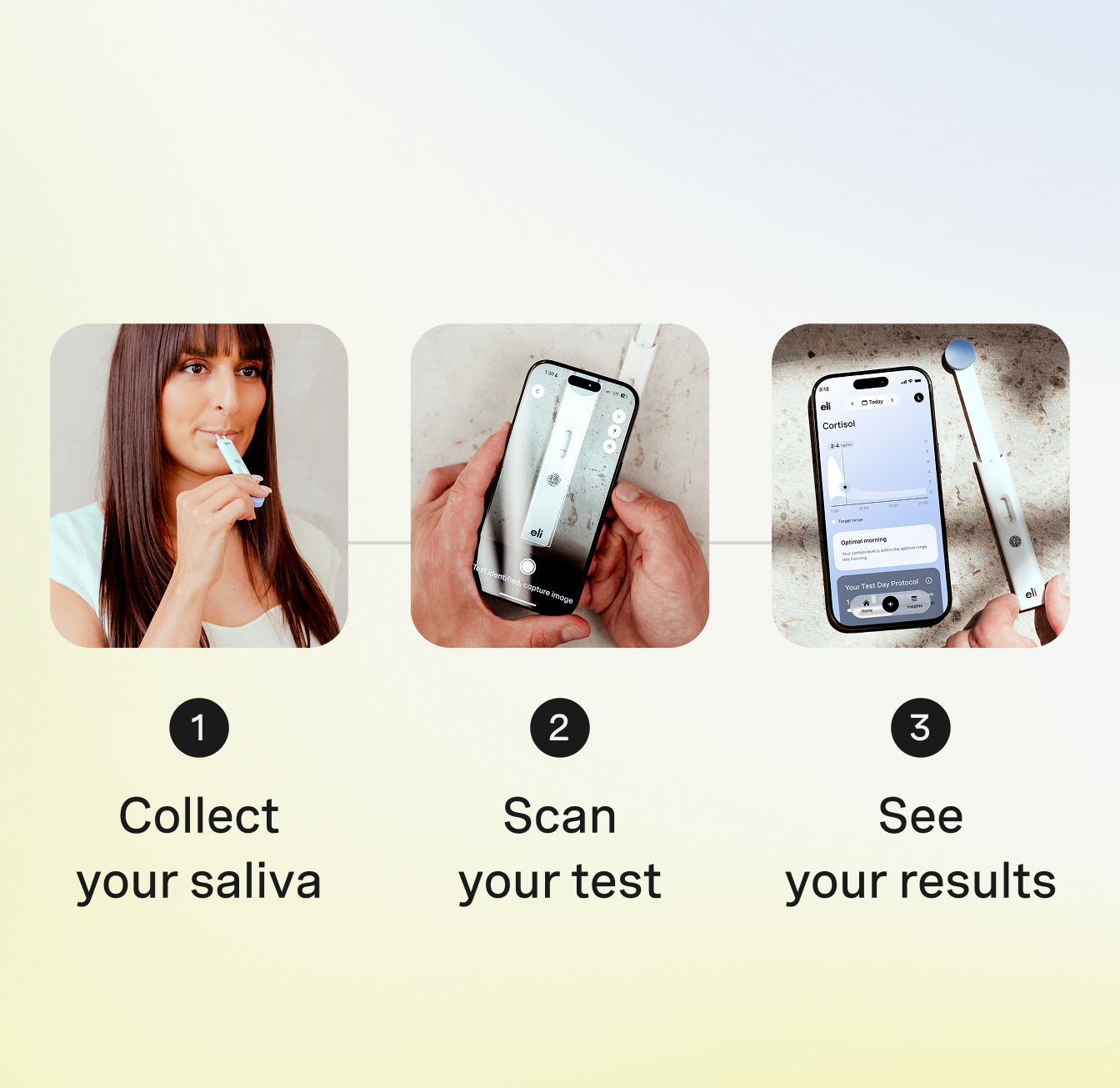
Salivary cortisol testing is used across a range of settings: in research labs and clinical environments where collection timing is controlled by trained staff, through mail-in kits where users collect samples at home and send them to a laboratory, and via instant at-home devices like the Hormometer®, which process the sample on the spot and return results within approximately 20 minutes.
The mechanics of saliva collection are straightforward: a sample is collected using a swab or tube at a specific time of day. Because cortisol passes freely from the bloodstream into saliva, the concentration in saliva reflects free cortisol levels in real time—without the need for a needle.
The particular strength of saliva testing lies in its ability to capture multiple data points across the day. A well-designed saliva cortisol protocol typically includes samples collected at wake, 30 minutes after waking, midday, and evening. Together, these four measurements map the full diurnal curve and capture a clinically meaningful marker called the cortisol awakening response (CAR)—the sharp rise in cortisol that occurs in the first 30 to 45 minutes after waking (Pruessner et al., 1997).
Kudielka and Wüst (2010) note that salivary cortisol collection is the standard approach for large-scale and longitudinal studies of cortisol patterns precisely because it can be performed across multiple time points, in both controlled and everyday conditions.
What mail-in saliva tests miss: the timing problem
Mail-in cortisol kits have made salivary testing more widely accessible. The user collects samples at home, packages them, and mails them to a laboratory for analysis.
The limitation of mail-in kits is not the testing method itself—it is the timing data.
Expert consensus guidelines from Stalder, Kirschbaum, Kudielka, Pruessner, Wüst and colleagues (2015)—a collaboration of more than a dozen leading researchers in the field—specify that accurate CAR measurement requires samples taken immediately upon waking and at precisely timed intervals. Research has shown that delays as small as 5 to 15 minutes between waking and the first sample can meaningfully affect CAR calculations (Clow et al., 2012). In mail-in protocols, collection times are typically self-reported by the user—introducing a source of variability that affects the reliability of the diurnal curve calculation.
The Hormometer® is a general wellness device—it is not intended to diagnose, treat, or monitor any medical condition. With the Hormometer®, each saliva sample is scanned at the point of collection and automatically timestamped. This supports a more accurate picture of your personal cortisol rhythm as part of an everyday wellness routine, without the need for laboratory processing or self-reported timing.
Head-to-head: all cortisol testing methods compared
Each method measures cortisol accurately—for the purpose it was designed for. The right choice depends on the question you are trying to answer.
| Blood test (clinical) | Blood test (mail-in fingerprick) | Saliva test (lab/clinical) | Saliva test (mail-in) | Instant saliva test (Hormometer®) | |
|---|---|---|---|---|---|
| What it measures | Total cortisol (bound + free) | Total cortisol (bound + free) | Free (bioavailable) cortisol | Free (bioavailable) cortisol | Free (bioavailable) cortisol |
| Primary purpose | Clinical hormonal screening | Clinical hormonal screening | Research & clinical monitoring | Daily pattern monitoring | Daily pattern monitoring (non-medical) |
| Setting | Clinical — lab or hospital | At home, processed by lab | Lab or clinical environment | At home, processed by lab | At home |
| Sampling | Single standardized time point | Single time point | Multiple samples, staff-controlled | Multiple samples, self-collected | Multiple samples, self-collected |
| Captures diurnal pattern | Not its intended purpose | Not its intended purpose | Yes — timing controlled by staff | Yes — timing self-reported | Yes — timing auto-recorded |
| Timing precision | Clinician-controlled | Self-collected, lab-processed | Staff-controlled | Self-reported by user | Automatic timestamp at scan |
| Time to results | Hours to days | Days (postal + lab processing) | Hours to days | Days (postal + lab processing) | ~20 minutes |
| Validated for | Clinical disease screening | Clinical disease screening | HPA axis research & monitoring | HPA axis monitoring | HPA axis monitoring |
For clinical screening—when a physician needs to assess whether cortisol levels fall within a medically significant range—FDA-approved blood testing, urine free cortisol, and late-night salivary free cortisol are used in clinical practice.
For daily pattern monitoring—tracking the cortisol awakening response, mapping the diurnal curve, and observing cortisol trends in everyday conditions—salivary testing is the approach validated in research. Bhagwagar and colleagues (2003) confirmed that salivary cortisol provides valid measures of HPA axis activity suitable for repeated ambulatory assessment. Among salivary options, lab and clinical settings offer staff-controlled timing; instant at-home devices like the Hormometer® bring that same timing precision into everyday use, with results in approximately 20 minutes.
When to choose saliva testing
Saliva testing is well-suited if your goal is to understand how your cortisol levels move across the day—tracking your rhythm over time rather than obtaining a single clinical reference value.
It is a particularly good fit if:
You want to map your cortisol awakening response—the morning cortisol surge that reflects how your stress system activates each day
You are monitoring chronic stress patterns over time, such as sustained high cortisol in the morning or a blunted diurnal curve
You are tracking how lifestyle factors—sleep, exercise, workload—affect your cortisol rhythm week to week
Kudielka and colleagues (2012) describe repeated salivary cortisol testing as the recommended approach for monitoring HPA axis patterns in healthy populations outside clinical settings—the method best aligned with continuous, pattern-based cortisol insight.
If you also want results today — instant at-home testing
If you want to go further—collecting at home on your own schedule and getting results the same day—instant at-home testing is the option best suited to that goal. With the Hormometer®, you collect your samples at home, scan each one at the point of collection, and receive results within approximately 20 minutes. The timestamp of each sample is recorded automatically, ensuring your diurnal curve and CAR are calculated from precisely timed data rather than self-reported estimates. This makes it the only at-home salivary option that combines the timing precision of a controlled lab protocol with the convenience of same-day results.
When to choose a blood test
Blood cortisol testing is the right choice when you are working with a physician to evaluate your hormonal health in a clinical context.
A blood test is the appropriate path when:
Your doctor wants to screen for a hormonal condition such as adrenal insufficiency
You need results that integrate into your medical record as part of a clinical workup
A physician has ordered the test as part of a broader hormonal panel
Blood testing and saliva testing are complementary tools. They address different questions, and knowing which question you are asking is the first step to choosing the right method. If you have concerns about a possible hormonal condition, consult your healthcare provider.
If you prefer testing from home — mail-in blood kits
If a clinical blood draw isn't convenient but you still need a total cortisol measurement, mail-in fingerprick blood kits are an option. You collect a small blood sample at home using a lancet, package it, and mail it to a laboratory. The sample is processed against the same standardized clinical reference ranges used in a clinic setting. Results typically return within a few days of the lab receiving the sample. This option is best suited for situations where a physician has recommended a blood cortisol measurement but a clinic visit is not immediately feasible.
Frequently asked questions
Is saliva cortisol testing as accurate as a blood test?
They measure different things, so accuracy depends on the goal. Blood testing is the clinical standard for measuring total cortisol against established medical reference ranges—it is the right tool for clinical hormonal screening. Saliva testing is well-validated for measuring free (bioavailable) cortisol and tracking the daily cortisol pattern. For monitoring cortisol rhythms and the cortisol awakening response, salivary testing is the method used in research precisely because it can capture multiple time points across the day (Kudielka & Wüst, 2010). The two approaches answer different questions and are best understood as complementary.
Can I test my cortisol at home?
Yes—both blood and saliva testing have at-home options. Mail-in fingerprick blood kits allow you to collect a small blood sample at home and send it to a laboratory. Mail-in saliva kits work the same way for salivary cortisol. Instant at-home saliva devices like the Hormometer® go a step further: you collect the sample, scan it, and have results within approximately 20 minutes—no shipping required. It is worth noting that saliva testing is also widely used in laboratory and clinical settings, where collection timing can be controlled by trained staff for research or clinical purposes.
What time of day should I collect a cortisol sample?
Timing is critical for accurate results. A complete cortisol profile typically requires four samples: immediately upon waking, 30 minutes after waking, midday, and evening. The first two samples are particularly important—they capture the cortisol awakening response, which peaks within 30 to 45 minutes of waking (Pruessner et al., 1997). Expert consensus guidelines specify that even a delay of 5 to 15 minutes before the first sample can affect the accuracy of the CAR measurement (Stalder et al., 2015; Clow et al., 2012).
What is the difference between free cortisol and total cortisol?
Most cortisol in the bloodstream is bound to proteins—primarily cortisol-binding globulin (CBG). This bound cortisol is biologically inactive. Free cortisol is the small fraction that is not protein-bound and is therefore available to act on cells and tissues throughout the body. Blood tests measure total cortisol (bound + free). Saliva tests measure free cortisol—the biologically active fraction. Research by Kirschbaum and Hellhammer (1994) established that salivary free cortisol is a reliable indicator of the body's active cortisol response.
How long does it take to get cortisol test results?
It depends on the method. Blood cortisol tests—whether drawn in a clinic or collected via a mail-in fingerprick kit—are processed in a laboratory and typically return results within hours to a few days. Mail-in saliva kits require several days to a week, accounting for shipping time and laboratory processing. With an instant at-home device like the Hormometer®, results are available within approximately 20 minutes of scanning the sample—no shipping, no waiting.
References
Aardal, E., & Holm, A. C. (1995). Cortisol in saliva: reference ranges and relation to cortisol in serum. European Journal of Clinical Chemistry and Clinical Biochemistry, 33(12), 927–932.
Bhagwagar, Z., Hafizi, S., & Cowen, P. J. (2003). Increase in concentration of waking salivary cortisol in recovered patients with depression. American Journal of Psychiatry, 160(10), 1890–1891.
Clow, A., Thorn, L., Evans, P., & Hucklebridge, F. (2012). Delays of 5–15 min between awakening and the start of saliva sampling matter in assessment of the cortisol awakening response. Psychoneuroendocrinology, 38(6), 1001–1007.
Hellhammer, D. H., Wüst, S., & Kudielka, B. M. (2009). Salivary cortisol as a biomarker in stress research. Psychoneuroendocrinology, 34(2), 163–171.
Kirschbaum, C., & Hellhammer, D. H. (1994). Salivary cortisol in psychoneuroendocrine research: recent developments and applications. Psychoneuroendocrinology, 19(4), 313–333.
Kudielka, B. M., Gierens, A., Hellhammer, D. H., Wüst, S., & Schlotz, W. (2012). Salivary cortisol in ambulatory assessment — some dos, some don'ts, and some open questions. Psychosomatic Medicine, 74(4), 418–431.
Kudielka, B. M., & Wüst, S. (2010). Human models in acute and chronic stress: Assessing determinants of individual hypothalamus-pituitary-adrenal axis activity and reactivity. Stress, 13(1), 1–14.
Pruessner, J. C., Wolf, O. T., Hellhammer, D. H., Buske-Kirschbaum, A., von Auer, K., Jobst, S., & Kirschbaum, C. (1997). Free cortisol levels after awakening: a reliable biological marker for the assessment of adrenocortical activity. Life Sciences, 61(26), 2539–2549.
Stalder, T., Kirschbaum, C., Kudielka, B. M., Adam, E. K., Pruessner, J. C., Wüst, S., ... & Clow, A. (2015). Assessment of the cortisol awakening response: expert consensus guidelines. Psychoneuroendocrinology, 63, 414–432.
This article is for informational and educational purposes only. It does not constitute medical advice and is not intended to diagnose, treat, cure, or prevent any disease or health condition. If you have concerns about your cortisol levels or hormonal health, consult a qualified healthcare provider.