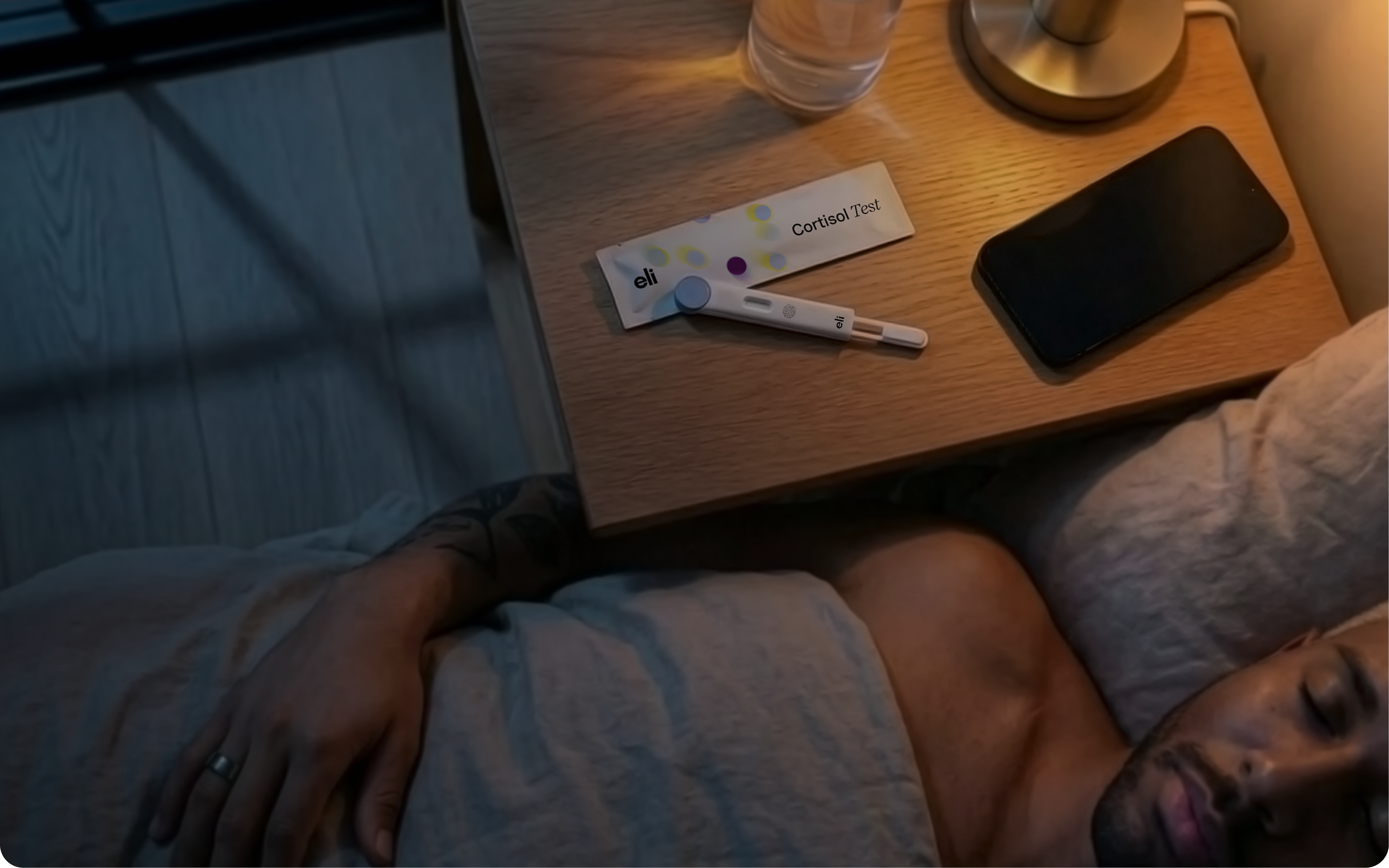
Poor sleep often starts with an imbalanced cortisol rhythm.
Here’s how disrupted cortisol affects sleep + recovery.


SLEEP DISRUPTION
You’re exhausted despite enough rest.


SLEEP ONSET
You’re tired, but you just
can’t fall asleep.


RECOVERY
You wake up foggy,
no matter how long you sleep.
Here’s how disrupted cortisol affects sleep + recovery.


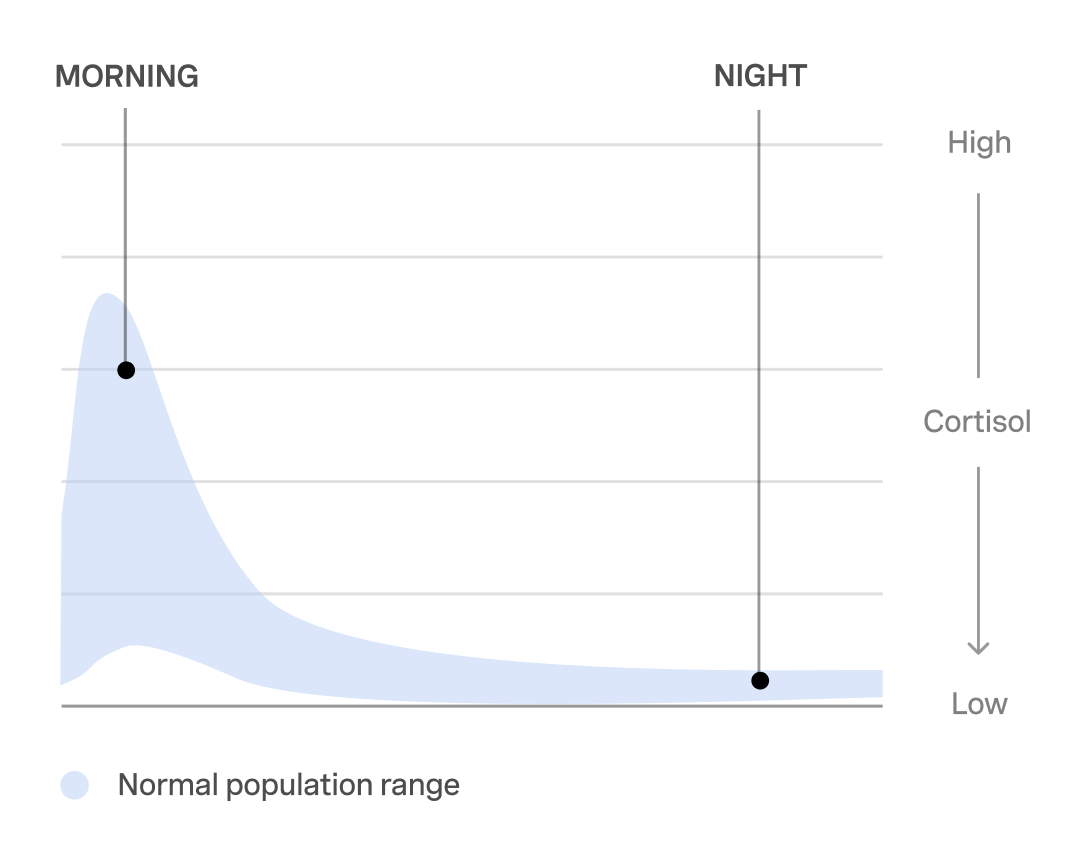
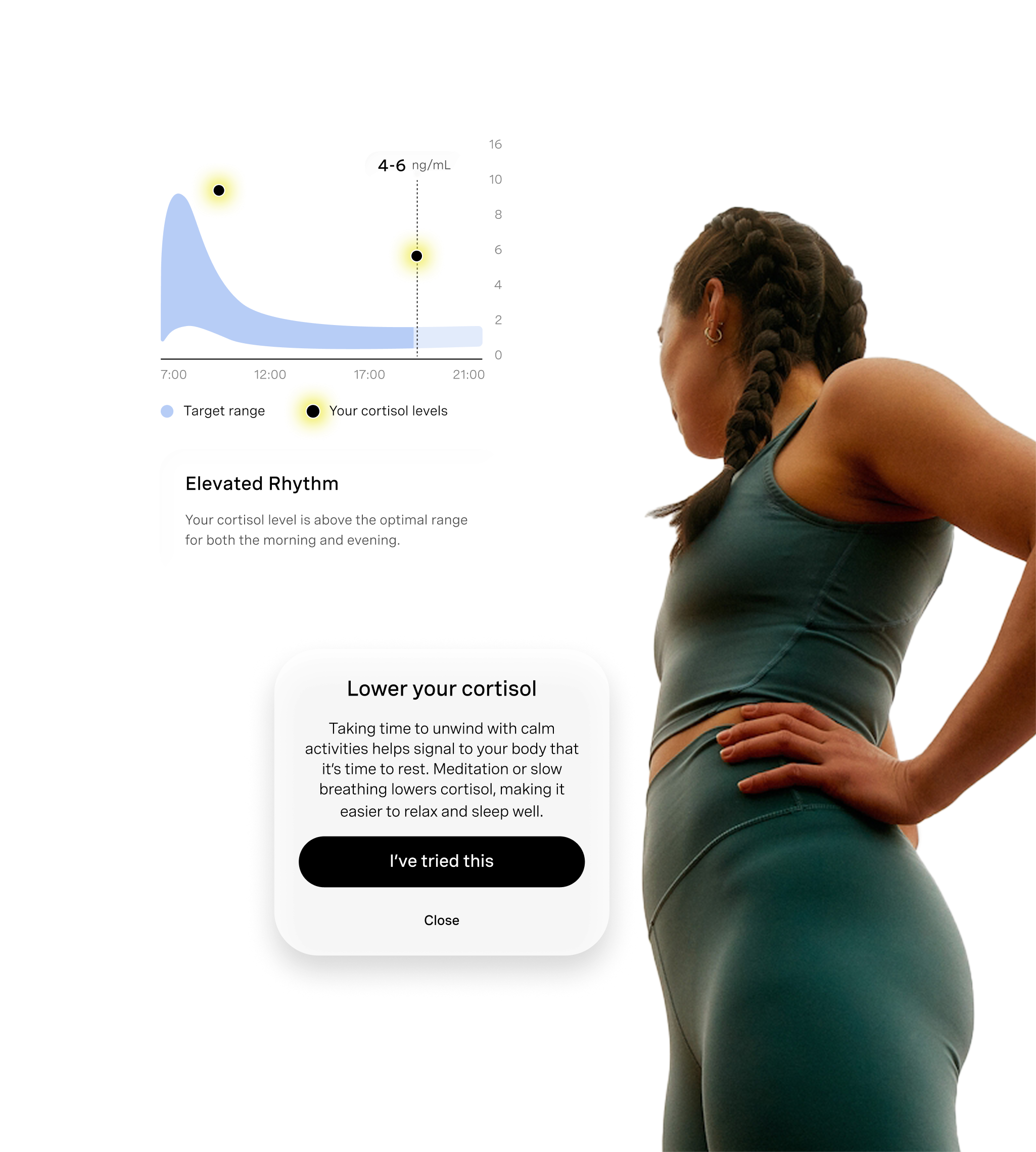
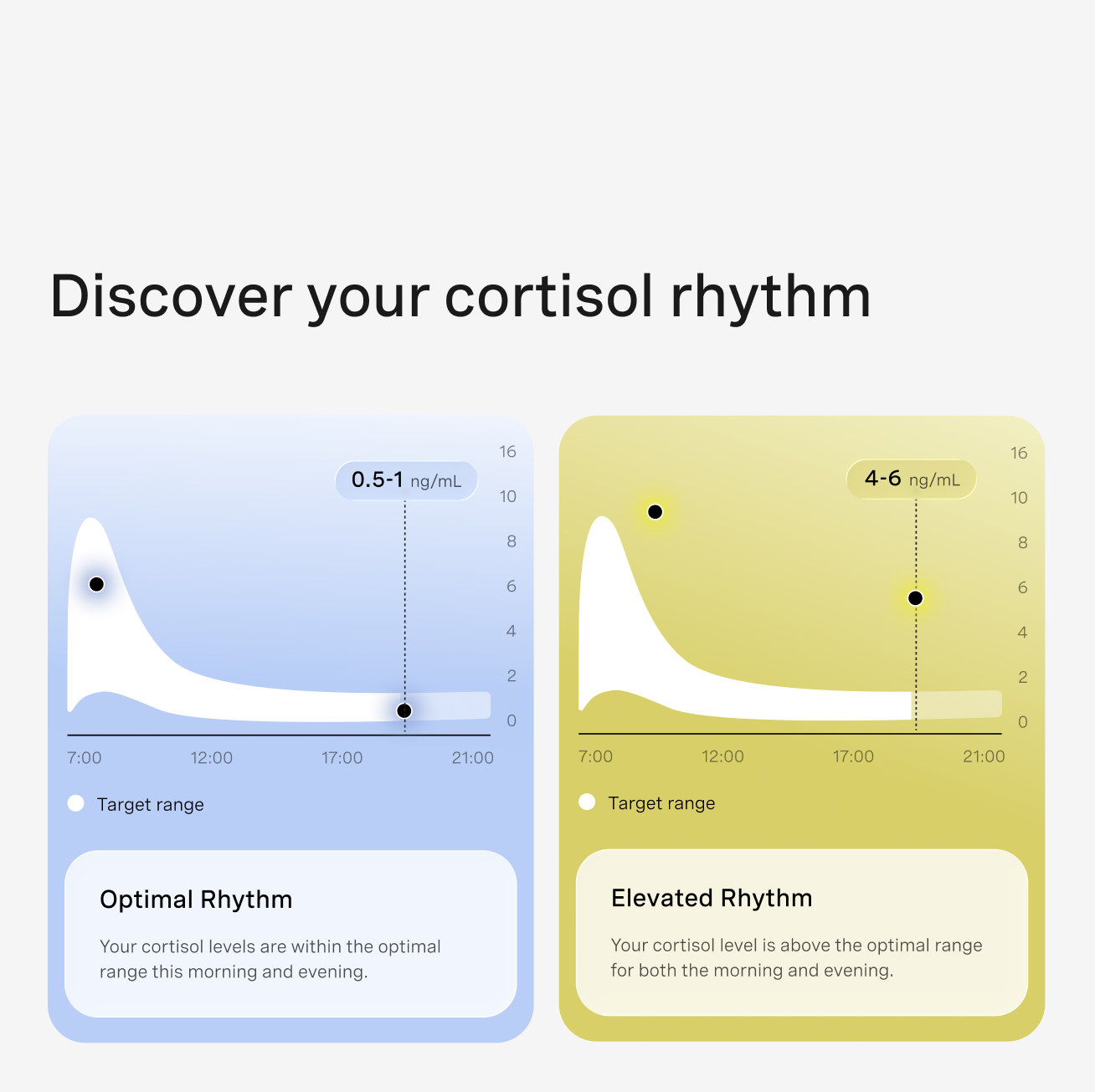
How your cortisol rhythm should move each day.
A balanced cortisol rhythm follows a pattern: it peaks in the morning to help you feel alert and drops by evening, preparing your body for sleep.
But when cortisol stays elevated, your body can’t wind down, leaving you feeling tired and wired.
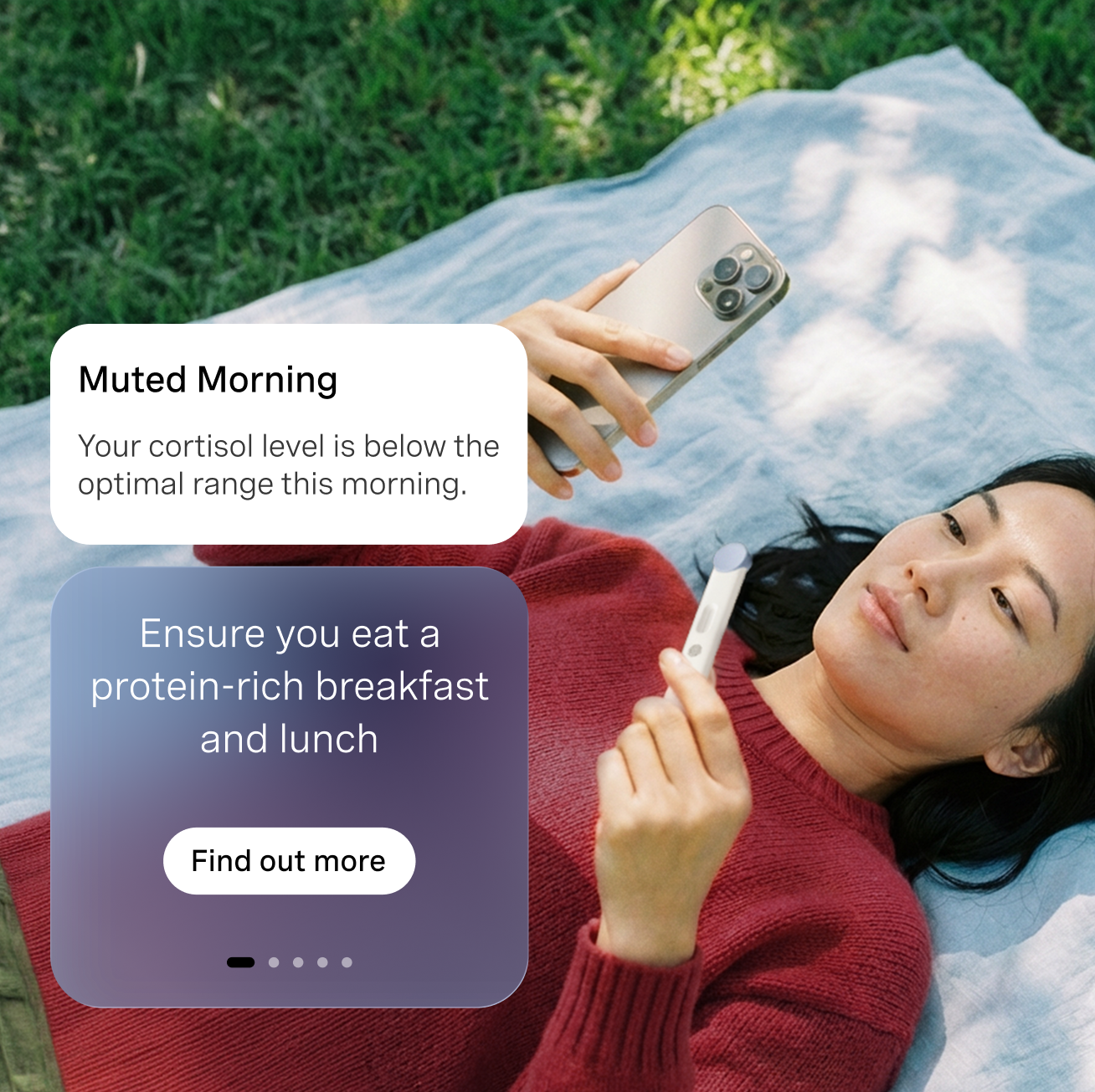
This can affect your mornings, too: when cortisol doesn’t rise adequately, you might struggle to wake up and feel ready for the day.
Cortisol affects more than sleep.

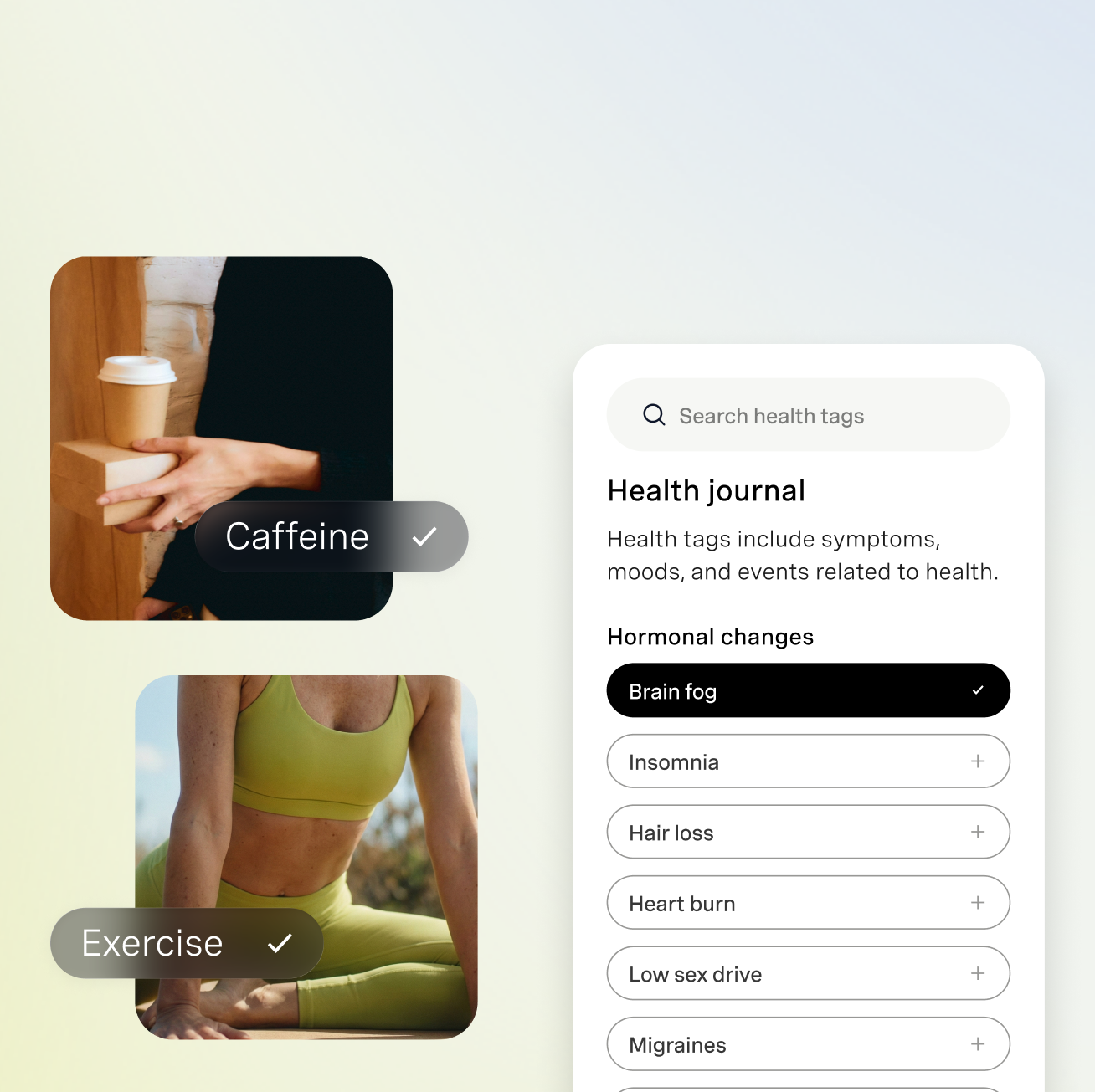
Brain fog, poor focus

Low morning energy

Burned out, midday exhaustion

Unexplained weight gain
THE CHALLENGE
Your sleep tracker shows symptoms. Eli shows what’s behind them.
You already know your sleep is broken: your wearable tells you every morning.
But HRV and sleep stage data leave a gap. They tell you what happened, but they don’t explain your cortisol didn't drop, or if it’s impacting your ability to stay asleep.
That's what Eli helps you see.
| Wearable or Sleep tracker | ||
|---|---|---|
| Measures cortisol (diurnal) curve | ||
| Results in minutes | Not accurate | |
| Test anytime, anywhere | Not accurate | |
| Captures morning + evening patterns | ||
| Research-grade accuracy |
COMPLETE PICTURE
Stop guessing what's wrong.
Start measuring what's broken.
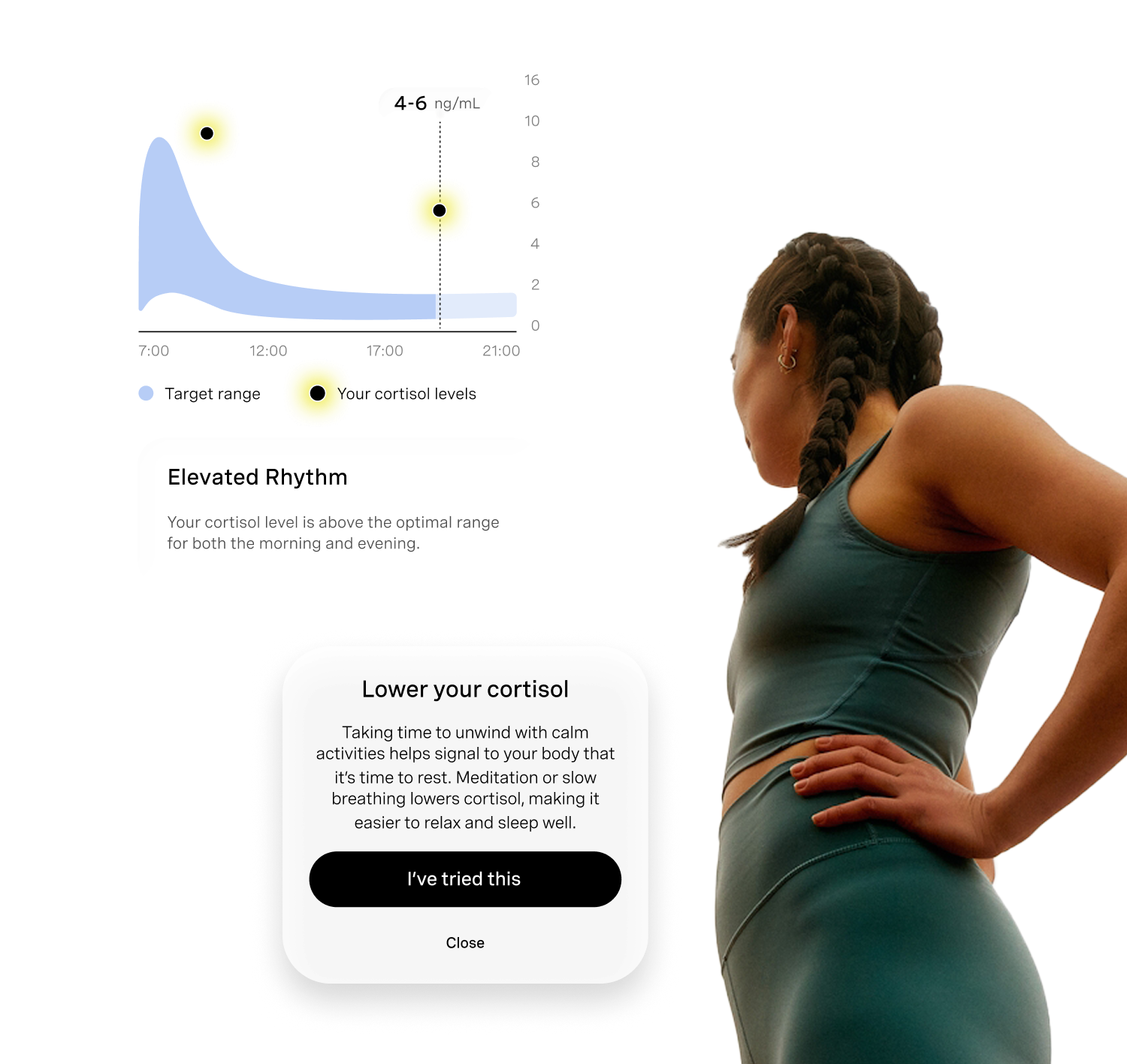
Most sleep aids treat the symptoms. Eli measures the source: your cortisol rhythm.
Before changing your routine or adding another supplement, see whether your rhythm is actually disrupted.
Once you establish your baseline rhythm, Eli gives you personalized tips on how to support it for better sleep.
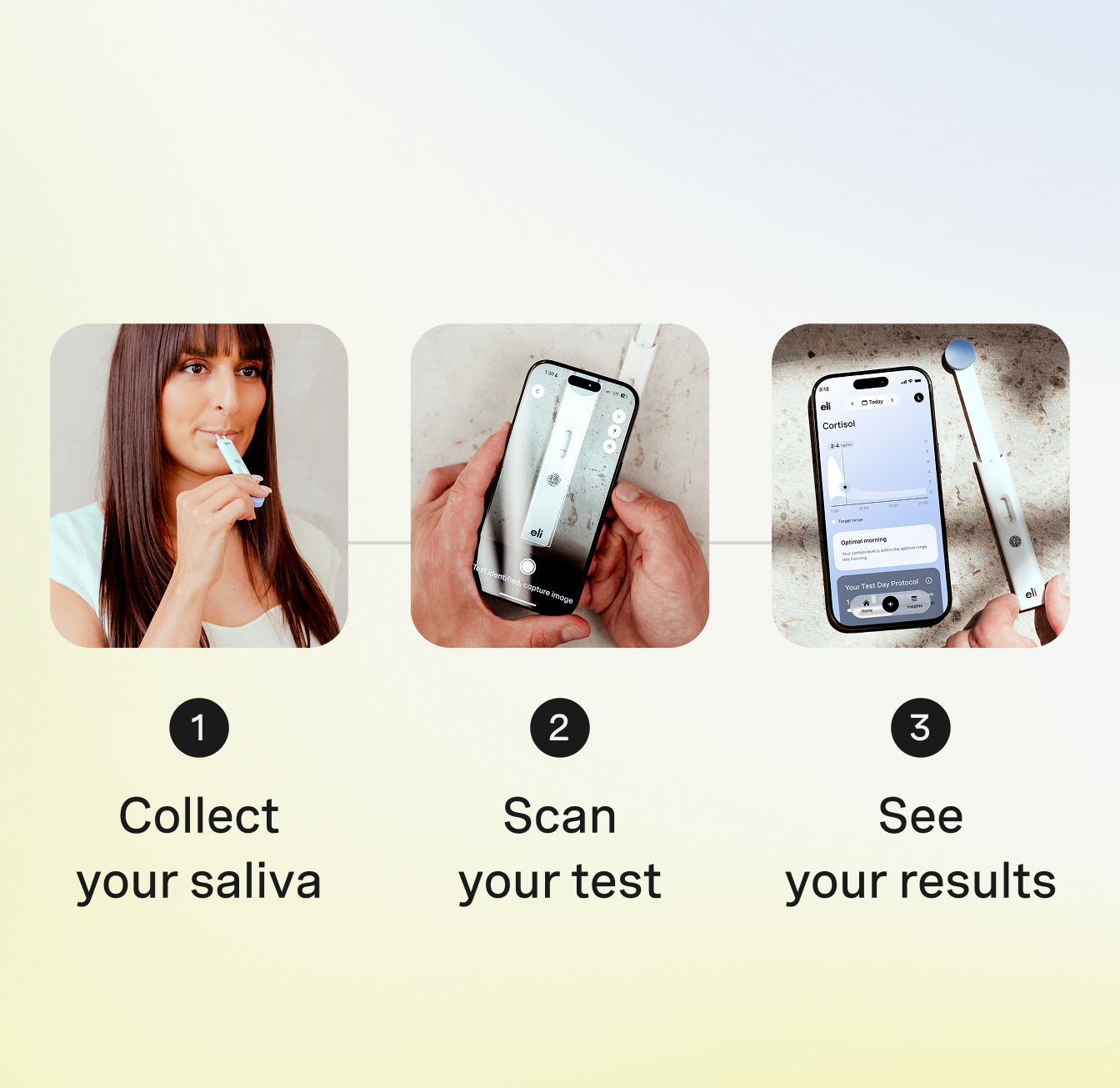
How it works
Test, track, and learn.


Step 01
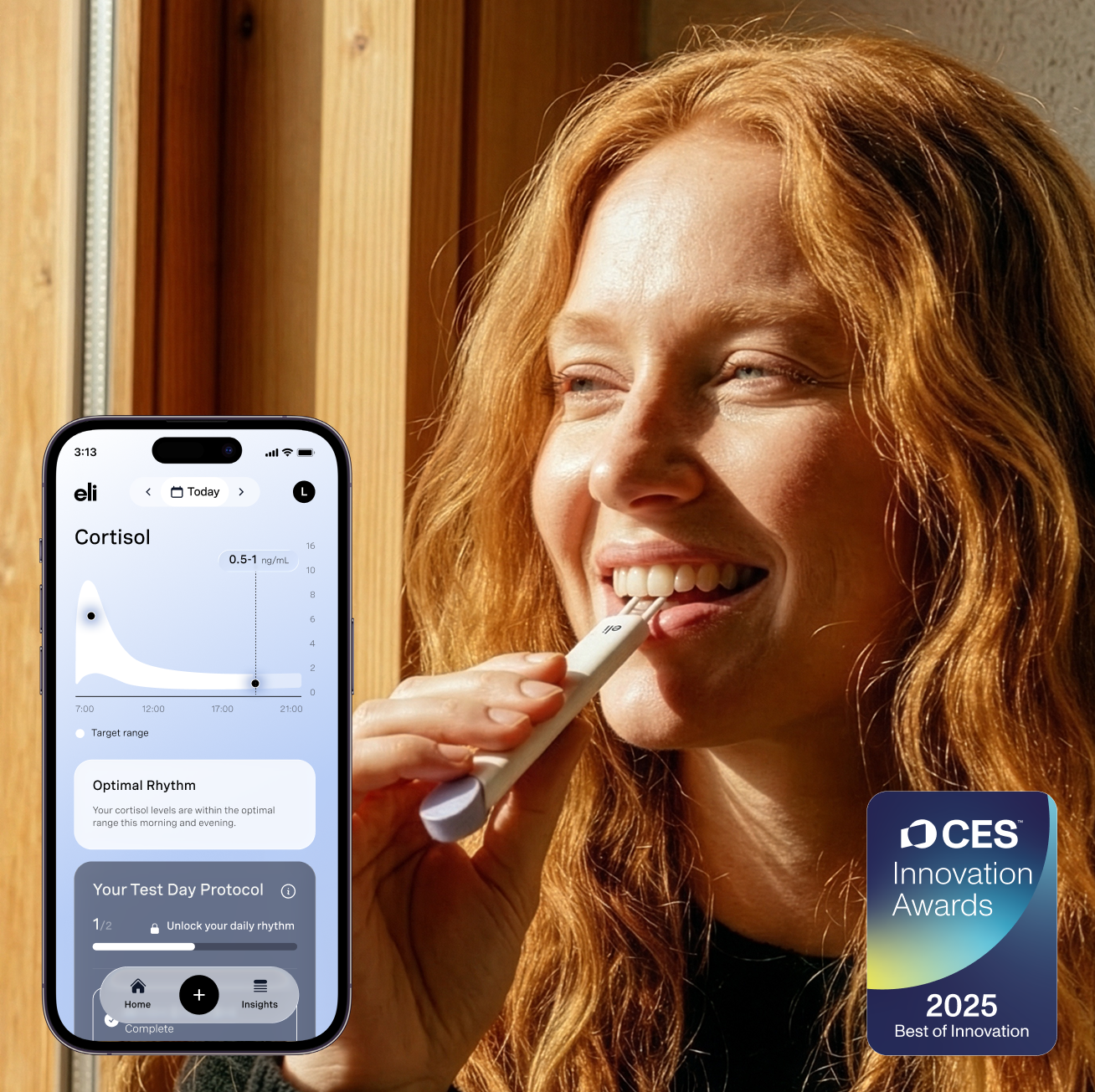
Collect your saliva.


Step 02
Scan it with the Eli app.


Step 03
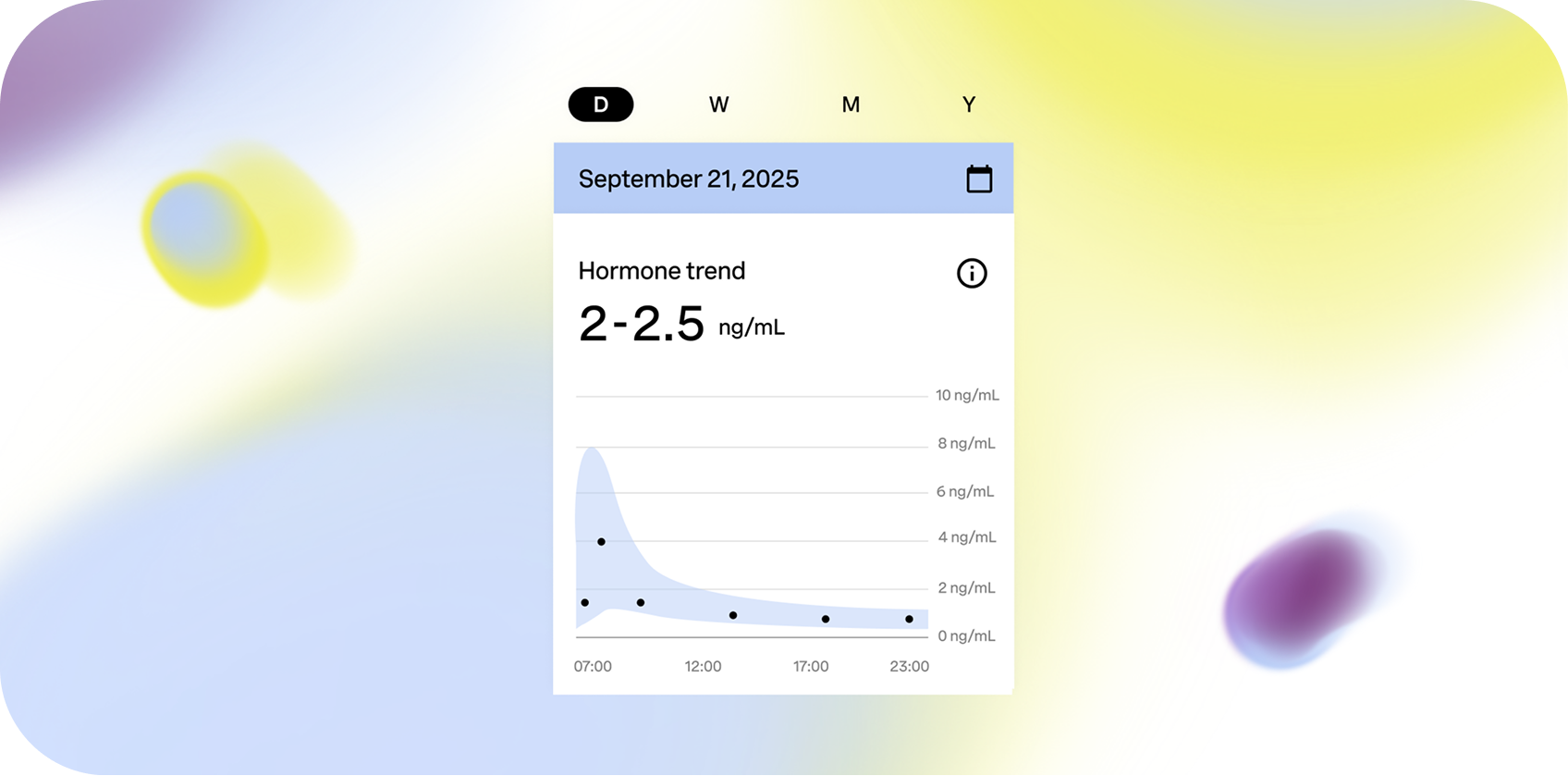
See your patterns + get personalized tips.
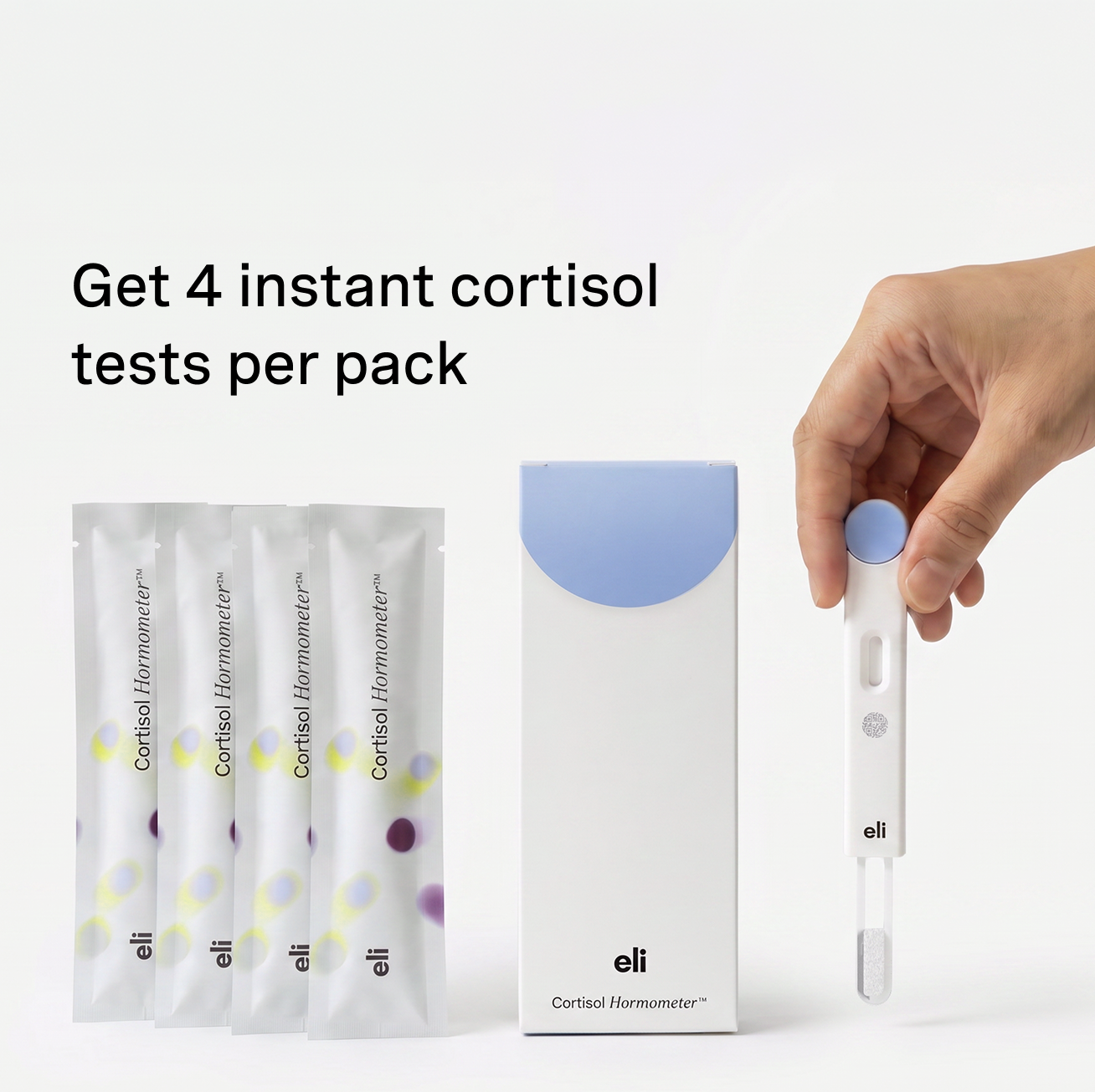
Instant Cortisol Test
+ Eli app
Measures free cortisol to reveal the impact of mental, physical, lifestyle, and environmental stress on your body.

Saliva-based test

Real-time results

Research-grade accuracy

AI-powered iPhone app (iPhone only)
Testimonials
What Eli users are saying

Cortisol tracking could complement existing devices. For example, if your smartwatch detects disrupted sleep, Eli’s Hormometer could help you see whether stress hormones are a factor.


Patterns you can actually see.
I finally understand how my body responds to stress throughout the day. I can see patterns I never had access to before.
Maya


Expert-led, from research to results.

Fady Hannah-Shmouni, MD
Endocrinologist and geneticist at the University of British Columbia.
Focus: Longevity healthcare.


Alicia Robbins, MD
Board-certified OBGYN and Certified Menopause Practitioner.
Focus: Midlife transitions healthcare.


Olivia Lesslar, MD
Physician and lecturer working across brain health, trauma, and recovery.
Focus: Integrative longevity healthcare.



CORTISOL
Dr. Andrew Huberman on Cortisol and Burnout
CORTISOL
Understanding Cortisol: Ranges, Variability, and Why Tracking Matters
Cortisol
Five Ways to Balance Your Cortisol
DISCLAIMER: This test is a wellness device. It is not intended to diagnose, treat, cure, prevent, or manage any disease or medical condition, including adrenal disorders such as Addison's disease, Cushing's syndrome, or sleep disorders. It provides lifestyle and wellness insights only. Always consult a licensed healthcare provider for medical concerns, especially if you have chronic insomnia, sleep apnea, or other diagnosed conditions. Do not stop or modify prescribed medications without medical supervision.
REFERENCES
¹ Vgontzas AN, et al. Chronic insomnia is associated with nyctohemeral activation of the HPA axis. J Clin Endocrinol Metab. 2001.
² Buckley TM, Schatzberg AF. On the interactions of the HPA axis and sleep. Psychiatr Clin North Am. 2005.
³ Adam EK, et al. Day-to-day dynamics of experience–cortisol associations. Psychoneuroendocrinology. 2006.
⁴ Kumari M, et al. Association of diurnal patterns in salivary cortisol with all-cause and cardiovascular mortality. PNAS. 2011.
⁵ Bellingrath S, et al. Chronic work stress and exhaustion is associated with higher allostastic load. Psychoneuroendocrinology. 2010.
⁶ Adam EK, et al. Diurnal cortisol slope and mental and physical health outcomes. Psychoneuroendocrinology. 2017.
⁷ Leproult R, et al. Sleep loss results in an elevation of cortisol levels the next evening. Am J Physiol Endocrinol Metab. 2007.