Key takeaways
-
Intermittent fasting introduces mild, adaptive stress that can strengthen metabolism and cellular health.
-
Cortisol supports fasting by mobilizing energy and enhancing alertness, but can become counterproductive when chronically high.
-
Timing fasting with natural diurnal rhythms helps maintain cortisol balance and restorative sleep.
-
A 16:8 schedule doesn't necessarily raise total daily cortisol. Where you place your eating window matters more than the length of your fast.
-
Chronically elevated cortisol is associated with visceral (belly) fat storage, which is why fasting that overloads your stress capacity can work against body composition goals.
-
Hormometer® helps visualize cortisol rhythms anytime, anywhere—revealing whether fasting supports balance or drives overload.
Fasting as a signal, not a shortcut
Intermittent fasting (IF) isn’t simply about skipping meals—it’s about creating intentional space for metabolic recovery. Everyone fasts to some extent; an overnight fast between dinner and breakfast is the most common example. Beyond that, fasting can take many forms—shortening the daily eating window, delaying the first meal, or avoiding food late at night.
What matters is not how long the fast lasts, but how your body responds to it. For some, moderate fasting supports energy, digestion, and mental clarity. For others—especially many women—extended or aggressive fasting can amplify stress and disrupt hormonal balance. The key question isn’t whether to fast, but how to structure your eating pattern so that it supports, rather than challenges, your physiology.
At the center of this process is cortisol, the hormone that plays a key role in your body’s energy deployment. During fasting, cortisol rises modestly to maintain glucose balance and alertness. Within a healthy diurnal rhythm, these temporary elevations promote adaptation: cells switch fuel sources, initiate repair, and strengthen metabolic resilience.
Fasting’s benefits emerge when it functions as a signal, not strain—meaning, when the stress is brief, recoverable, and rhythmic. The goal isn’t deprivation, but dialogue: listening to how your body reacts and aligning your fasting window with its natural cortisol rhythm.
How cortisol supports fasting
1. Cellular renewal through autophagy
Fasting activates survival pathways that favor maintenance over growth. As insulin and glucose levels drop, enzymes such as AMPK and sirtuins ramp up, while mTOR—the growth driver—downshifts. This biochemical shift triggers autophagy, a process where cells clear damaged proteins and recycle components to restore efficiency.
Cortisol supports this state by releasing stored energy—glucose and fatty acids—that fuel these repair mechanisms. A review in Frontiers in Endocrinology shows that short fasting bouts increase mitochondrial efficiency and reduce oxidative stress, key indicators of metabolic health and longevity.
Rather than being purely catabolic, cortisol’s fasting-phase activity represents an orchestrated clean-up operation: mobilize, repair, reset.
2. Enhancing metabolic flexibility
One of fasting’s most measurable benefits is metabolic flexibility—the body’s ability to shift between carbohydrates and fats as energy sources. Cortisol facilitates this switch by promoting glycogen breakdown and lipolysis.
Research in The Journal of Nutritional Biochemistry shows that even 24-hour fasts can improve insulin sensitivity and fat oxidation. Importantly, total daily cortisol exposure doesn’t necessarily rise. Instead, its timing sharpens: morning peaks become more pronounced, and nighttime levels decline. Both are signs of a more resilient diurnal rhythm, rather than chronic stress.
When cortisol follows this natural curve, the body stays energized in the morning and relaxed by evening—a hormonal rhythm associated with better metabolic efficiency and cognitive clarity.
3. Aligning fasting with the body clock
Timing determines whether fasting feels invigorating or depleting. Early time-restricted feeding (eTRF)—eating in the morning and fasting after mid-afternoon—works in harmony with cortisol’s natural rise-and-fall pattern.
In one MDPI study, participants who stopped eating by 3 p.m. had lower evening cortisol and reported deeper sleep. Late eating, by contrast, triggered a “pre-meal” cortisol surge that delayed relaxation and impaired melatonin onset.
This research reinforces a simple principle: feed when your body is designed to be alert, and fast when it's winding down for rest.
Aligning your eating window with daylight hours strengthens the natural cortisol diurnal curve — energizing mornings while protecting restorative sleep at night.
Intermittent fasting can recalibrate broader endocrine rhythms. Fasting modulates glucocorticoid receptors and “clock genes,” which coordinate hormonal timing across tissues. When cortisol, insulin, and melatonin are synchronized, energy use becomes predictable: glucose fuels the morning, fats sustain the afternoon, and recovery dominates at night.
Does 16:8 fasting increase cortisol?
Short answer: for most people, 16:8 fasting doesn't raise total daily cortisol. It changes when cortisol shows up.
16:8 means an eight-hour eating window and a sixteen-hour fast — often noon to 8 p.m., though the window can sit anywhere in the day. During the fasted hours, cortisol rises modestly to keep blood glucose stable. That rise is expected and adaptive. In time-restricted eating research, the more consistent finding isn't higher total cortisol, but instead, a sharper curve: a more pronounced morning peak and lower evening levels.
Where 16:8 can push cortisol in the wrong direction:
- A late eating window. A noon-to-8 p.m. schedule puts the hardest stretch of the fast in the morning, when cortisol is already peaking, and food intake in the evening, when it should be tapering. Shifting the same eight hours earlier (roughly 9 a.m. to 5 p.m.) can be gentler on your rhythm.
- Stacked stressors. Fasted high-intensity training, heavy caffeine, short sleep, or a demanding week each add to the same load. These are individually manageable, but collectively excessive.
- Low individual stress capacity. The same protocol lands differently depending on training volume, sleep debt, life stress, and hormonal context — many women in particular report a lower tolerance for long or aggressive fasts.
Signs your 16:8 window is asking too much: waking at 3 or 4 a.m., feeling wired but exhausted at night, morning fatigue that coffee doesn't touch, or irritability that spikes near the end of the fast. These are cues to shorten the window or move it earlier — not to push harder.
Does IF cause belly fat from cortisol?
Intermittent fasting doesn't cause belly fat on its own. Chronically elevated cortisol is associated with abdominal fat storage, and fasting that consistently overshoots your stress capacity is one of several things that can keep cortisol elevated.
The reason belly fat is specifically implicated: visceral fat — the deep abdominal fat surrounding the organs — carries a higher density of glucocorticoid receptors than fat stored elsewhere. When cortisol stays high, that tissue is unusually responsive to the signal to store energy. Persistent elevation also accelerates gluconeogenesis and weakens insulin sensitivity, which compounds the pattern even when total calories hold steady.
Cortisol influences the other side of the equation, too. Elevated levels drive appetite signaling through peptides such as neuropeptide Y, which is why a long, stressful fast is often followed by an outsized, fast-carb-heavy meal. The fasting protocol looks disciplined on paper; the physiology tells a different story.
This is the frustrating scenario many people describe: months of consistent fasting, but no change through the midsection. Usually the issue isn't willpower or fast length: it's that the fast is running on top of poor sleep, hard training, and a late eating window, and cortisol never gets the chance to come down.
The distinction that matters is dose and rhythm, not duration. Brief, well-timed fasts that leave room for recovery support metabolic flexibility. Long or late fasts layered onto an already loaded system tend to flatten your cortisol curve — and a flat curve is the pattern most consistently associated with abdominal fat accumulation.
How to reduce cortisol when fasting:
If fasting feels like strain rather than signal, these adjustments address the most common causes:
- Eat within daylight hours. Move your eating window earlier so the fast falls when cortisol is naturally declining, not when it should be peaking.
- Don't train hard fasted. Save high-intensity sessions for after you've eaten; keep fasted movement to walks and easy work.
- Protect sleep first. Short sleep raises next-day cortisol on its own — fasting on top of it stacks two stressors.
- Keep caffeine early and moderate. Black coffee on an empty stomach late in a fast amplifies the cortisol response.
- Break the fast gently. Protein, fiber, and healthy fats temper the rebound; sugar and stimulants prolong it.
-
Build in refeed days. Consistency beats intensity. Regular lower-stress days preserve the adaptation you're training for.
How to find your ideal fasting window
There is no universal fasting protocol—only individual stress capacity. The goal is to induce adaptation without depleting resilience.
“Fasting” itself covers a wide range of patterns. For most people, it naturally occurs overnight during sleep; for others, it involves deliberate meal-timing adjustments such as shortening the daily eating window. What matters most is not how long you fast, but how your body responds.
Fasting is not equally suited to everyone. Many women, for example, may find that prolonged or aggressive fasting adds unnecessary stress to an already complex hormonal landscape. The key is understanding which kind of fasting supports you—and when it begins to work against you.
1. Time your fast to the sun
Early-day fasting (skipping dinner) typically aligns best with the body’s diurnal cortisol curve. Late-night fasting or erratic schedules can disrupt that rhythm and interfere with sleep.
2. Pair stress with recovery
Fasting is one form of stress. Exercise, caffeine, and emotional load are others. Stack too many, and the adaptive response turns into overload. Schedule rest days, hydration, and light movement to buffer cortisol.
3. Refuel intelligently
Breaking a fast with balanced macronutrients—protein, fiber, and healthy fats—helps temper cortisol and re-establish glycogen stores. Processed sugars or stimulant beverages prolong the stress response.
4. Listen to physiological feedback
Energy crashes, persistent irritability, or disrupted sleep suggest cortisol excess. Shorten fasting windows, introduce refeed days, or shift to morning-based eating.
5. Measure, don’t guess
Because cortisol varies from person to person, tracking actual hormone patterns can clarify what “balance” means for you.
When stress outpaces adaptation
The hormetic window is narrow. What strengthens one system can overstrain another, especially if repeated too intensely or at the wrong time.
Fasting challenges the body; recovery rebuilds it. When the two are imbalanced—through skipped sleep, excessive training, or emotional overload—cortisol loses its rhythm. Instead of peaking sharply in the morning, it may stay elevated late into the night or spike erratically through the day.
Emotional and cognitive effects
Cortisol affects the brain as much as the body. Elevated levels heighten vigilance but can also amplify anxiety and irritability. Studies during Ramadan fasting found increased tension and reduced mood stability—especially in individuals already under academic or occupational stress.
That jittery “hangry” sensation is the physiological signature of cortisol and adrenaline overshooting their adaptive range. When glucose runs low and cortisol surges, the brain perceives threat, narrowing attention and draining calm.
Women, whose hormonal axes interact differently with cortisol, may experience stronger mood effects during aggressive fasting or under prolonged caloric restriction. For them, consistency and recovery days are especially important.
Fatigue, sleep, and the flattened curve
When cortisol peaks too late, it blunts melatonin release and reduces REM sleep, flattening the diurnal curve. Over time, this loss of amplitude leads to morning fatigue and slower recovery—patterns seen when fasting misaligns with biological timing.
Metabolic costs of chronic elevation
Persistently high cortisol accelerates gluconeogenesis, promotes insulin resistance, and drives protein catabolism in muscle—slowing metabolic efficiency over time. It raises blood sugar through gluconeogenesis, weakens insulin sensitivity, and can degrade muscle tissue for fuel. Over time, this pattern encourages visceral fat accumulation, even if total calories remain stable.
Data from Diabetology & Metabolic Syndrome link higher morning cortisol with increased insulin resistance and poorer pancreatic β-cell function. Elevated cortisol also drives cravings via appetite-regulating peptides like neuropeptide Y, promoting overeating when the fast ends.
In short, fasting that continually overshoots the stress threshold can undermine the very goals it was meant to support: metabolic health and compositional balance.
Visualize your stress with Hormometer®
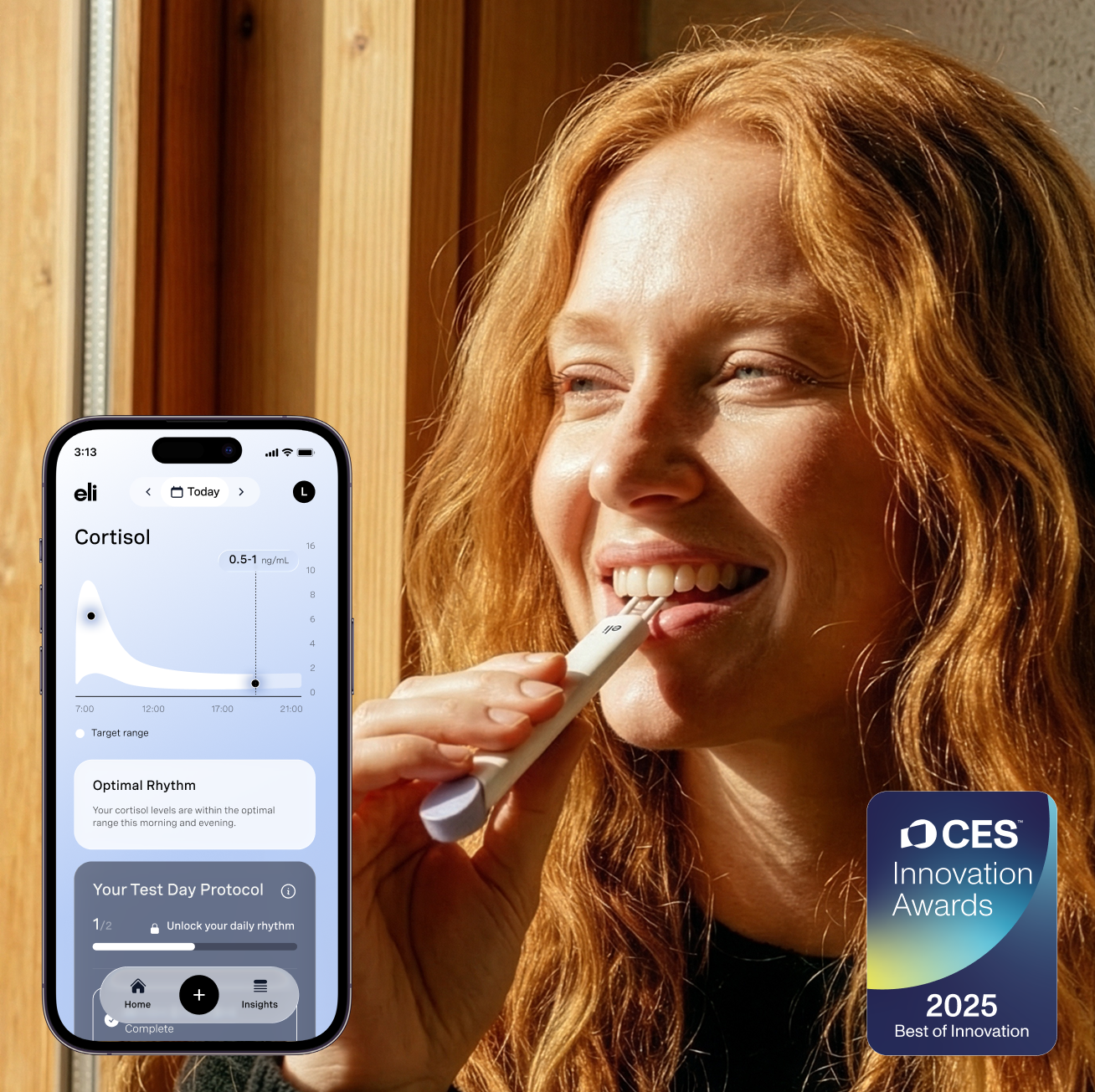
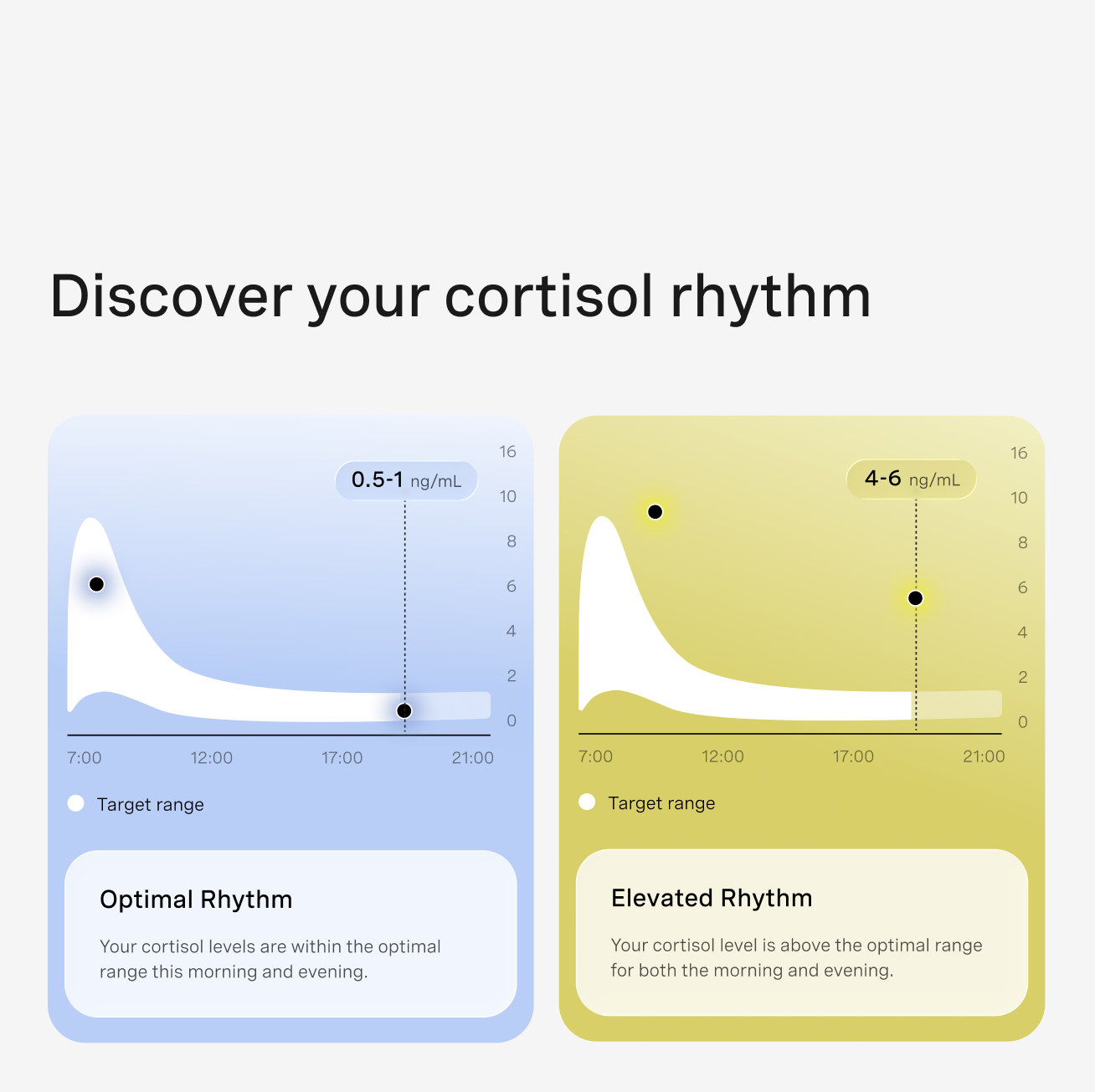
Hormometer® turns cortisol from an invisible variable into a visible rhythm. By measuring salivary cortisol, users eliminate the guesswork—allowing them to see how fasting, exercise, and sleep interact across the day.
Each reading becomes a data point in your personal cortisol curve. A smooth arc—high in the morning, low by night—reflects adaptive balance. A flat or inverted curve signals strain.
With this feedback, you can tailor fasting windows, training intensity, or recovery routines to your unique physiology. Ultimately, the goal is to replace intuition with measurable insight. Understanding your cortisol rhythm transforms fasting from a generalized wellness habit into a regular adaptation practice.
Mastering stress for metabolic health
Cortisol is often framed as the enemy of wellness, but that’s far too simplistic. Context matters. It’s not the presence of cortisol that harms health, but its persistence.
In fasting, as in life, short-lived surges can build resilience; chronic elevation erodes it.
When used intentionally, intermittent fasting can help your metabolism become flexible and your hormones stay rhythmic. It can align biological processes with daylight, reinforce sleep cycles, and strengthen the cellular pathways that maintain energy balance.
Hormometer® gives this process visibility. By tracking your cortisol rhythm over time, you can see whether your fasting routine is helping your body adapt or asking it to do too much.
Fasting is not for everybody. Before you introduce any new practices to your wellness routine, it’s important to check in with your medical provider.