Live in the Eli app in April
Most people who feel stressed never confirm it. Most people who are stressed don't always feel it.
That gap—between what you feel and what your body actually responds to—is exactly where cortisol testing shows its value.
Relying on how you feel is incomplete
Stress isn't just a feeling. It's a physiological state driven by your nervous system and regulated largely by cortisol, the hormone that shifts based on what your body is actually experiencing, not what you think is happening.
The disconnect between feeling and reality often presents in two ways:
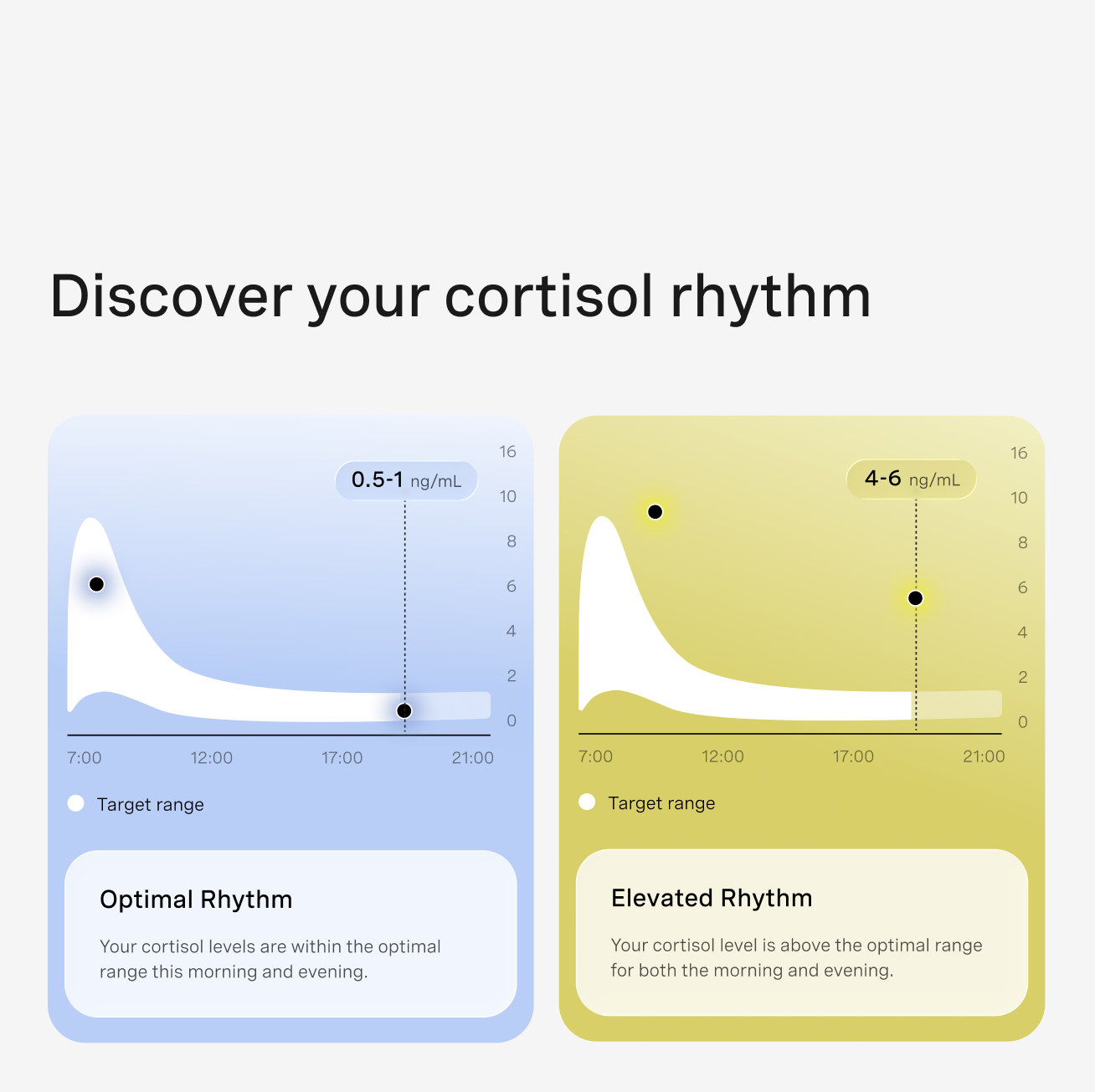
Some people feel calm, functional, and in control—while their cortisol data tells a very different story. Elevated morning levels, elevated evening levels, a pattern of sustained activation that hasn't surfaced as obvious distress yet. Their bodies are under load that their minds haven't yet registered.
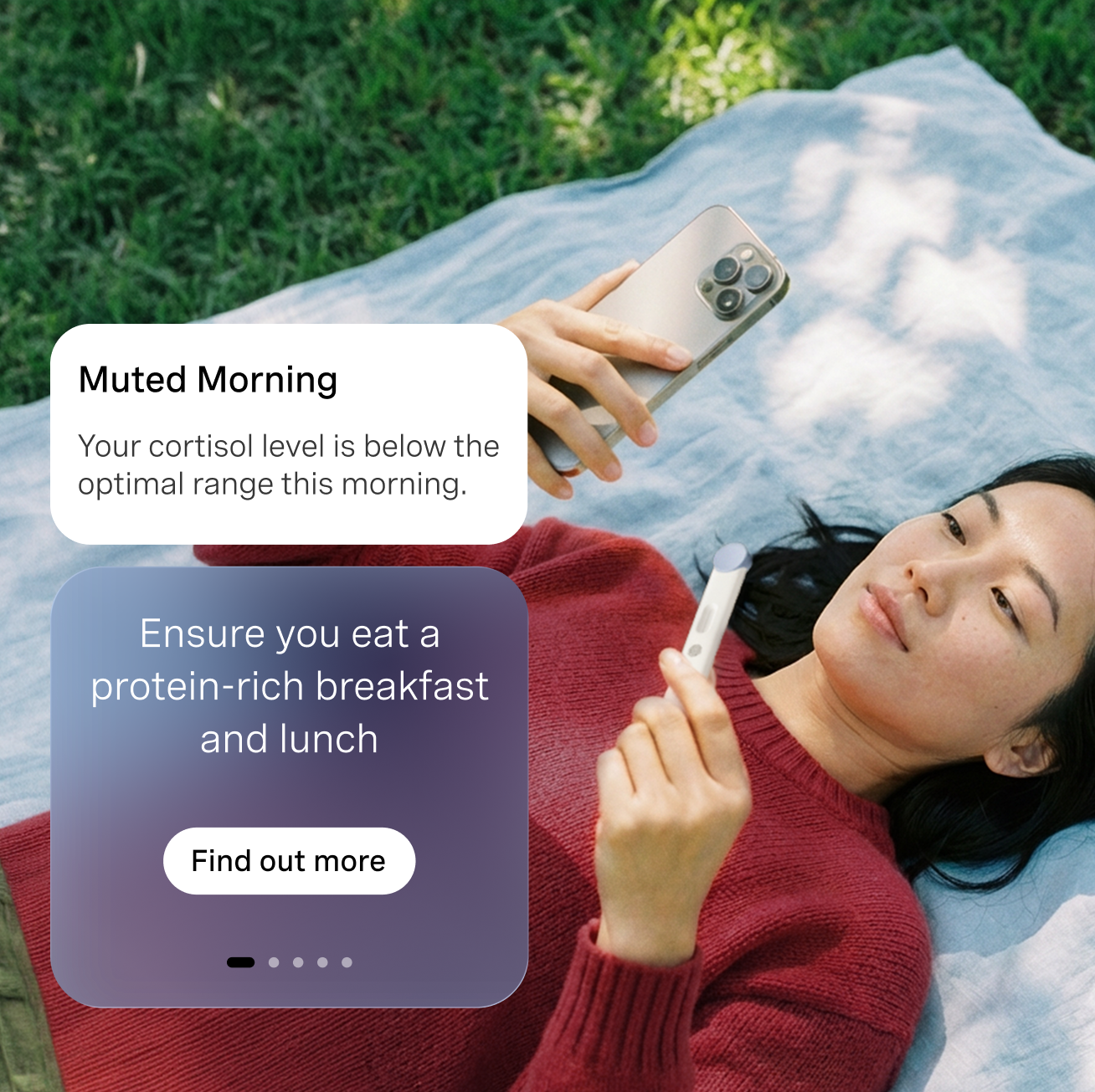
Other people feel exhausted, flat, and depleted—while their cortisol data confirms it in a way that self-awareness alone never could. What feels like "just being tired" has a measurable hormonal pattern underneath it.
Neither pattern shows up in a single reading, which is why consistently completing a full daily curve is important. It captures the full range of how your cortisol shifted throughout the day.
What is a stress pattern, exactly?
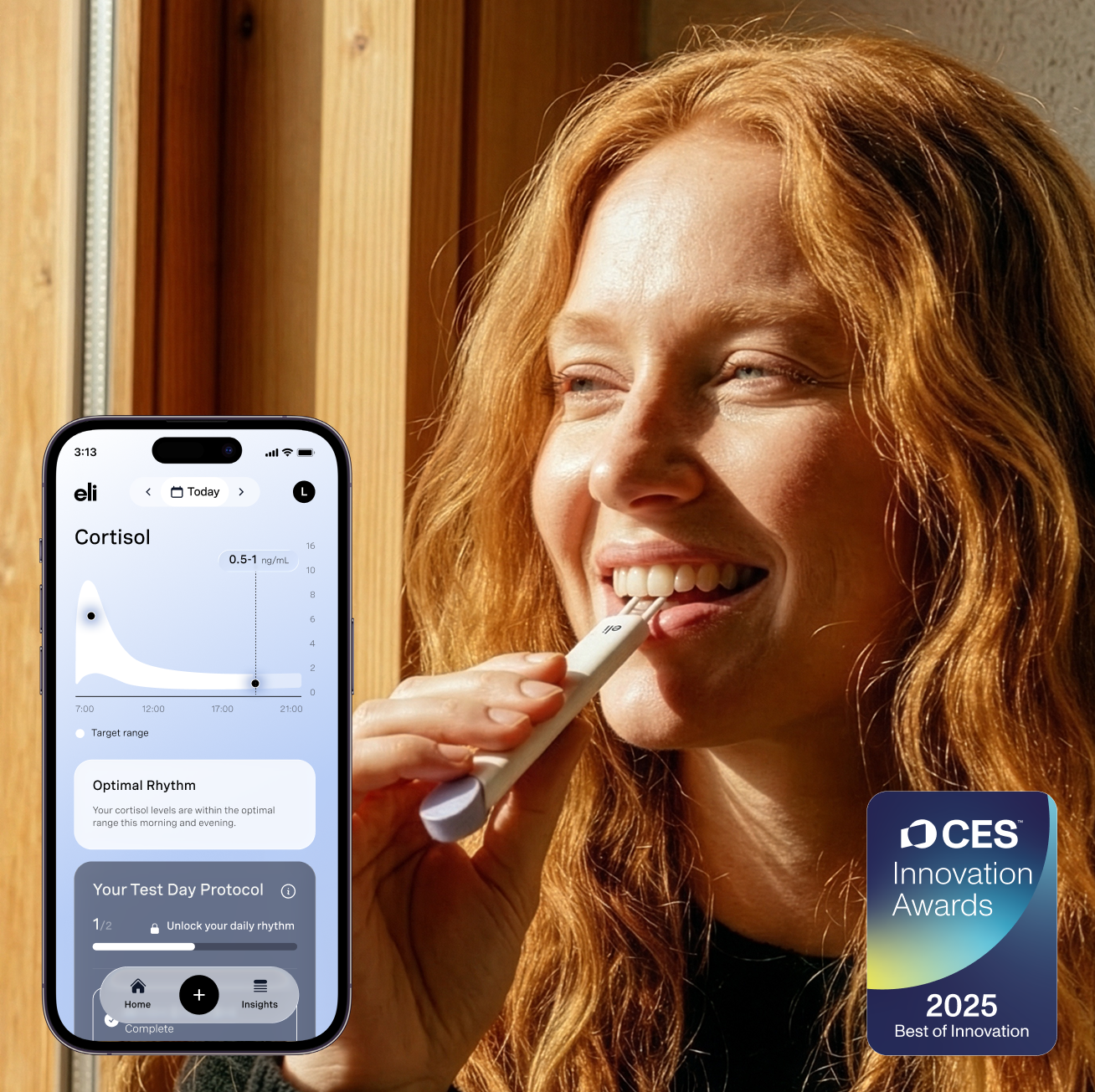
Cortisol follows a predictable daily rhythm. It peaks in the first 30 to 90 minutes after waking—a biological kickstart called the cortisol awakening response—and gradually declines toward evening. When stress is present, that rhythm can go in one of two ways:
-
Elevation → When cortisol runs higher than normal. Your body is in a sustained activation state. You might feel wired, reactive, or like you can't slow down.
-
Depletion → When cortisol runs lower than normal. The activation system has been running long enough that it's losing its efficacy. This is a different kind of tired: less "busy," more "flat."
How Stress Status works in the Eli app
Stress Status* is calculated from 8 completed cortisol tests ( 4 diurnal rhythms), typically taken over the course of a month. Once you've completed 8 tests, you'll receive a status that falls under one of five categories:
-
Balanced: All 8 tests within range.
→ Your cortisol rhythm is balanced and functioning properly -
Strained: 1 to 4 tests below range.
→ Your cortisol is low, but only some of the time -
Depleted: The majority of your tests are below range.
→ Your cortisol shows a sustained low pattern. -
Activated: 1 to 4 tests above range.
→ Your cortisol is elevated, but only some of the time -
Overextended: The majority of your tests are above range.
→ Your cortisol shows a sustained high pattern.
*Stress Status is not a medical diagnosis or a substitute for clinical evaluation.
Why do I need to take 8 tests?
One test can be influenced by dozens of variables: how you slept, caffeine consumption, a stressful commute, an unexpected argument. 8 tests, spread across multiple days and times, control for these microfluctuations.
Not just as a snapshot, but as a tracker.
I have my status—what's next?
Sometimes your Stress Status will match what you already suspected, and you can use the insights provided in the dashboard to take action to address it.
Other times, it might not match how you feel at all—you're unbothered but your cortisol pattern says otherwise. This can be a helpful way to spot early changes, as hormones often shift before you feel the physical impact. This can be a sign to pay attention, and move ahead mindfully.
Either way, your status is a quantitative data point to help inform your habits and choices.
FAQs
-
Does Stress Status replace my Daily Score?
While Stress Status is not a 1-1 replacement for Daily Score, we are removing Daily Score from the cortisol screen to maintain simplicity and ease of use in the Eli app.
-
Why do I need to take 8 tests to unlock my Stress Status?
Cortisol naturally fluctuates each day—one high or low result doesn't define your stress indefinitely. Assessing your results across 8 measurements puts them in context, giving you a more complete view of your stress pattern.
-
How often do I need to test to get updates on my Stress Status?
Your Stress Status will automatically update based on your most recent 8 tests. You can view your Stress Status history to see how it evolves over time.