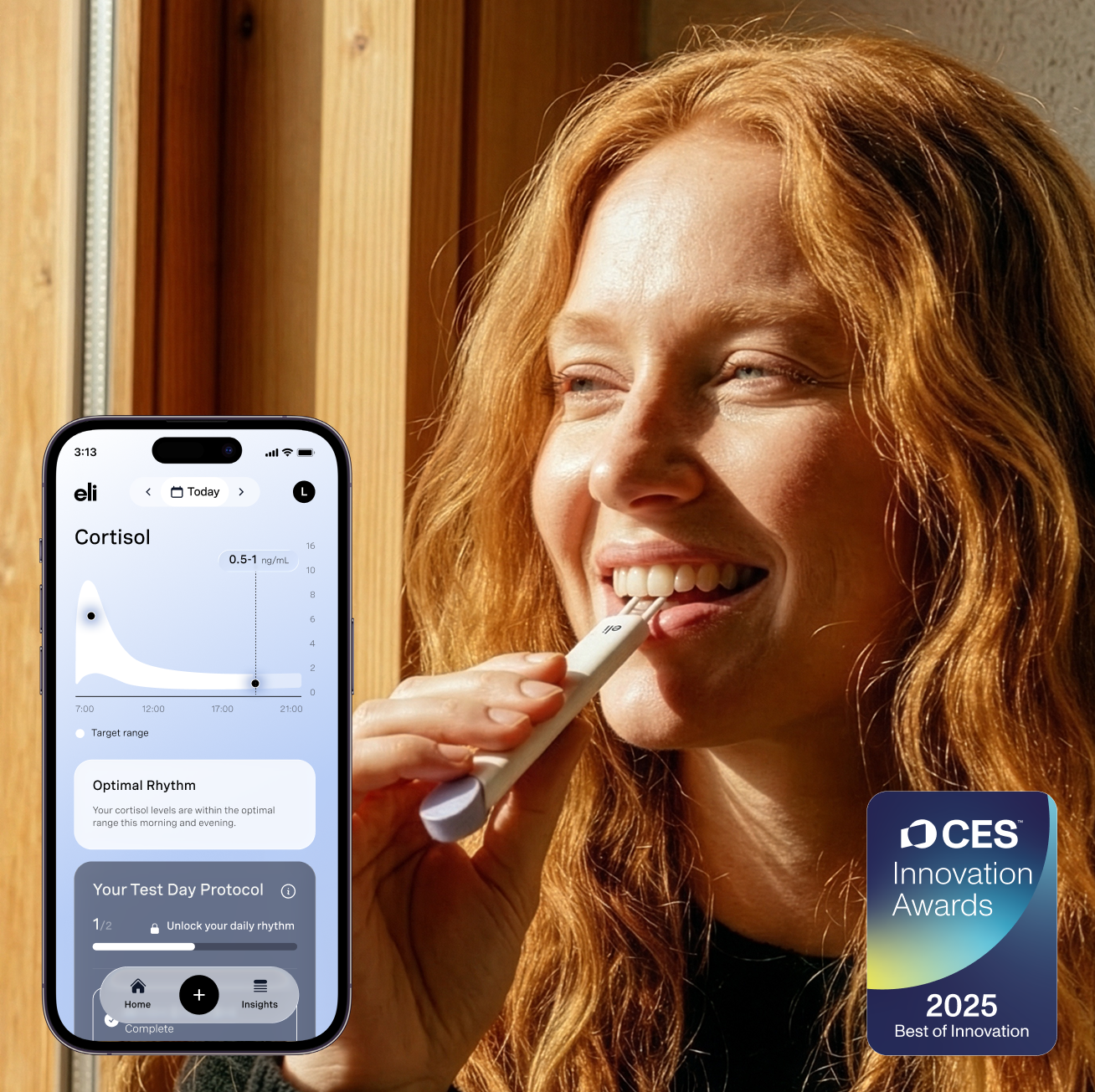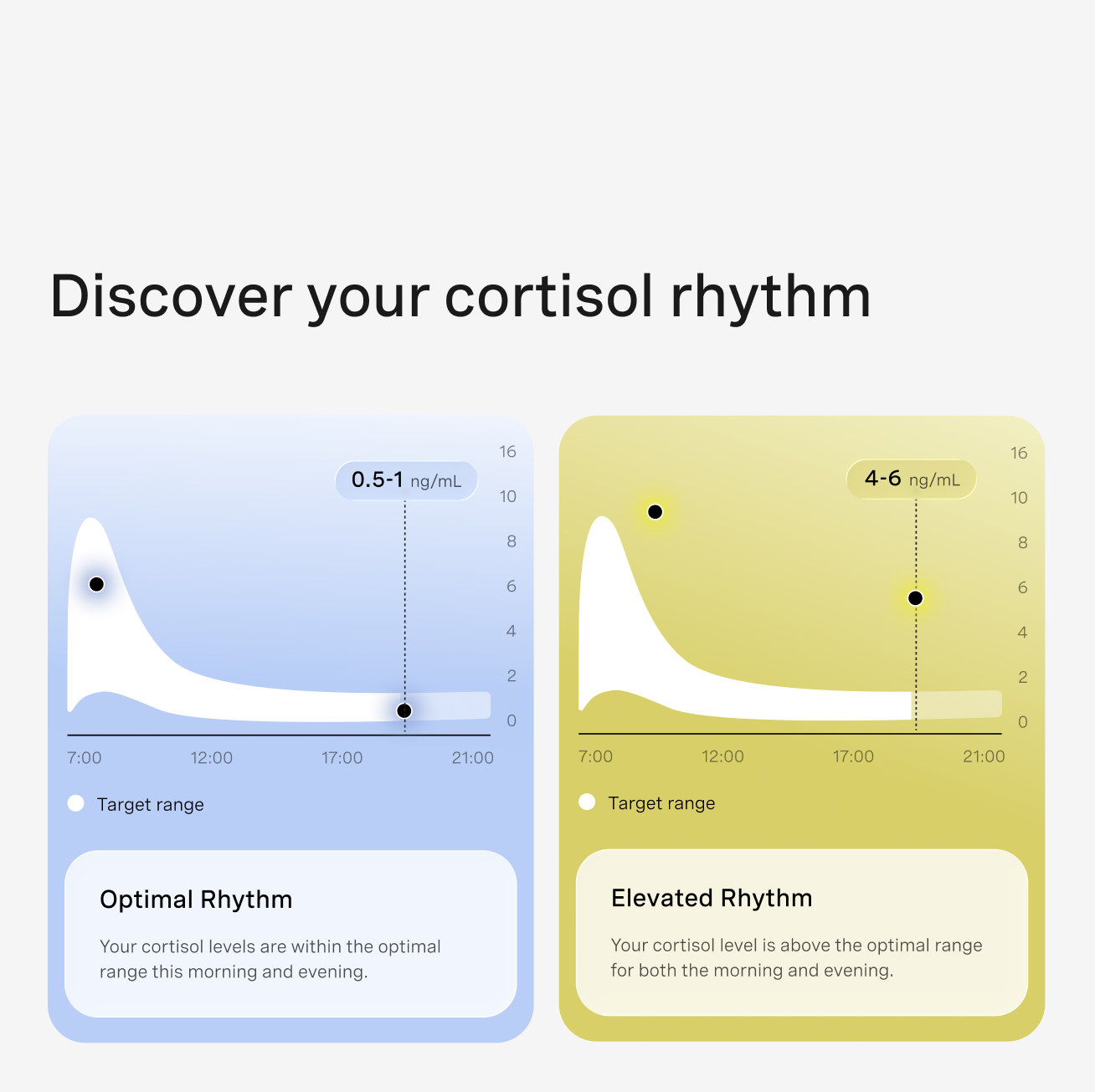
Most people know cortisol as the stress hormone. But stress is just one thing it does. Cortisol also drives your energy in the morning, supports your metabolism, and cues your body to wind down at night. It's less of a stress alarm and more a daily operating system—and like any system, it runs on a rhythm.
A healthy rhythm has a shape
Cortisol follows a predictable arc across the day. Within the first 30 minutes of waking, it spikes sharply—sometimes by as much as 150%. This is called the Cortisol Awakening Response, and it's your body front-loading energy for the day ahead: sharpening focus, mobilizing fuel, getting your systems online.
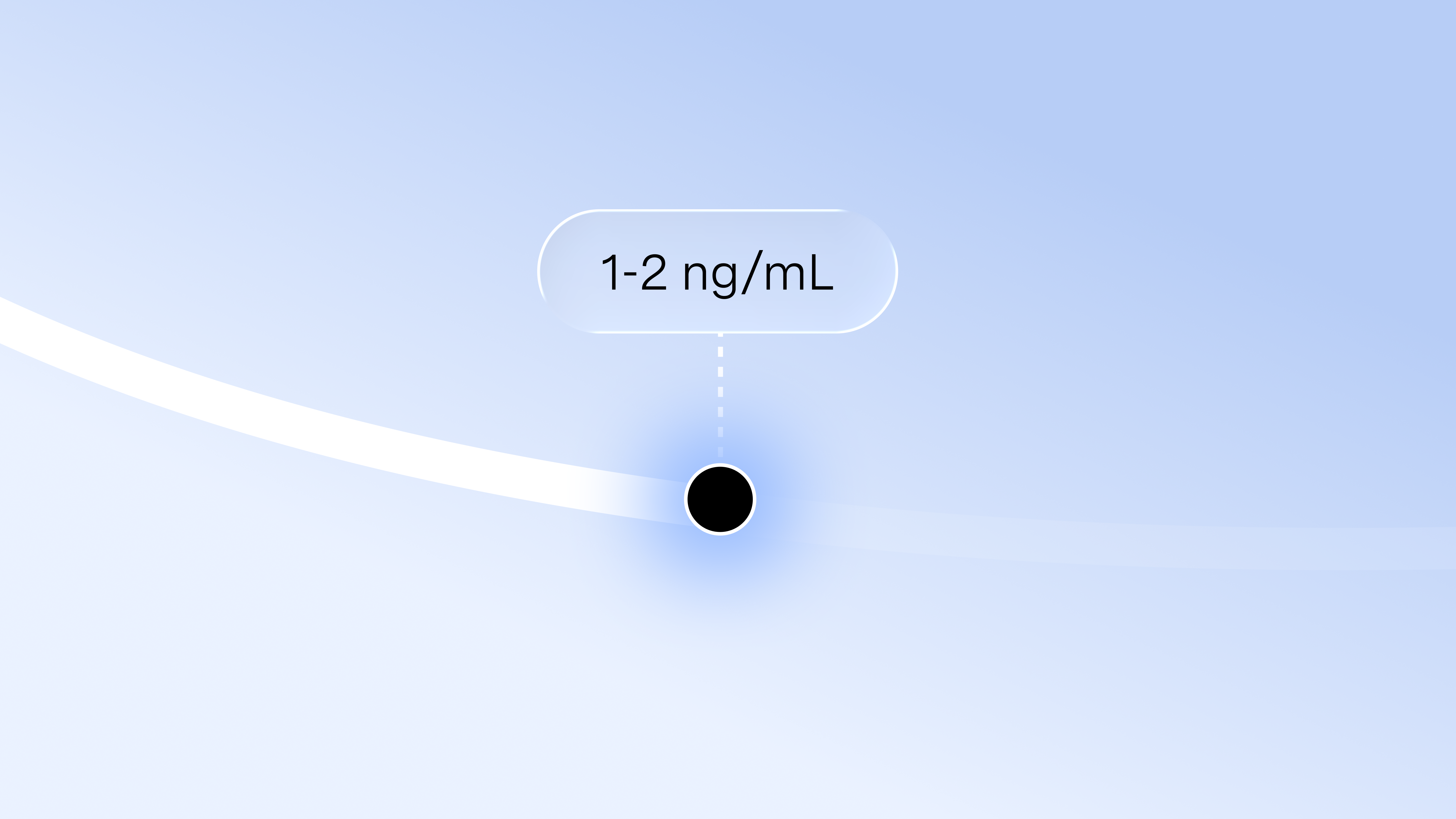
From that peak, cortisol gradually declines through the afternoon and into the evening. By midnight, it's at its lowest point, which is roughly 15 times lower than it was in the morning. That fall is what allows your body to rest and recover. The rise and fall together form the diurnal curve: the signature shape of a well-functioning cortisol rhythm.
The second hidden rhythm
What most people don't know is that beneath that daily curve, cortisol is also pulsing on a much shorter cycle. Roughly every 60 to 120 minutes, cortisol rises and falls in smaller waves. These are called ultradian pulses, and they run continuously (even while you sleep.)
The size and regularity of those pulses shapes how you feel throughout the day. They're part of why you might notice natural windows of focus and fatigue that seem to follow a pattern, even when your overall energy feels flat.
When your cortisol rhythm is disrupted
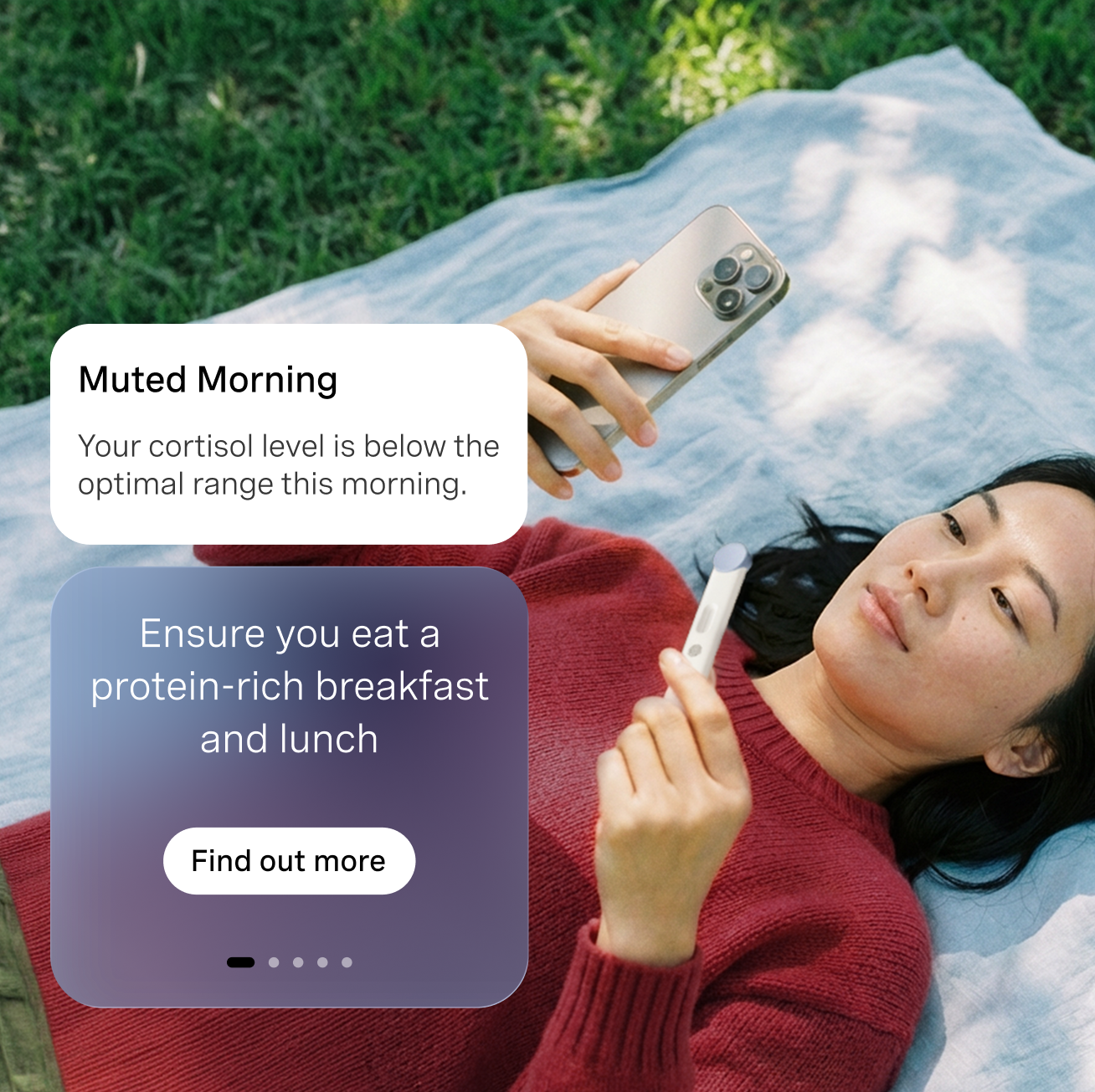
Stress, poor sleep, and irregular schedules can all interfere with this rhythm. The disruption usually doesn't show up as one dramatic shift—it shows up gradually in the shape of your curve. A blunted morning peak. Cortisol that stays elevated into the evening. A pattern that looks different under pressure than it does when life is calm.
That's why a single cortisol number doesn't tell you much. What matters more is the shape: how high the peak rises, how consistently it falls, and whether that pattern holds across different conditions.
What tracking unlocks
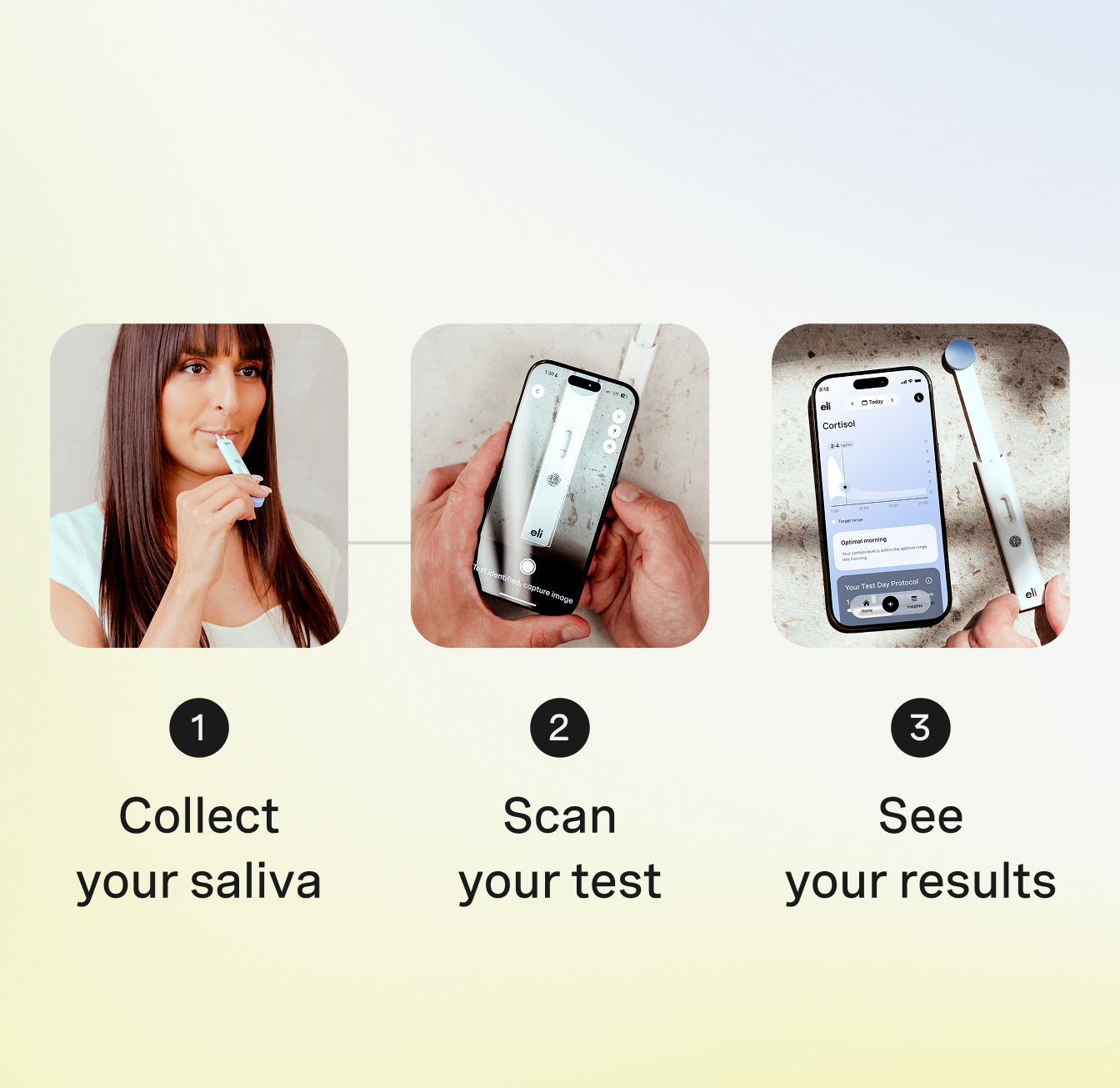
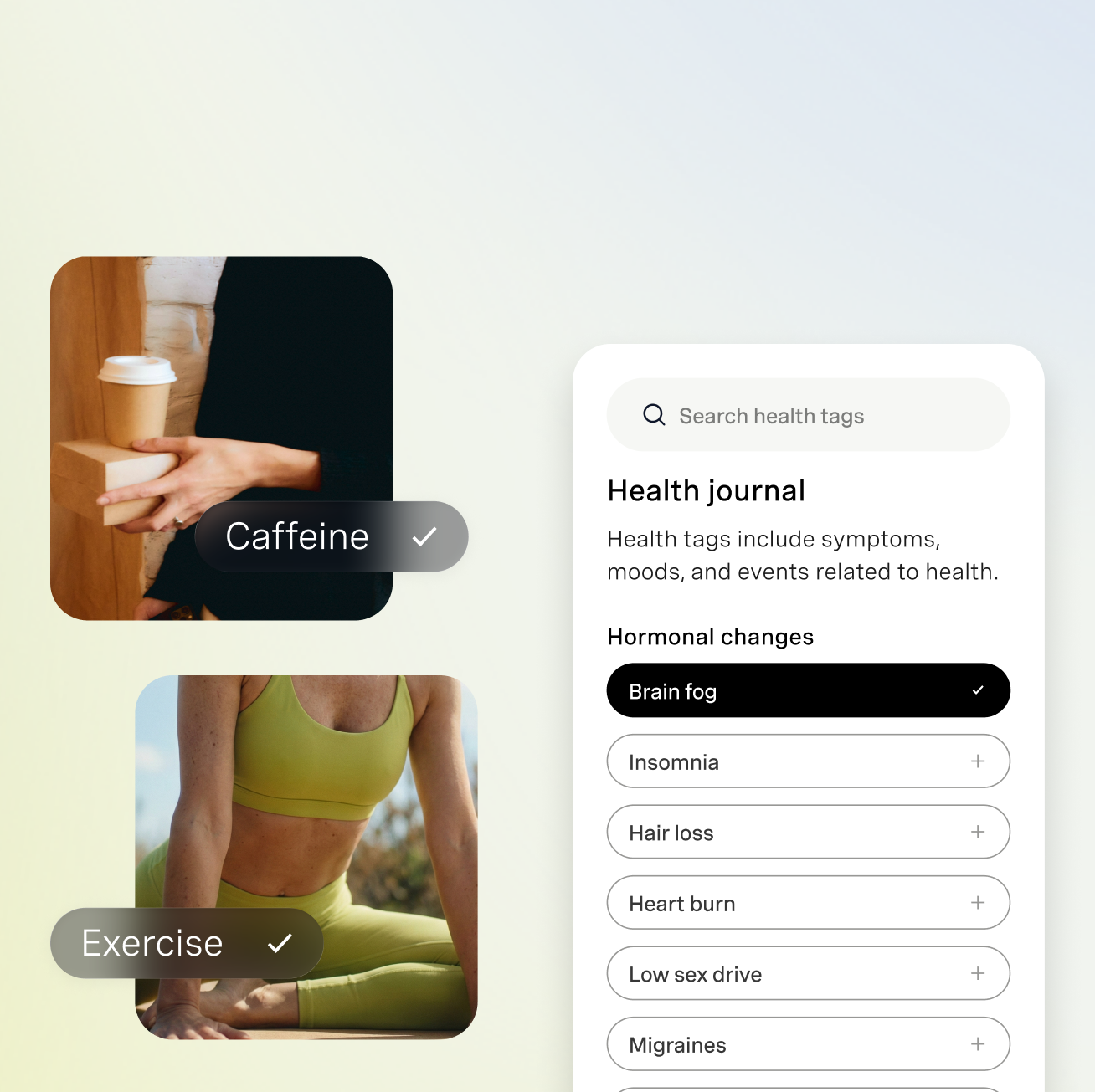
One test gives you a snapshot: it's your rhythm across one day, under one set of circumstances. But test it again during a calmer week, or in a different phase of your cycle, and you can start to see the real signal: what's stable in your rhythm and what's more sensitive to the stress you carry.
That's when regular tracking shifts from data collection to something more useful—a way to understand your body's baseline, and notice when it changes.