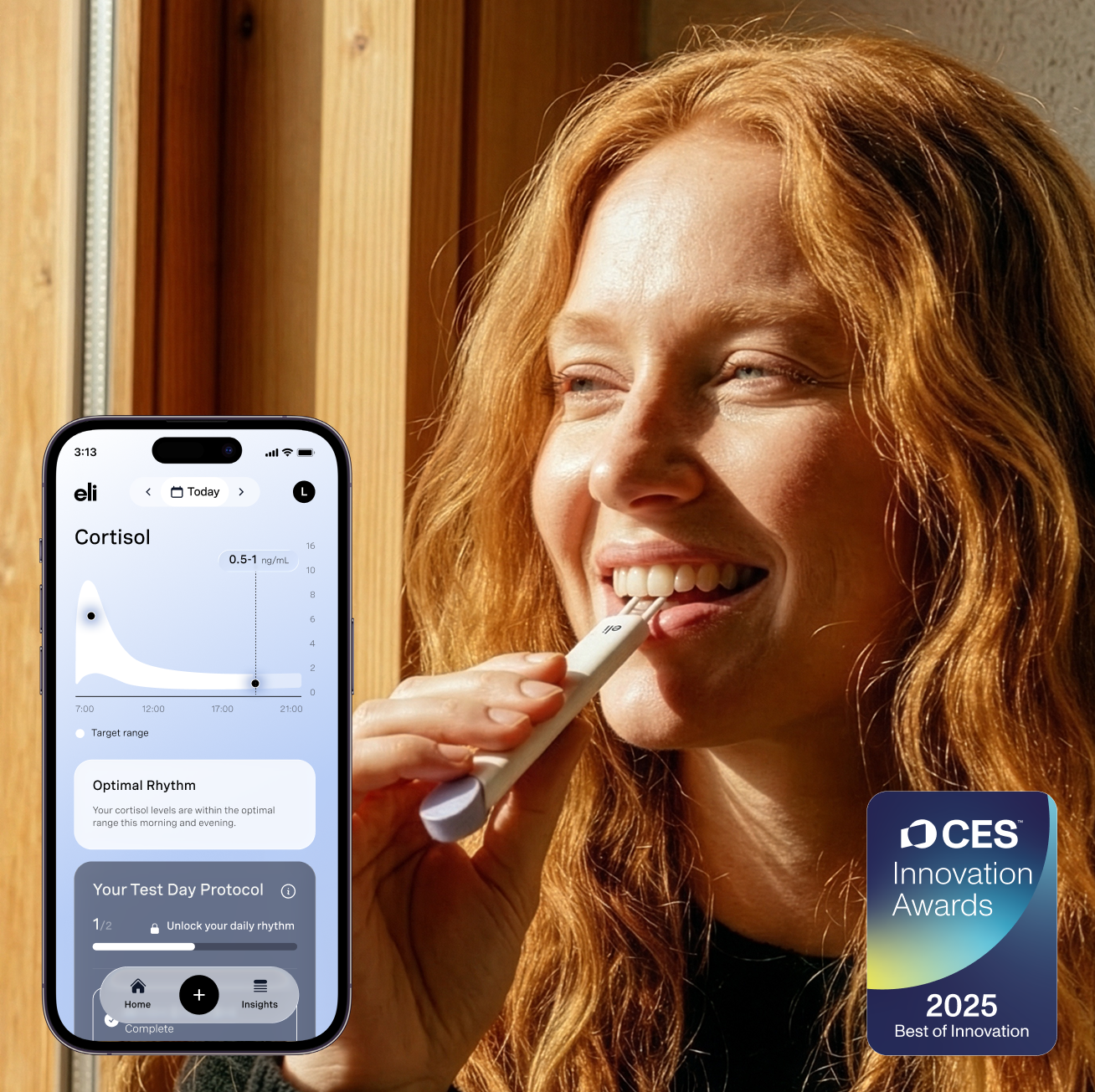
Your body runs on rhythms. At the center? Cortisol—your master coordinator, not just a "stress hormone."
What cortisol does
-
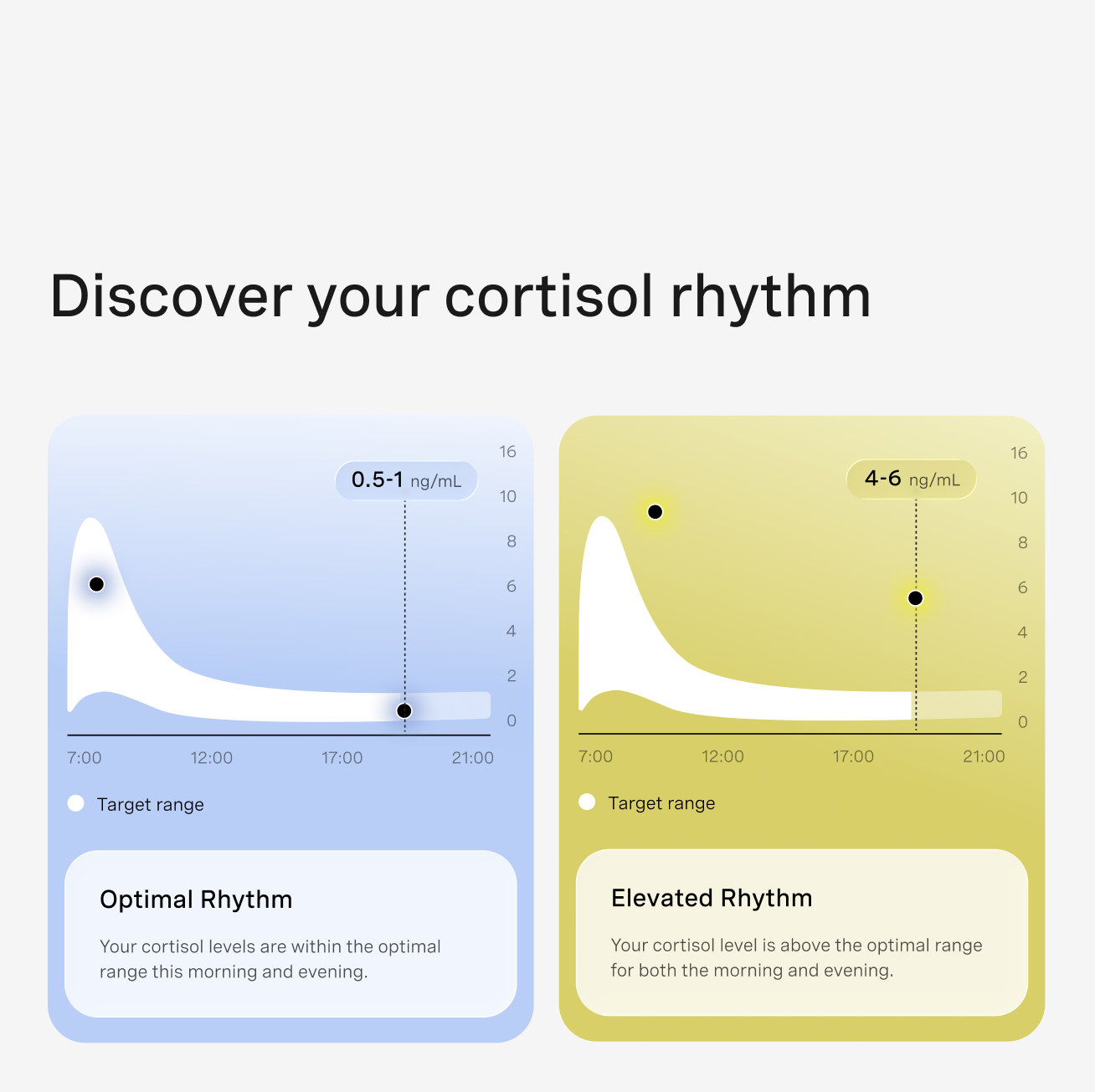
Morning: Cortisol surges to wake you up and sharpen focus. This is your cortisol awakening response.
-
Day: It manages stress, regulates blood sugar, controls inflammation, and maintains steady energy.
-
Evening: Cortisol drops to its lowest point, signaling your body to wind down for sleep.
When this rhythm works, you feel energized in the morning, resilient during the day, calm at night. When it's disrupted, everything feels harder.
When cortisol goes off rhythm
It's not about "too much" or "too little"—it's about timing. A spike during a workout? Normal. That same spike at 11 PM? Dysregulation.
1 in 3 adults have dysregulated cortisol—and most don't know it. Symptoms include:
-
Morning fatigue despite 8 hours of sleep
-
Afternoon energy crashes
-
Trouble falling asleep or waking at 3 AM
-
Feeling anxious for no clear reason
-
Slow recovery from exercise
-
Stubborn weight gain around the midsection
Why tracking changes everything
You can't feel your cortisol rhythm the way you feel hunger or fatigue. It's invisible until badly disrupted.
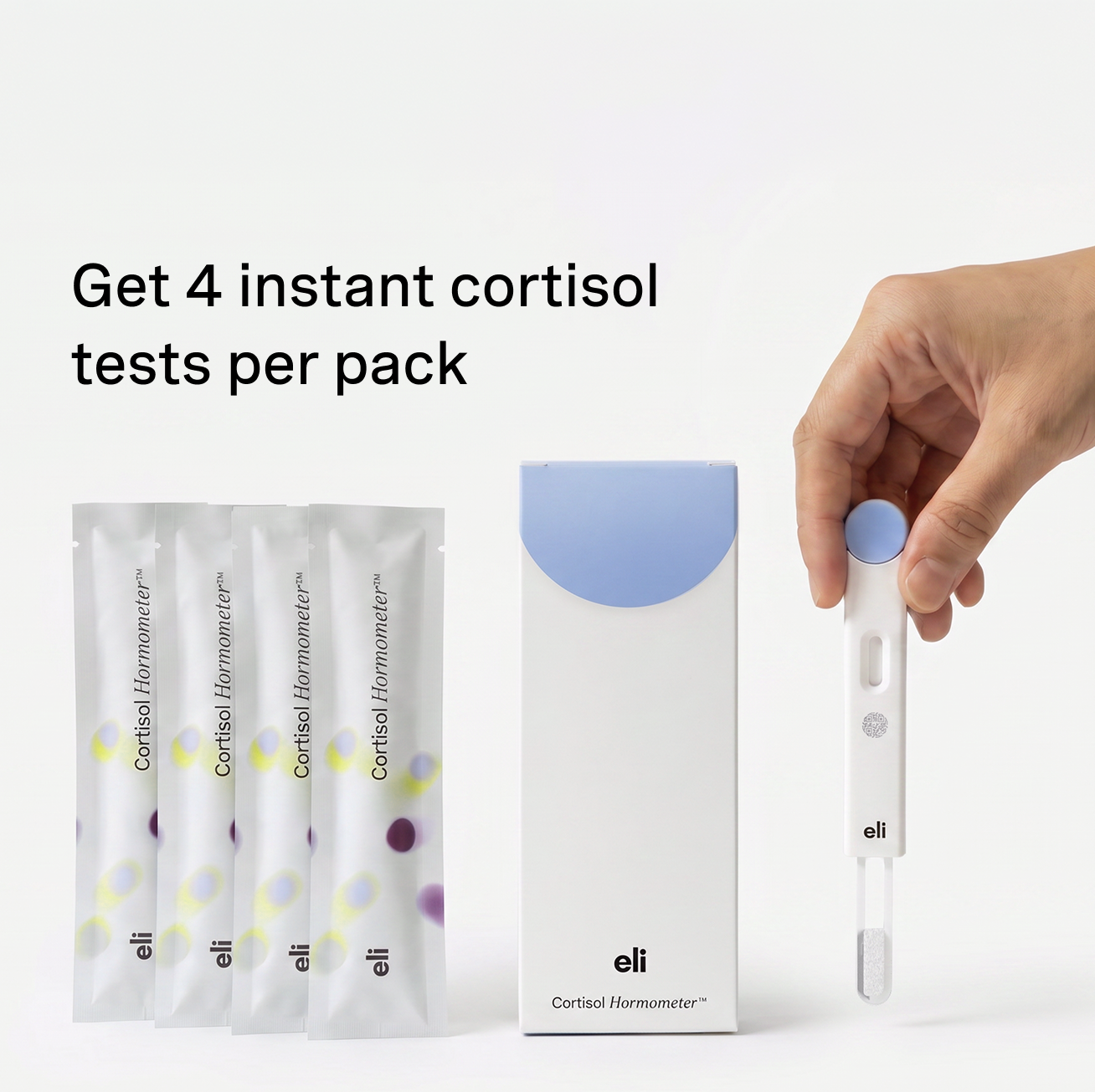
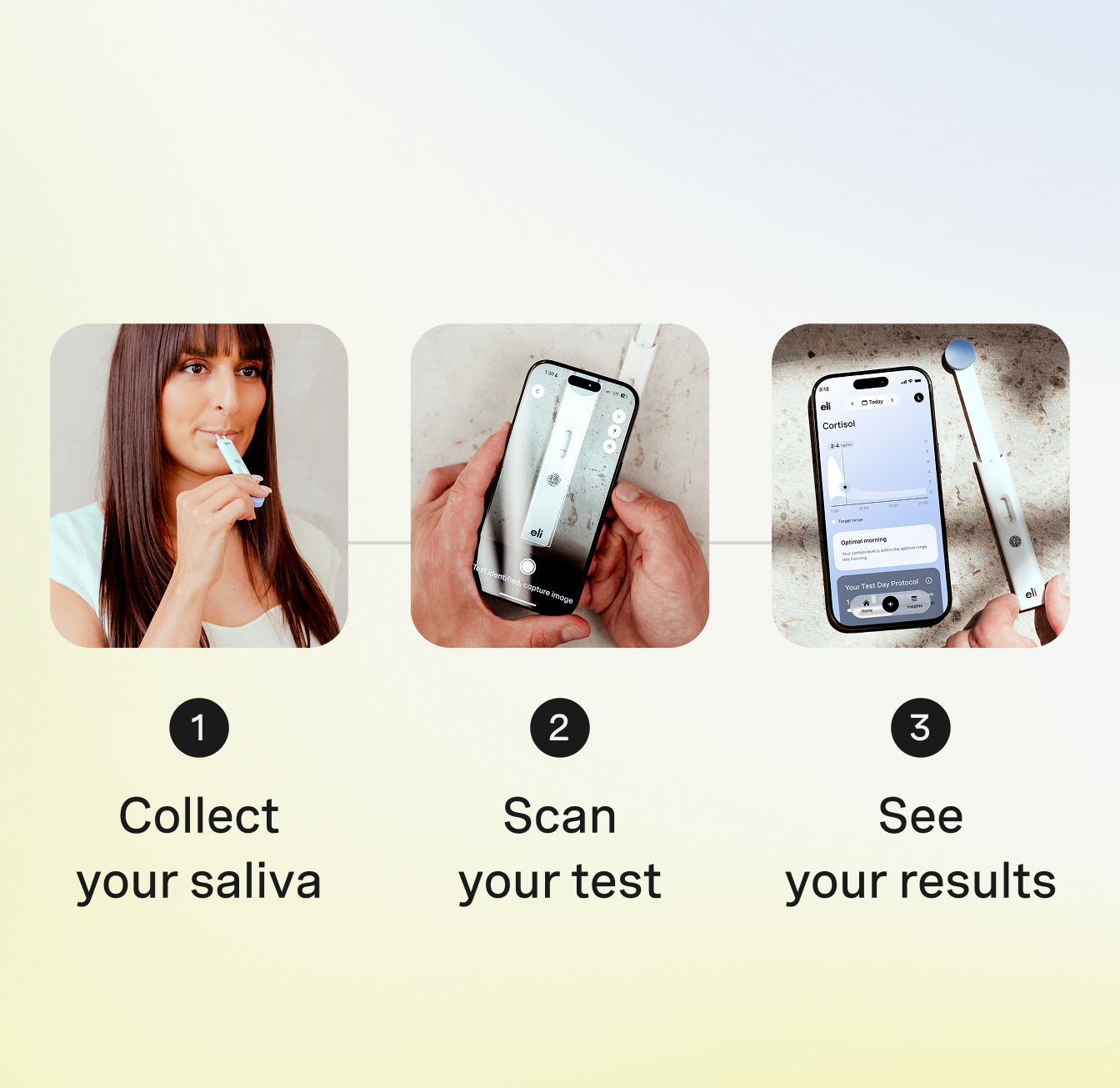
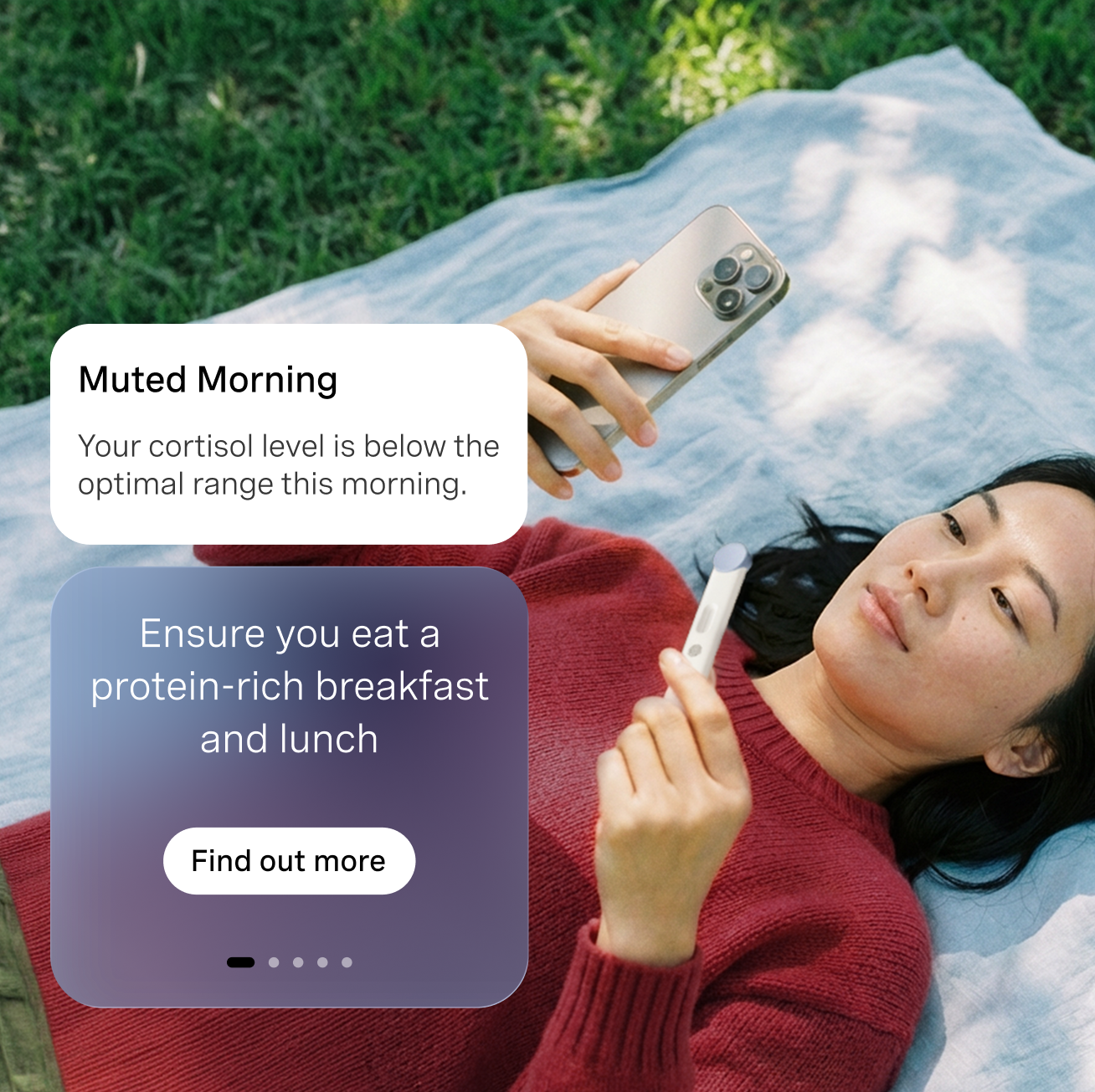
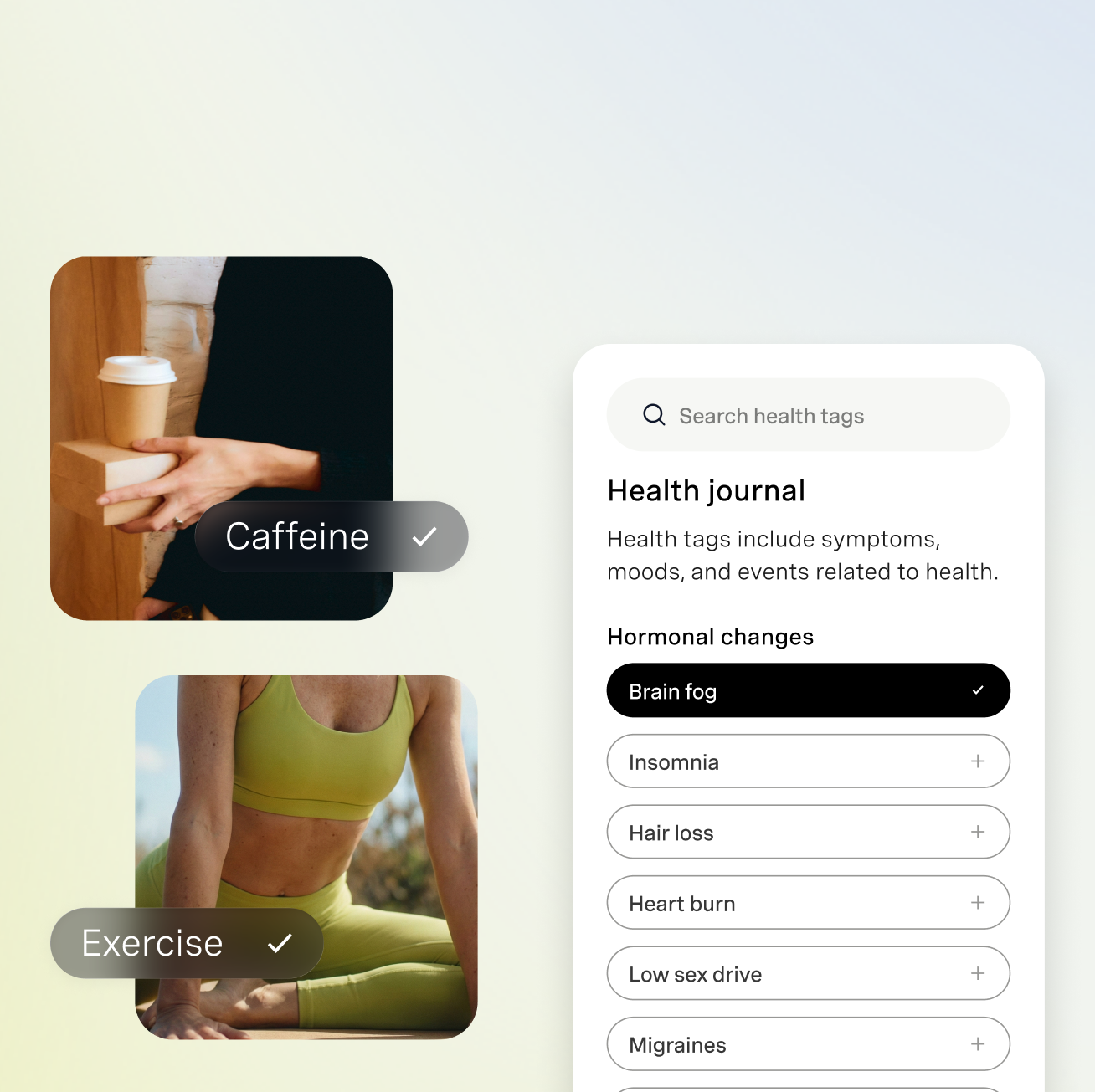
Hormometer® reveals your rhythm in real-time. Test after afternoon coffee to see if it spikes cortisol into evening. Test post-workout to check recovery. Test before bed to confirm you're actually winding down.
When you can see your rhythm, you stop guessing. You know what's working and what to change.
Start tracking with Hormometer® and discover what your body has been trying to tell you.