Understanding morning cortisol
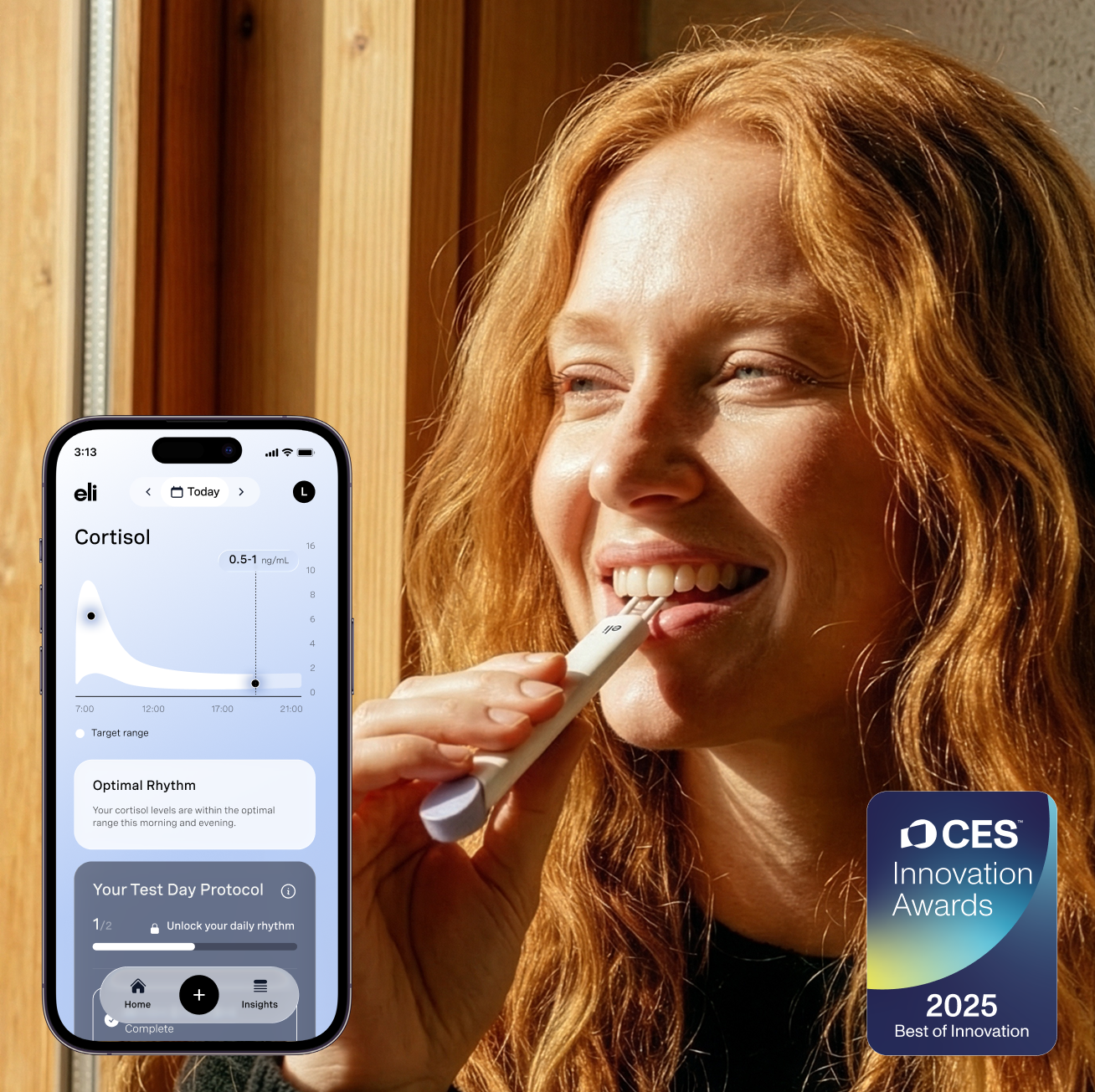
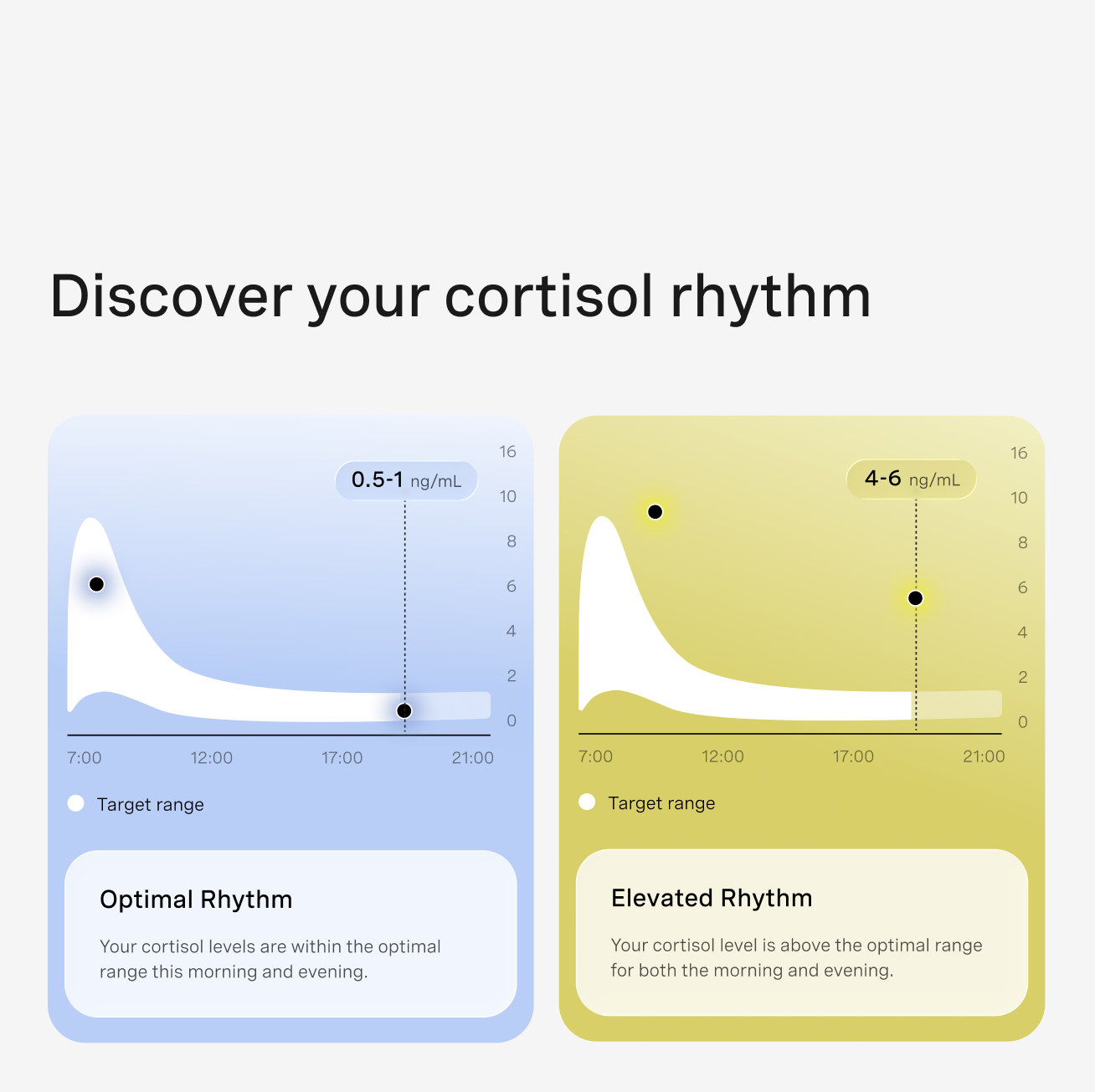
Cortisol should be at its highest point at the start of your day—it typically peaks within 60 minutes of waking. This surge (called the cortisol awakening response, or CAR) prepares your body for the day ahead.
Important timing note: Your cortisol can peak as early as immediately upon waking, to 60 minutes after waking–it depends on your individual biology. In the Eli app, we recommend testing within 30 minutes of waking for consistency. This captures when most people peak, but your personal peak timing may vary. For the most complete picture, consider full CAR testing.
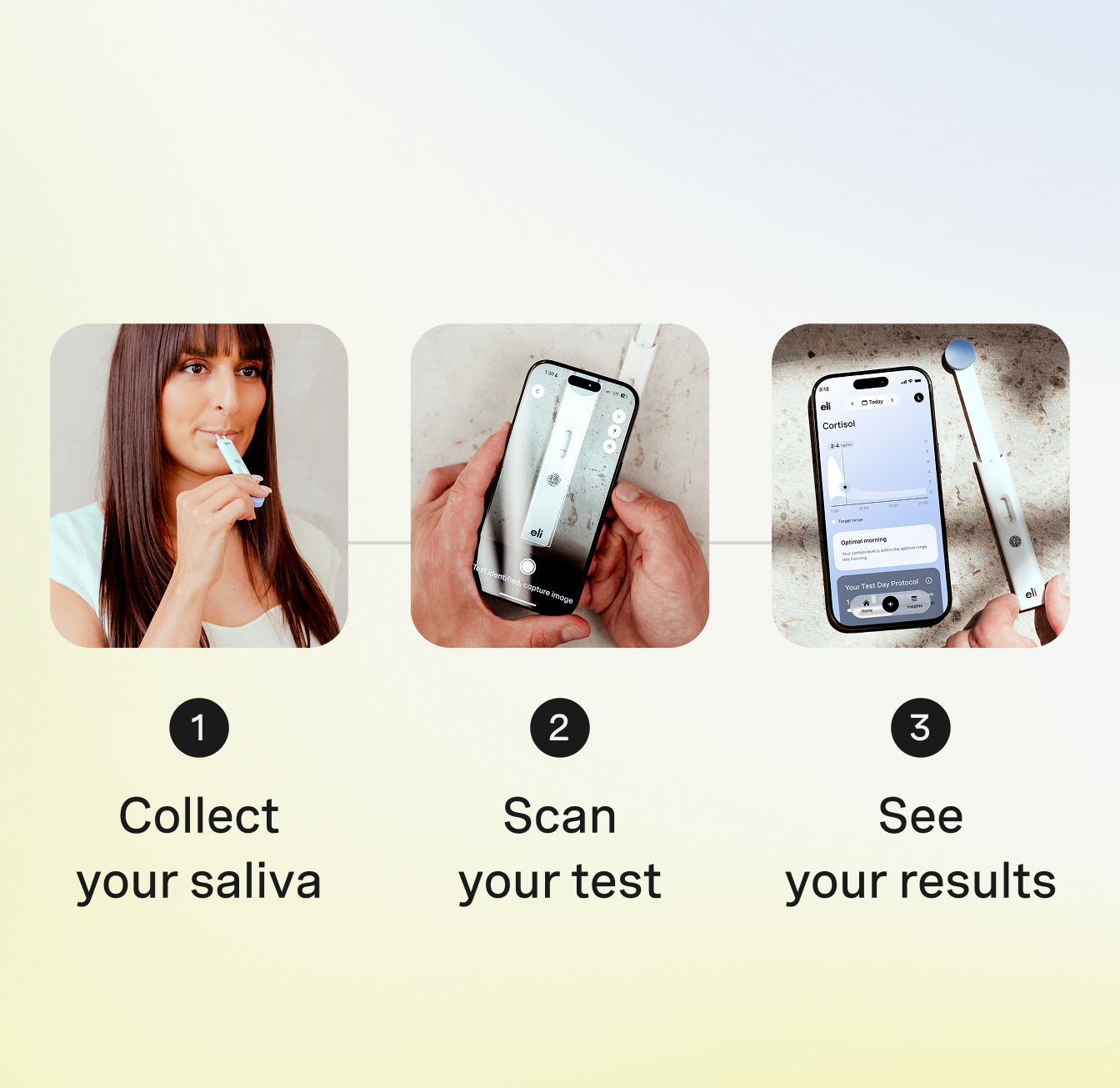
Testing window: Within 30 minutes of waking (before food, beverages, chores, or exercise.)
What influences morning cortisol
Your morning reading can be affected by:
-
Sleep quality: Poor sleep blunts morning cortisol
-
Time of waking: Testing at different times gives different results
-
Individual peak timing: Some people naturally peak at wake, others at 30 min, others at 60 min
-
Stress dreams: Nightmares or anxiety dreams can elevate morning cortisol
-
Illness: Being sick raises cortisol
-
Medications: Steroids, some antidepressants, birth control
-
Alcohol: Even previous evening's drinks can affect next morning
For accurate results: Test at the same time for 2-3 mornings to confirm the pattern. If results seem inconsistent, try CAR testing to identify your personal peak timing.
What your morning cortisol results mean
Very low morning cortisol (under 1 ng/mL)
What it suggests:
-
Severely blunted stress response
-
Possible adrenal insufficiency (rare but serious)
-
Advanced stage burnout
-
Chronic fatigue syndrome
You might feel:
-
Extreme difficulty waking up
-
No energy, despite adequate sleep
-
You need stimulants just to function
-
Brain fog and difficulty concentrating
What to do:
-
Use CAR protocol testing to confirm the pattern isn't just early timing
-
If it remains persistently low, consult a doctor immediately—extremely low levels require medical evaluation
-
Consider a comprehensive hormone panel and ACTH stimulation test
Low morning cortisol (1-3 ng/mL)
What it suggests:
-
Blunted cortisol awakening response
-
Chronic stress or burnout
-
Exhausted HPA axis
-
Depression or prolonged sleep issues
You might feel:
-
Tired upon waking, hitting snooze repeatedly
-
Your energy slowly building throughout morning
-
The need to use stimulants to feel functional
-
An afternoon or evening energy surge
What to do:
-
Use CAR protocol testing to see if you have a delayed peak—some people naturally peak later in the morning window
-
Focus on rebuilding morning cortisol:
-
Get at least 15 minutes of bright light immediately upon waking (sunlight or lightbox)
-
Add morning movement (a short walk, stretching, light exercise)
-
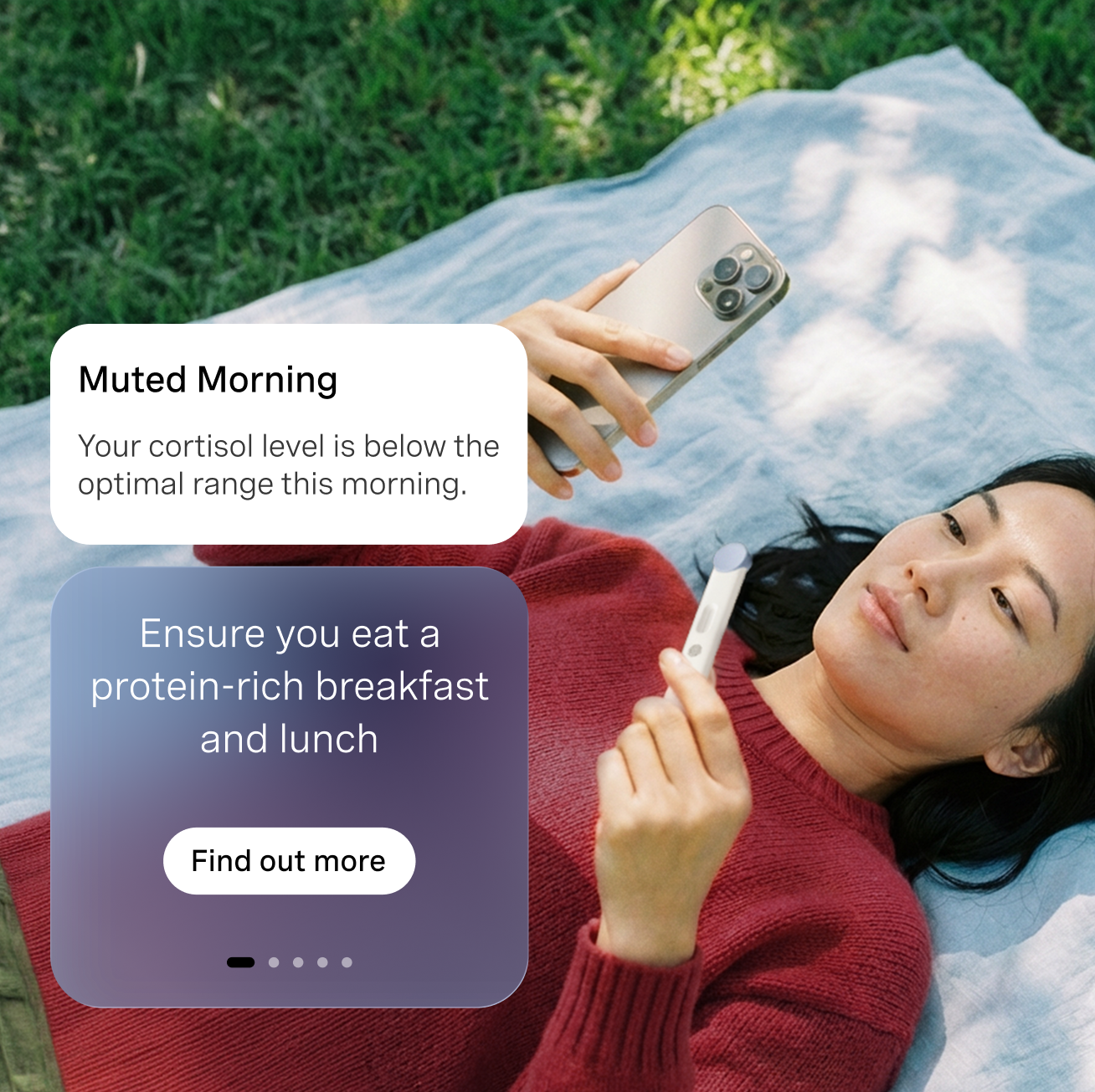
Eat a protein-rich breakfast within 1 hour of waking
-
Try cold water exposure (cold shower for 30 seconds)
-
-
Address chronic stress: Try therapy, stress management tools, and setting clear work boundaries
-
Improve sleep quality: Create a consistent schedule to get 8+ hours; sleep in complete darkness
-
Retest in 2-3 weeks to track your improvement
Normal morning cortisol (3-8 ng/mL)
What it suggests:
-
Healthy cortisol awakening response
-
Proper HPA axis function
-
Good stress response capacity
-
Well-regulated circadian rhythm
You might feel:
-
Energetic upon waking up
-
Clear-headed in the morning
-
Ready to start the day without excessive stimulants
-
Sustained energy through morning hours
What to do:
-
Maintain what's working:
-
Keep a consistent sleep schedule
-
Continue morning light exposure
-
Maintain regular exercise and practice stress management
-
Focus on balanced nutrition
-
-
Test evening cortisol to confirm your full diurnal rhythm is healthy
-
Consider CAR protocol testing to identify your personal peak timing for future reference
-
Retest periodically during high-stress periods to catch dysregulation early
High morning cortisol (8-12 ng/mL)
What it suggests:
-
Elevated, but still within a normal range for some individuals (athletes or high-performers)
-
May indicate acute stress or anxiety
-
Might precede burnout if sustained
Important note: If you tested immediately upon waking and got this result, consider testing again at 30 and 60 minutes later—you may have caught your natural peak, which could be higher than average but still healthy if it declines properly afterward.
You might feel:
-
Anxiety upon waking or have racing thoughts
-
Wired but not necessarily energized
-
Difficulty relaxing, even in the morning
-
Anticipatory stress about the day ahead
What to do:
-
Use CAR protocol testing to see your full morning pattern—high early cortisol that drops quickly can be normal
-
Check evening cortisol (around 9-11pm) to see if levels are staying high all day
-
Assess acute stressors: What's causing morning anxiety?
-
Adjust your morning routine:
-
Avoid checking your phone/email immediately upon waking
-
Add 5-10 minutes of breathing exercises or meditation before starting your day
-
Switch to gentle movement instead of intense morning workouts
-
-
Reduce stimulants: Cut back on morning caffeine
-
Retest in 1-2 weeks to see if your levels are sustained or temporary
Very high morning cortisol (above 12 ng/mL)
What it suggests:
-
Significantly elevated stress response
-
Possible Cushing's syndrome (rare but serious)
-
Severe acute stress or anxiety disorder
-
Medication effects (if taking corticosteroids)
Important note: If you tested immediately upon waking, test again at 30 and 60 minutes later to see if this is a natural (though high) peak that declines, or if cortisol stays elevated throughout the morning window.
You might feel:
-
Intense anxiety or panic
-
Heart racing upon waking
-
Difficulty controlling worry
-
Physical symptoms such as sweating, trembling, or nausea
What to do:
-
Consult a doctor immediately—levels this high require evaluation
-
Rule out medical causes: Cushing's syndrome, tumors, medication effects
-
Do not wait weeks to retest—seek medical guidance within days
Bottom Line: Your morning cortisol reveals your starting point for the day. Your natural peak can occur anytime in the first hour after waking—so consistency in testing time matters more than the exact timepoint.