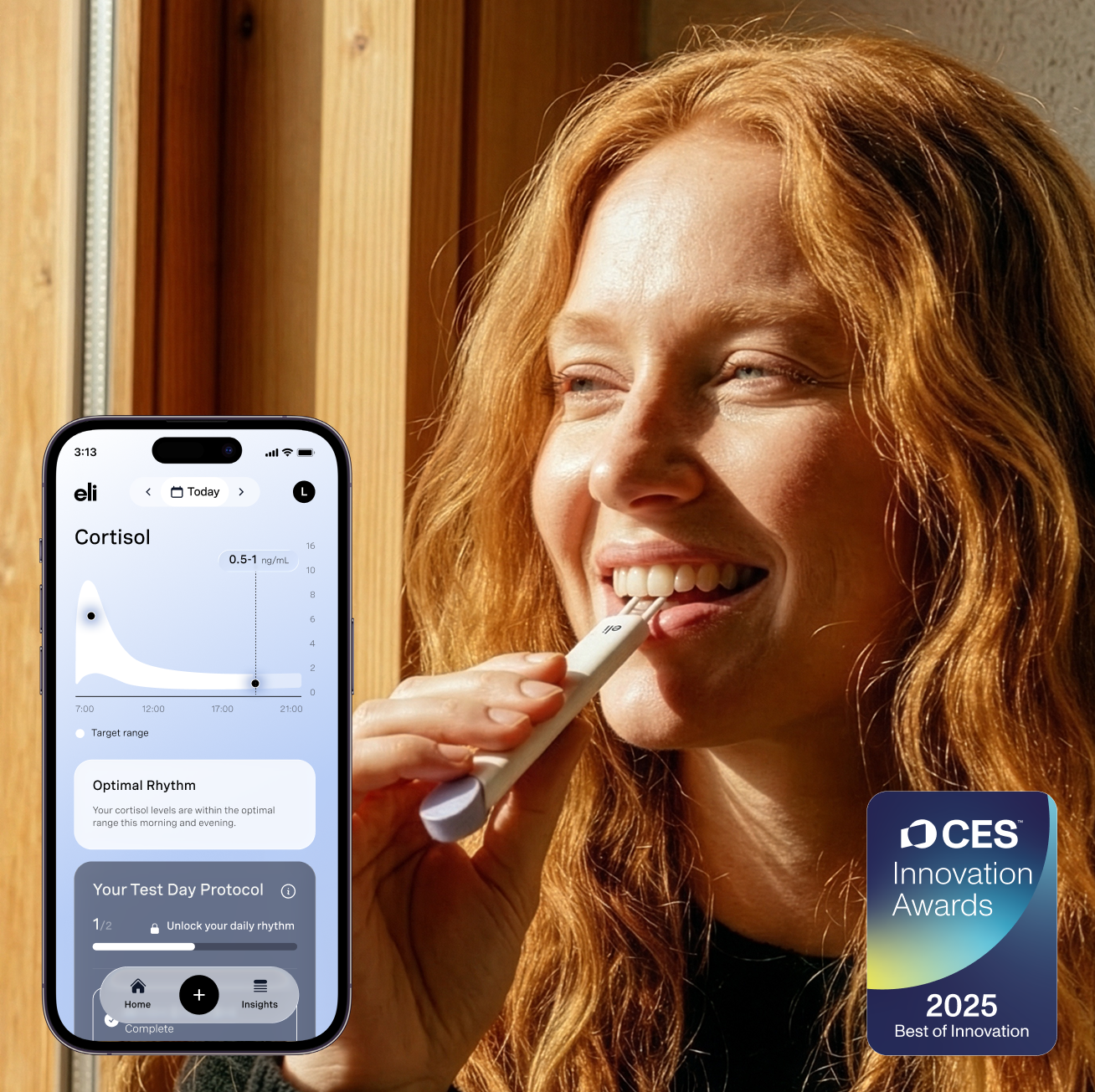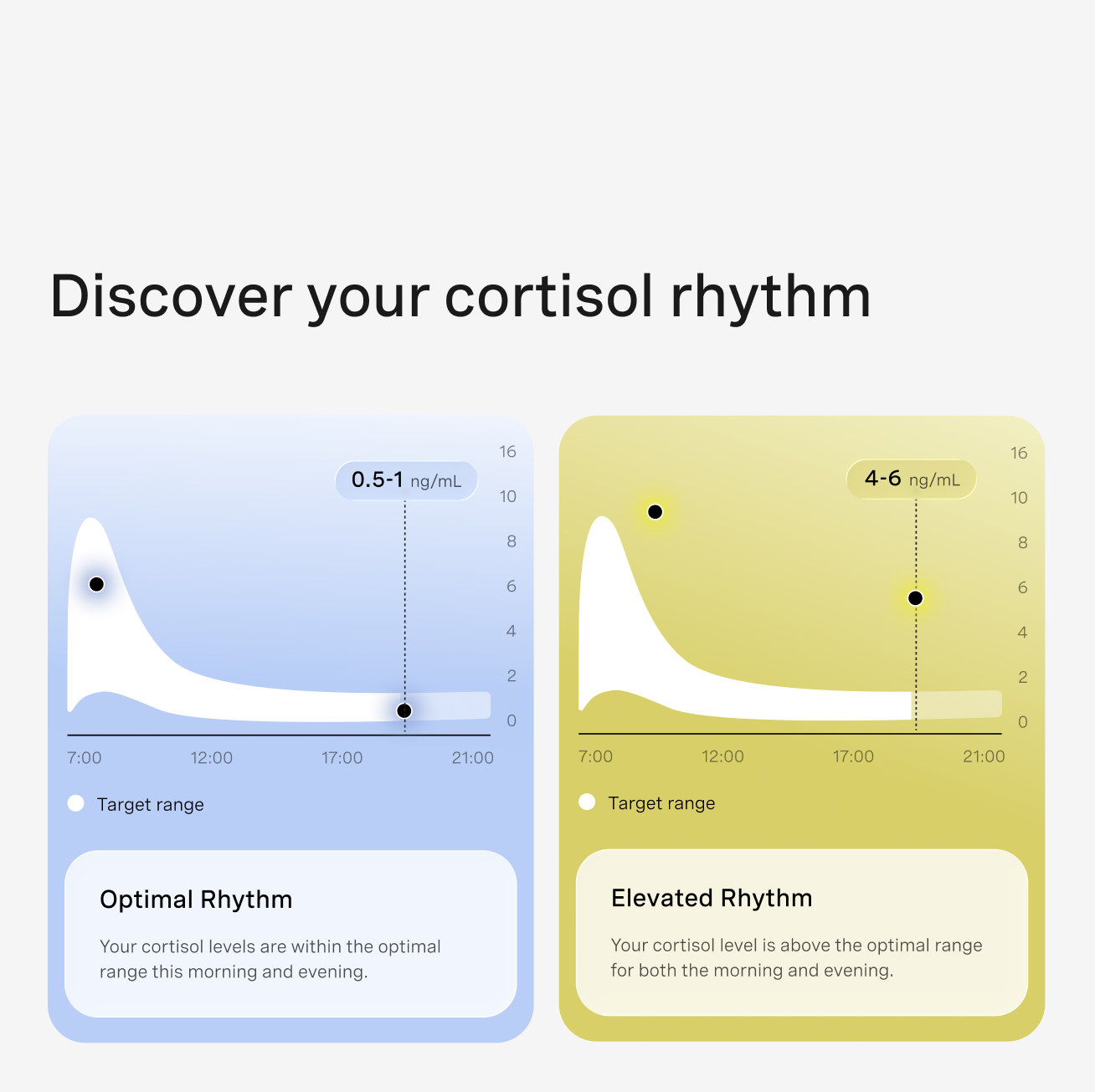
Most conversations about cortisol frame it as a number: too high, too low. But cortisol isn't a single reading. In healthy adults, it's a rhythm that rises sharply in the morning, then tapers steadily through the day, reaching its lowest point around bedtime.
When that rhythm breaks down, your body sends signals. The challenge is that many of those signals look alike, whether cortisol is running high, running low, or simply losing its natural arc. That overlap is why so many people feel something is off but can't pinpoint what. Testing across multiple timepoints is the most direct way to see which direction your pattern has shifted, rather than relying on signs alone.
Here's what to look for.
What does cortisol imbalance actually mean?
Cortisol imbalance doesn't always mean an extreme reading at one point in the day. More often, it means a disrupted pattern across the day: a curve that's flatter than it should be, too elevated in the evening when it should be winding down, or too sluggish in the morning when it should be at its peak.
Understanding which direction your rhythm has shifted matters, because the strategies that support a high-cortisol pattern and a low-cortisol pattern are different. Treating one as the other can make things worse.
What a high-cortisol pattern can feel like
The Hormometer® is a general wellness device and is not intended to screen for, diagnose, or evaluate any medical or hormonal condition. The patterns described below are for educational purposes only. If you have concerns about your cortisol levels or health, speak with your healthcare provider.
Chronically elevated cortisol keeps your body's stress response switched on. Over time, that constant activation shows up in predictable ways.
You feel wired but exhausted
One of the most recognizable signs of sustained high cortisol is the feeling of being simultaneously on edge and depleted. You're tired but you can't fully relax. Your mind keeps running even when your body wants to rest. This "wired-but-tired" state reflects a nervous system that hasn't had a chance to downregulate.¹
Sleep is hard to come by
Cortisol and sleep operate in opposition. When cortisol is still elevated in the evening, when it should be at its daily low, it competes with the hormones that signal your body to wind down.³ Difficulty falling asleep, waking in the early hours, or sleeping a full night and still feeling unrested can all point to cortisol that isn't dropping the way it should by nighttime.
Your weight is shifting, especially around the midsection
Cortisol plays a direct role in how your body stores and mobilizes fat.¹ When it remains elevated for extended periods, it can encourage fat storage in the abdominal area and disrupt normal metabolism. Unexplained changes in body composition, particularly around the belly, that aren't explained by obvious changes in diet or activity are worth noting.
Your mood feels harder to manage
Sustained high cortisol affects the parts of the brain involved in emotional regulation.⁵ You may notice more reactivity, a shorter fuse, difficulty concentrating, or a low-level anxiety that doesn't seem tied to anything specific. These shifts can feel like personality changes, but they often reflect a physiological pattern that can be measured and tracked.
You're getting sick more frequently
Cortisol has anti-inflammatory properties in the short term, helping the body respond to immediate threats.¹ But when it stays elevated chronically, those same properties begin to suppress immune function. A pattern of frequent minor illnesses, slow recovery, or feeling run down more often than usual can be a downstream signal of a cortisol rhythm that's been running high for too long.
What a depleted cortisol pattern can feel like
Low cortisol, or a cortisol pattern that fails to rise properly in the morning, creates a different but equally disruptive set of challenges.
You wake up exhausted, even after a full night
The cortisol awakening response (CAR) is the sharp rise in cortisol that normally occurs within the first hour after waking.² It's part of what generates the energy and alertness to start the day.⁴ When that morning peak is blunted, waking up feels like pushing through fog regardless of how many hours you slept. Coffee helps temporarily, but the underlying pattern remains.
Afternoons feel like hitting a wall
In healthy adults, a well-functioning cortisol curve provides a gradual, sustained release of energy through the morning that supports focus and physical capacity.³ When the curve is flat or depleted, that energy reserve runs out quickly. Mid-afternoon crashes, a sudden drop in concentration, motivation, or physical energy, can reflect a cortisol pattern that ran out of steam by midday.
Motivation and mood feel flat
Where high cortisol tends to produce anxiety and reactivity, low cortisol more often produces a kind of flatness.¹ Things that used to feel engaging lose their pull. Getting started on tasks requires more effort than it should.This flatness tends to feel physiological rather than emotional — like the engine isn't turning over, rather than something being wrong with the day.
Recovery from exercise takes longer than expected
Cortisol is part of the physiological response that mobilizes resources for physical effort and then facilitates recovery afterward.⁵ When the cortisol pattern is depleted, that recovery mechanism is less efficient. Muscle soreness that persists longer than usual, feeling worse the day after exercise rather than better, or hitting unexpected performance plateaus can all reflect a cortisol rhythm that isn't supporting recovery the way it should.
Why these signs overlap and why that matters
You may have noticed that some of these signs appear in both lists. Fatigue, mood shifts, disrupted sleep, and changes in body composition can show up whether cortisol is running too high or too low. That's not a coincidence.
Both patterns reflect a cortisol rhythm that has lost its natural shape.³ The difference is in the direction, and the direction matters for how you respond. Lifestyle strategies that support recovery from chronic high cortisol (reducing stimulation, prioritizing rest, lowering training load) are different from those that help a depleted cortisol pattern rebuild (strategic morning light exposure, consistent sleep timing, appropriate movement).
Without knowing which pattern you're in, it's easy to apply the wrong approach or to keep guessing.
The most direct way to know: measure your rhythm
Recognizing these signs is a useful first step. But signs are context. They point toward a question, not an answer.
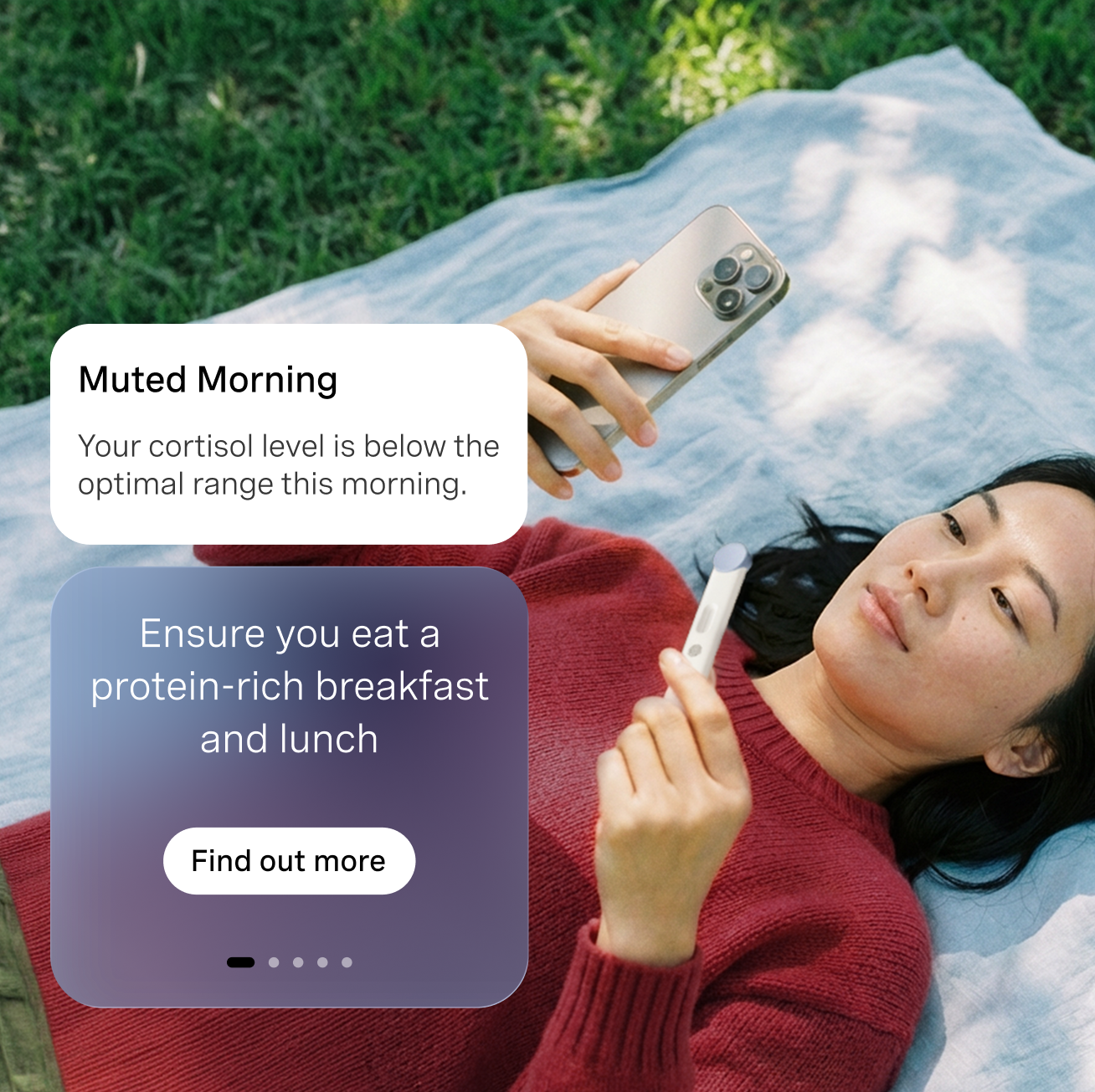
Cortisol testing at home makes it possible to see your actual rhythm across the day: whether your morning peak is present and strong, how steadily levels decline through the afternoon, and whether cortisol has dropped by the time you're ready for sleep. That curve, not a single reading but the pattern, is what tells you which direction to look.
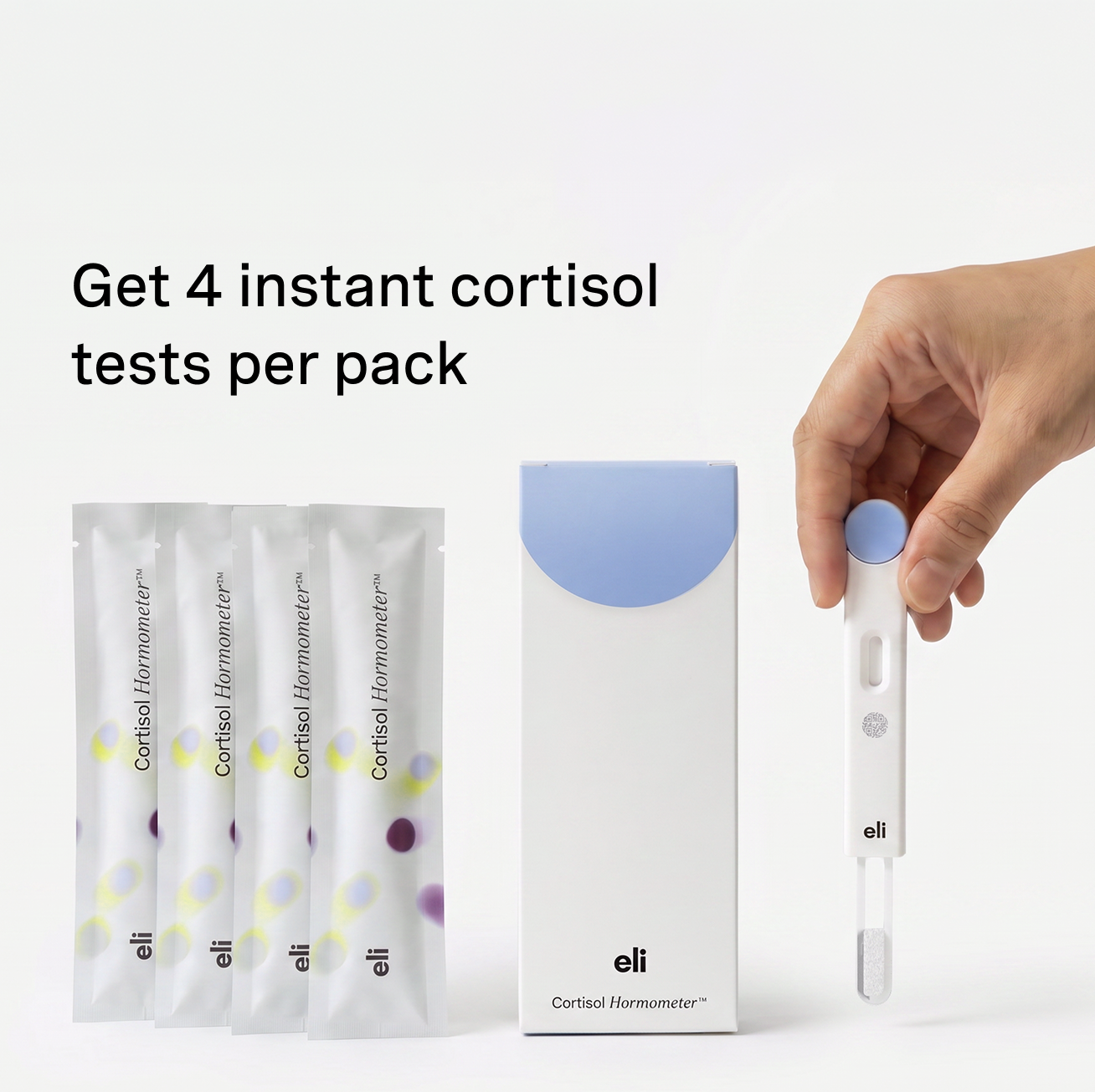
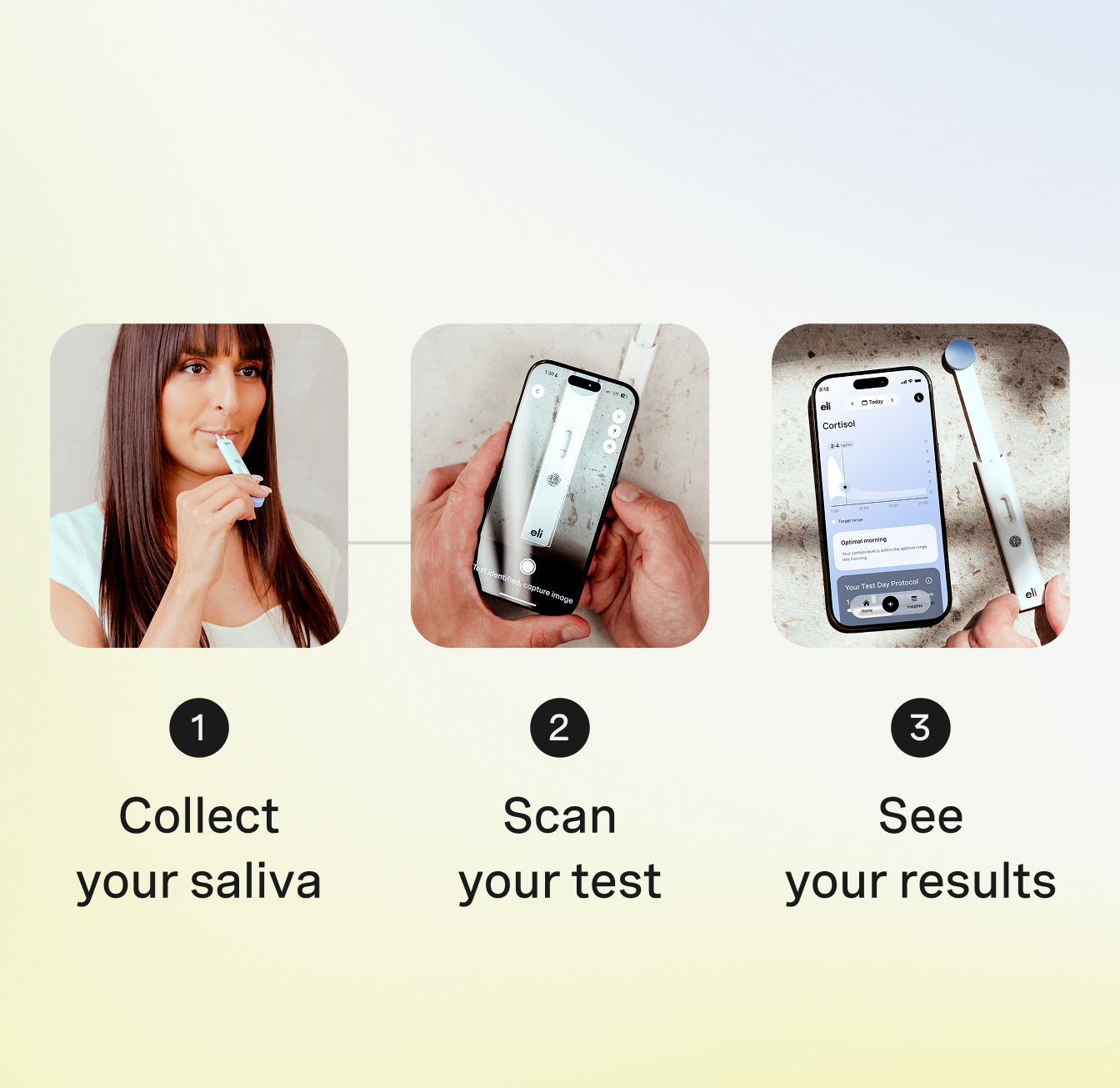
The Hormometer® delivers salivary cortisol results in 20 minutes via the Eli app. No lab, no mail-in. Test at the times that matter: morning, afternoon, evening, and start seeing your pattern.
The Hormometer® is a general wellness device. It is not a medical device and is not intended to diagnose, treat, or monitor any health condition.
→ Saliva vs. blood cortisol tests: which one is right for you?
Frequently asked questions
What are the most common signs of high cortisol? The most commonly reported signs of a cortisol pattern running high include difficulty sleeping despite fatigue, feeling persistently anxious or on edge, unexplained weight changes particularly around the abdomen, low-grade mood instability, and getting sick more often than usual.¹ These signs reflect a stress response that hasn't had adequate opportunity to downregulate. Testing across multiple timepoints (morning, afternoon, and evening) is the most direct way to see whether a higher cortisol pattern is part of what you're experiencing.
Can you have signs of both high and low cortisol at the same time? Yes, and it's more common than most people expect. Because many signs, including fatigue, mood shifts, disrupted sleep, and changes in motivation, appear in both high and low cortisol patterns, it can be difficult to distinguish between them without testing.³ This overlap is one of the main reasons self-assessment alone has limits. A cortisol test that captures your rhythm across the day provides a clearer picture of what's actually happening.
How do you test cortisol at home? At-home cortisol testing uses a saliva sample to measure cortisol levels without a clinic visit or blood draw.³ The Hormometer® by Eli Health is a salivary test that delivers results in 20 minutes via smartphone scan, unlike mail-in saliva kits which typically take days or weeks. For the most complete picture of your cortisol rhythm, testing at multiple points across the day (morning, afternoon, and evening) is recommended. Learn more about the differences between testing options in our guide to saliva vs. blood cortisol tests.
This article is for informational and educational purposes only. It is not intended as medical advice and does not constitute a diagnosis, treatment recommendation, or substitute for consultation with a qualified healthcare provider. If you have concerns about your cortisol levels or hormonal health, consult your doctor.
References {#references}
-
Kudielka, B. M., & Kirschbaum, C. (2005). Sex differences in HPA axis responses to stress: a review. Biological Psychology, 69(1), 113–132. https://doi.org/10.1016/j.biopsycho.2004.11.009
-
Clow, A., Thorn, L., Evans, P., & Hucklebridge, F. (2004). The awakening cortisol response: methodological issues and significance. Stress, 7(1), 29–37. https://doi.org/10.1080/10253890410001667205
-
Stalder, T., Kirschbaum, C., Kudielka, B. M., Adam, E. K., Pruessner, J. C., Wüst, S., … & Clow, A. (2016). Assessment of the cortisol awakening response: Expert consensus guidelines. Psychoneuroendocrinology, 63, 414–432. https://doi.org/10.1016/j.psyneuen.2015.10.010
-
Pruessner, J. C., Wolf, O. T., Hellhammer, D. H., Buske-Kirschbaum, A., von Auer, K., Jobst, S., … & Kirschbaum, C. (1997). Free cortisol levels after awakening: a reliable biological marker for the assessment of adrenocortical activity. Life Sciences, 61(26), 2539–2549. https://doi.org/10.1016/s0024-3205(97)01008-4
-
Hellhammer, D. H., Wüst, S., & Kudielka, B. M. (2009). Salivary cortisol as a biomarker in stress research. Psychoneuroendocrinology, 34(2), 163–171. https://doi.org/10.1016/j.psyneuen.2008.10.026