Key takeaways.
- Cortisol rises after intense training to mobilize energy and sharpen focus, then settles back toward baseline as you recover.
- Balanced training is associated with a lower baseline stress response and greater resilience over time.
- When training consistently outpaces recovery, cortisol rhythms can shift. This pattern is associated with fatigue, incomplete recovery, and stalled performance.
- A single cortisol reading can't tell you whether you're overtrained. Overtraining shows up in the shape of your diurnal curve tracked across multiple days—not in one number on one day.
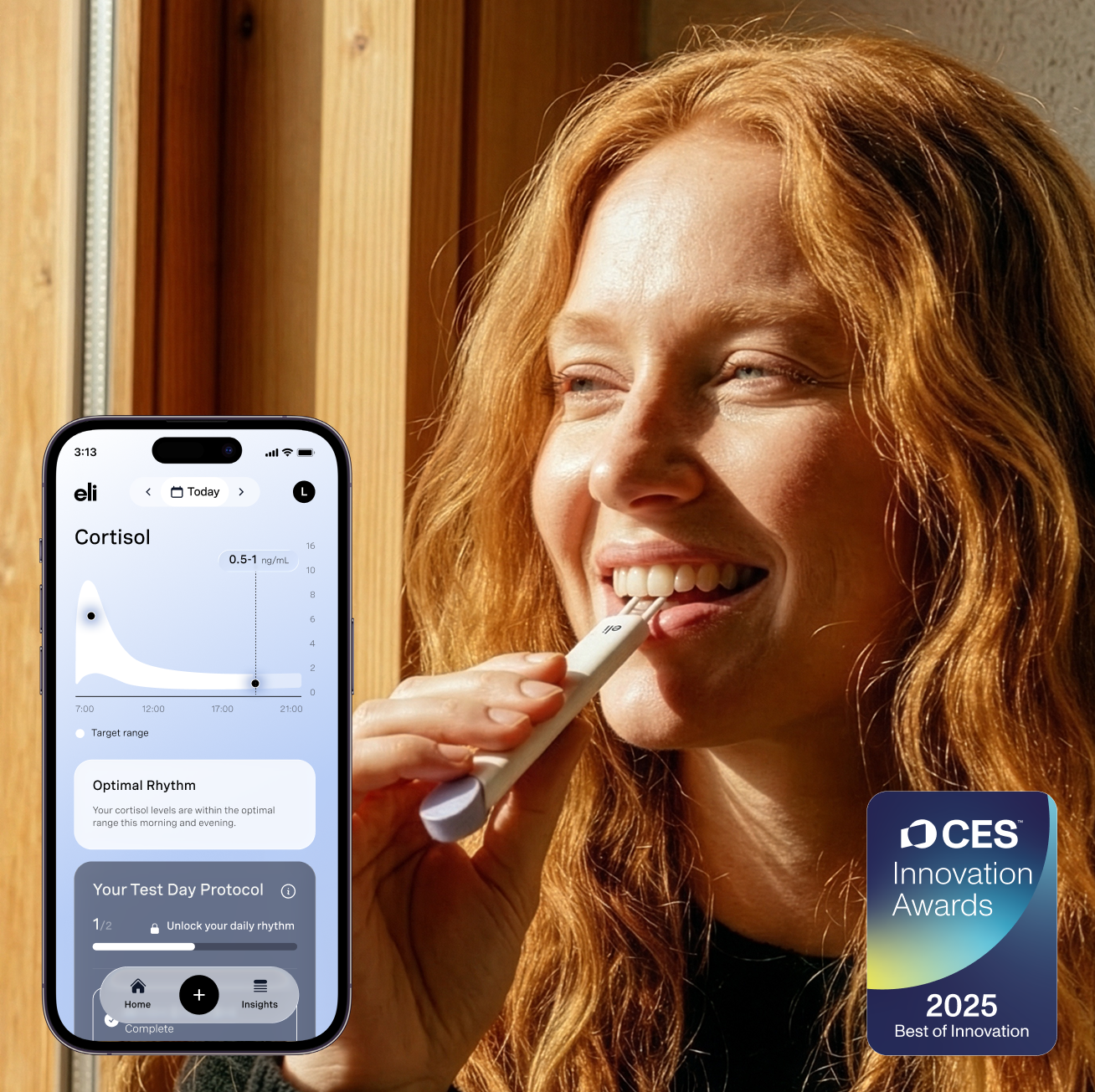
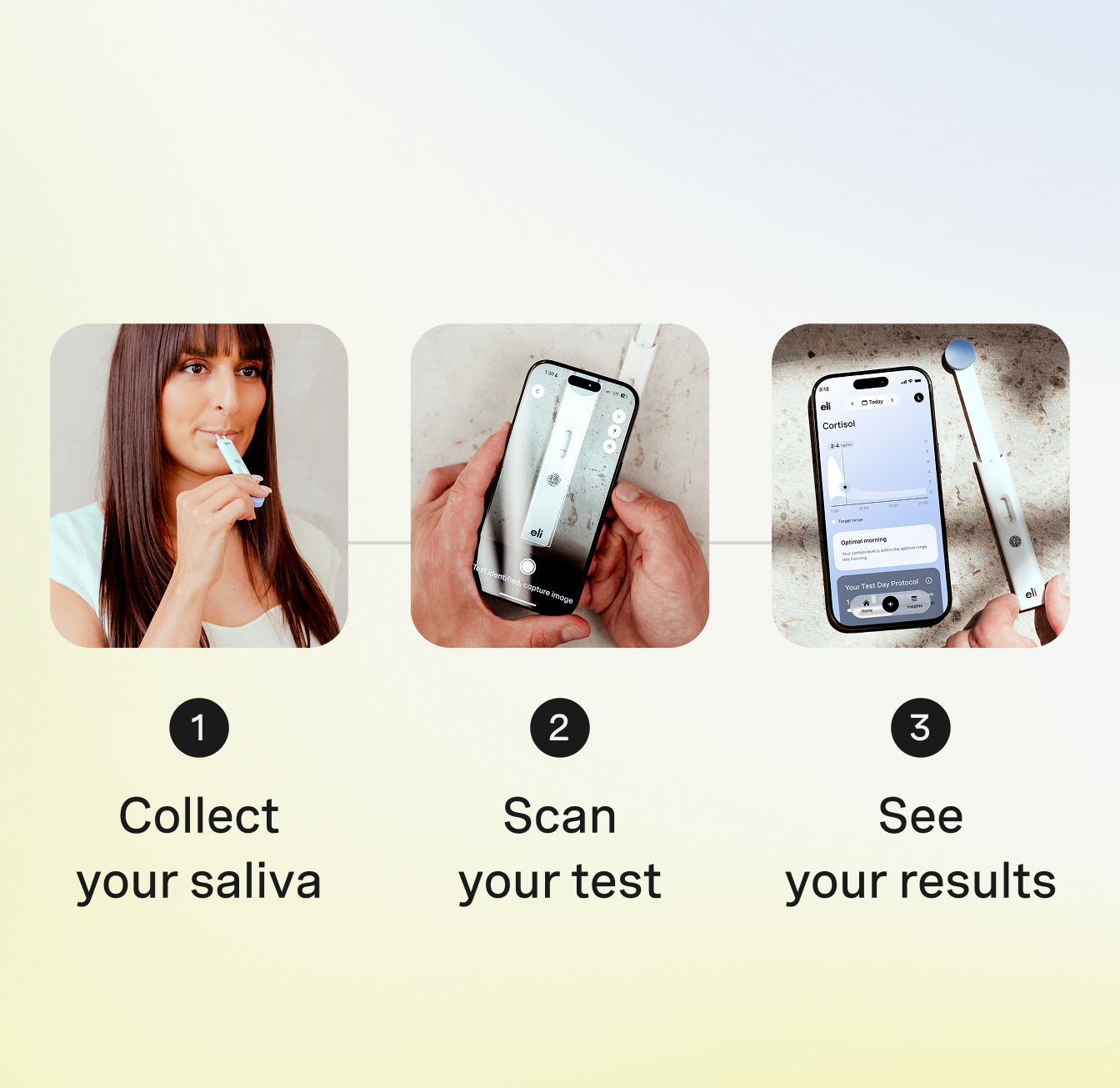
- Eli's Hormometer® makes it possible to capture cortisol patterns anytime, anywhere, so you can watch your rhythm build over time.
Training, stress, and the role of cortisol.
Training induces stress by design. Every sprint, lift, or long run challenges the body to adapt, grow stronger, and become more resilient. At the center of this process is cortisol, the body's primary stress and energy-deploying hormone.
In short bursts, cortisol is helpful. When training volume and recovery are in balance, cortisol supports progress, enabling your body to rise to the challenge. But if recovery is inadequate, cortisol can fall out of rhythm—and that shift is something you can only see by watching your pattern over time, not by reading a single result.
Cortisol and the exercise stress response.
Why does cortisol rise during training?
During exercise, cortisol increases with intensity and duration. High-intensity efforts trigger sharper spikes, while long endurance sessions elevate cortisol more gradually. These temporary increases help:
-
Mobilize glucose and fatty acids for working muscles.
-
Support focus and alertness during performance.
-
Moderate inflammation from muscle stress.
Environmental factors also influence the response—training in heat, cold, or with depleted glycogen stores can amplify cortisol release. Athletes on very low carbohydrate diets often see stronger cortisol spikes because the body perceives greater metabolic stress.
After training, cortisol typically returns to baseline within a few hours as the body shifts to recovery.
Building resilience with consistent training.
With regular training, the same workout tends to produce a lower cortisol output than it did before, meaning the body experiences less stress to achieve the same effort. This reflects a raised stress threshold: the body becomes more efficient at managing both exercise and everyday stressors.
Why is overtraining harmful?
Overtraining erodes both physical and mental performance, slowing or halting progress and elevating injury risk. Chronically elevated cortisol is associated with the breakdown of muscle and connective tissue, and with a higher risk of stress fractures and tendon issues.
It's also linked to cognition: prolonged cortisol elevation is associated with reduced memory and focus, which athletes may notice as brain fog, slower decision-making, or difficulty learning new techniques. Sleep disturbance often compounds the problem, as elevated nighttime cortisol can interfere with full recovery.
Overtraining and cortisol imbalance.
When training consistently outpaces recovery, cortisol rhythms tend to shift in stages.
In early overtraining, cortisol levels may remain elevated even at rest. Athletes often feel "wired but tired": alert during the day yet unable to switch off at night. Recovery feels incomplete, and sleep quality begins to suffer.
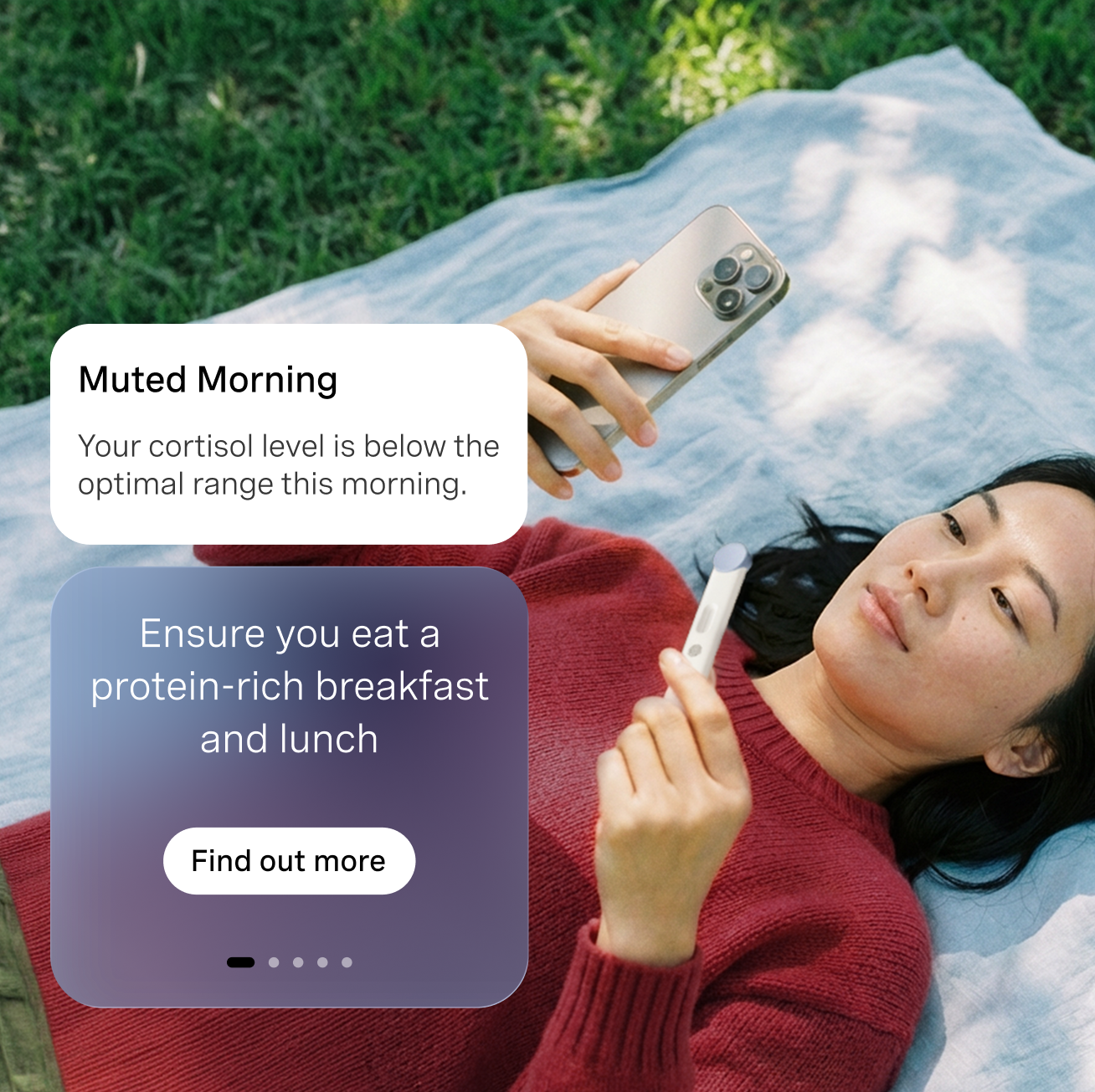
In advanced overtraining, the stress system itself becomes fatigued. Instead of spiking when needed, cortisol output flattens or blunts. This leaves athletes chronically drained, less motivated, and less able to respond to normal training loads.
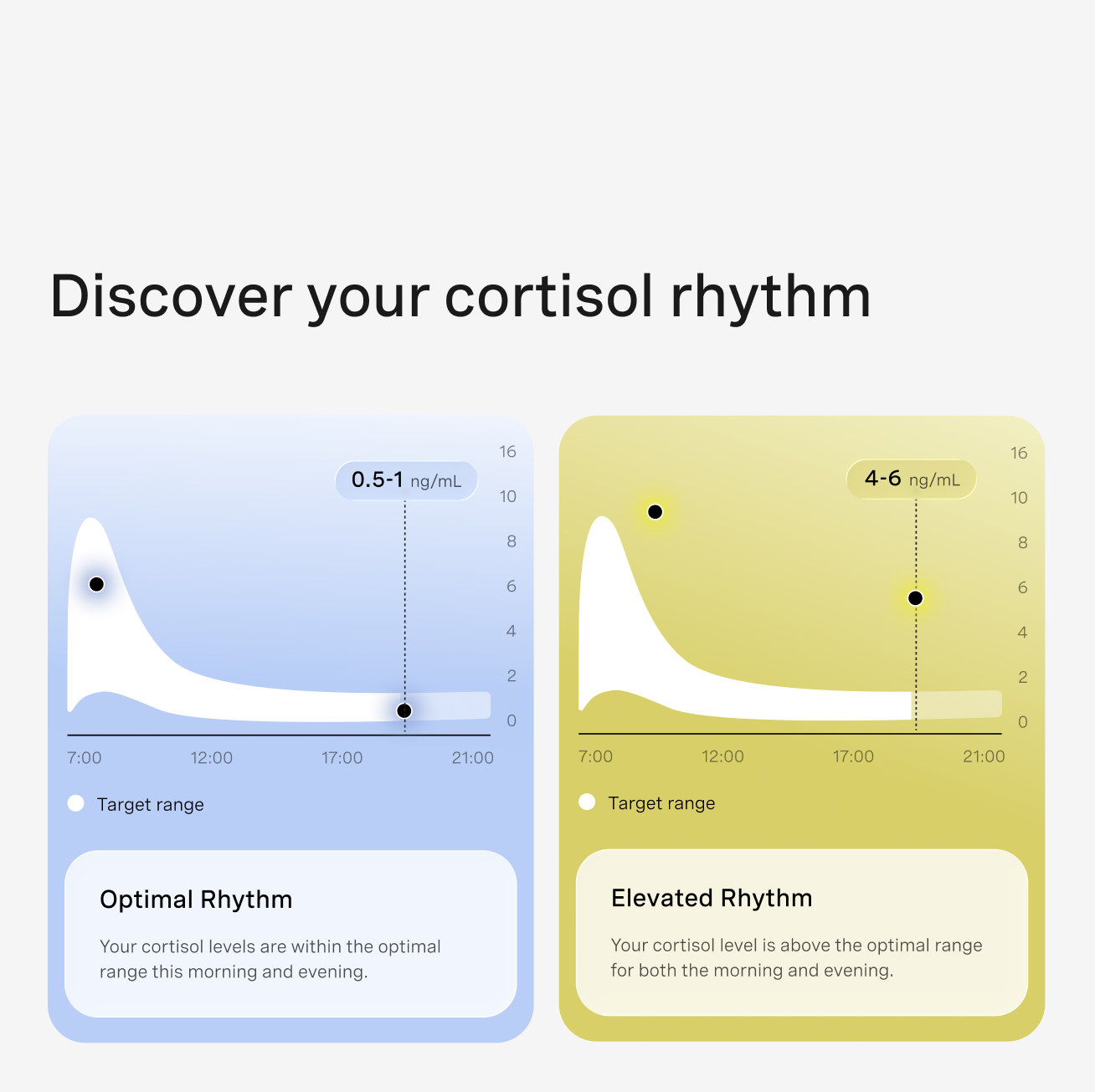
A flattened cortisol rhythm—where morning and evening values start to look similar—is one of the clearer signals associated with chronic stress and underrecovery. When this shows up, performance often declines despite greater effort, suggesting the body is no longer adapting but breaking down.
But here's the catch, and it's the whole point of tracking: you can't see a flattening rhythm in a single reading. A flat curve is only "flat" relative to what a healthy, sloped curve looks like for you. That shape only becomes visible across repeated tests.
Sympathetic vs. parasympathetic overtraining patterns.
Researchers describe two common presentations:
-
Sympathetic overtraining. High cortisol, elevated resting heart rate, poor sleep, and persistent agitation. This pattern is more common in high-intensity sports like HIIT, sprinting, or powerlifting.
-
Parasympathetic overtraining. Blunted cortisol output, low motivation, persistent fatigue, and reduced performance. This pattern is more common in endurance sports like marathon running or long-distance cycling.
Both patterns underscore the same thing: balancing load and recovery matters before stress overwhelms the system. These patterns also reveal themselves as changes to your rhythm, not as one surprising reading.
Practical strategies for balancing training and recovery.
Structure your training in cycles. Rotate periods of high intensity with lower-intensity or recovery weeks to give the body time to consolidate gains.
Build in rest days. Allocate at least one to two rest days per week to give muscles and connective tissues time to repair.
Monitor warning signs. Watch for persistent soreness, poor sleep, or declining motivation as cues to ease off.
Support with nutrition and hydration. Consume adequate fuel—particularly carbohydrates and protein—to help minimize excessive cortisol and restore glycogen. A post-training meal with carbs and protein not only supports muscle recovery but is also associated with a faster return of cortisol toward baseline.
Prioritize sleep. Aim for seven to nine hours of quality sleep per night to support growth hormone release and keep cortisol in a healthy rhythm. Growth hormone peaks during deep sleep, while cortisol naturally drops, making sleep the body’s most effective recovery tool.
Use active recovery. Incorporate gentle cycling, walking, or yoga to help reduce soreness and stress without adding cortisol load.
What can cortisol tracking reveal?
This is the part most people get wrong: they treat a cortisol result like a decision—one number, one verdict. Cortisol doesn't work that way.
Cortisol is highly individual, and it moves constantly in response to the intensity of a session, how you slept, how you fueled, and everything else life threw at you. So any single reading is a snapshot of one moment, not a diagnosis of your training state. A number that looks "high" might just mean you tested an hour after intervals.
Overtraining doesn't announce itself in one test. It shows up as repeated deviation from your own baseline—a diurnal curve that flattens, or even inverts, across multiple days. That shape is invisible in a single reading and unmistakable across many. The rhythm over time is the signal; the individual number is just a data point.
What to watch for across your rhythms
-
Elevated morning cortisol. A strong cortisol awakening response where levels rise in the first 30–60 minutes after waking is a healthy sign. But if cortisol starts out unusually high the moment you wake, before that surge, it may reflect residual stress from the previous day or incomplete recovery.
-
Upward trending cortisol. Rising cortisol towards the end of a training week may signal training carryover.
-
Flattened rhythms. A diurnal curve that loses its slope or inverts over several days may indicate imbalance.
Because cortisol is so individual, patterns over time are far more meaningful than single numbers. Moment-in-time results matter less than repeated deviations from your own baseline—which is exactly why a handful of curves tells you more than a single perfect test ever could.
These insights help athletes adjust intensity, rest, or fueling before performance declines.
How can Eli support training and recovery?
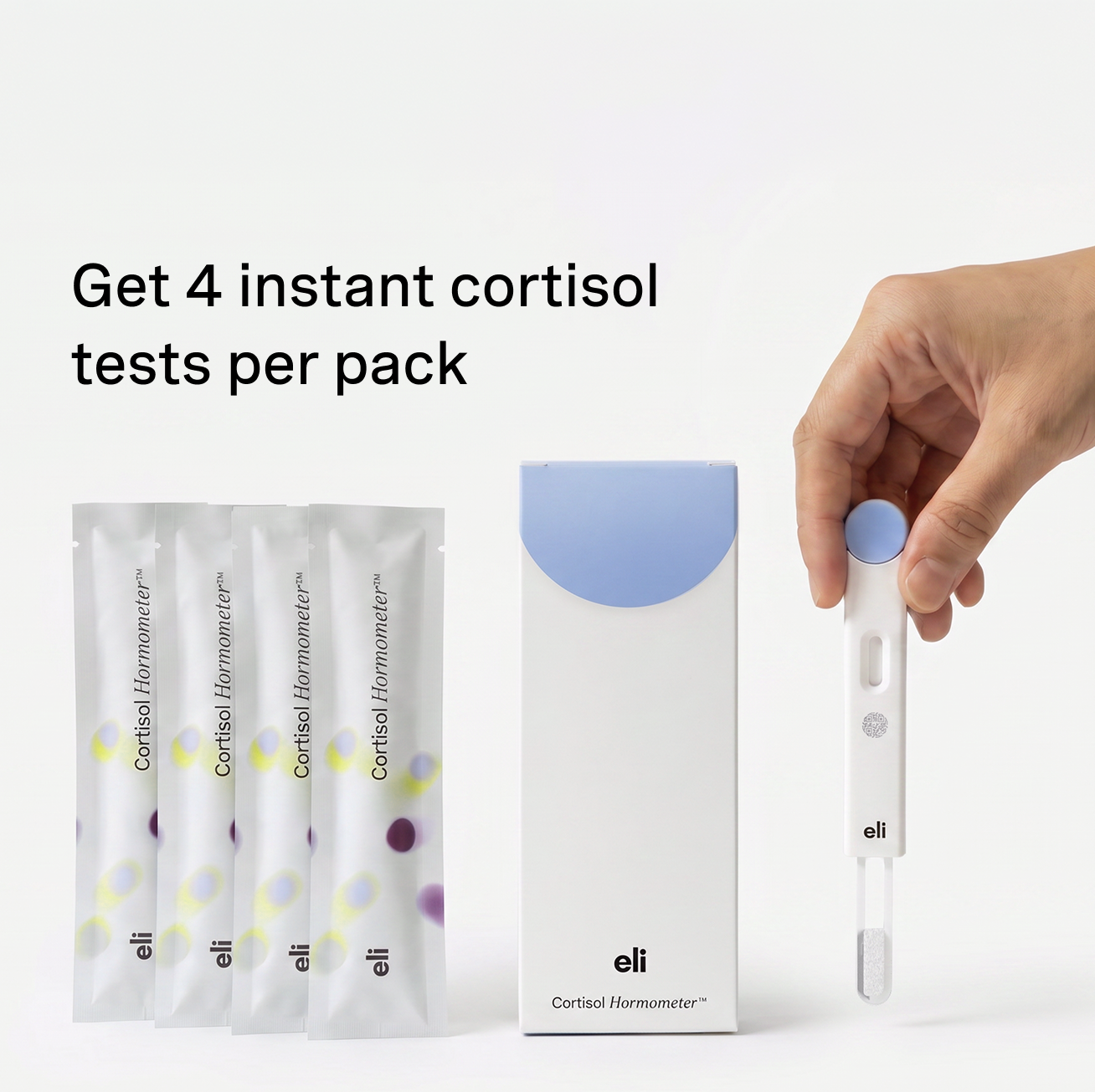
Eli's Hormometer® captures salivary cortisol levels in real-time, turning frequent testing results into clear patterns. Testing over time allows athletes to:
-
Visualize daily cortisol rhythms.
-
Track how training and recovery strategies affect stress responses.
-
Build a personalized picture of resilience and readiness that gets sharper with every reading.
By capturing morning and evening samples across days and weeks, Hormometer® can reveal whether cortisol rhythms remain optimal or beginning to flatten, a common sign of overload.
Train hard, recover harder.
Cortisol is not the enemy of training. It's the signal that drives progress. But when stress outpaces recovery, that signal changes—and that changes shows up in your rhythm. By proritizing recovery, fueling properly, and using tools like Hormometer®, athletes can keep their cortisol rhythms in check, helping them feel their best and reach their goals.